The British Museum's Iconic Collection: London's Must-See Cultural Treasure
When you live in London, you don’t need to travel far to stand face-to-face with human history. Just a short walk from Holborn or a quick Tube ride from Covent Garden, the British Museum is a vast, free-to-enter institution housing over eight million artifacts spanning two million years of human civilization. It’s not just another museum - it’s one of London’s most essential cultural anchors, right here in the heart of the city.
Why the British Museum Belongs on Every Londoner’s List
Think about how many times you’ve passed it on your way to the National Gallery, grabbed a coffee at the café on Great Russell Street, or met a friend outside the grand entrance with the iconic columns. Yet how many of you have actually gone inside? For locals, it’s easy to take it for granted. But this isn’t just a building with old stuff. It’s where you can see the Rosetta Stone - the key that cracked ancient Egyptian hieroglyphs - less than 30 minutes from your flat in Camden. Or the Parthenon sculptures, carved over 2,400 years ago, still whispering stories of democracy and art in a way no textbook ever could.
And here’s the thing: it’s free. No ticket. No queue (unless you’re here during school holidays). You can wander in at 10 a.m. on a Tuesday, spend three hours lost in Assyrian lion reliefs, and leave without spending a penny. That’s rare in London, where even the Tate Modern charges for special exhibitions. The British Museum keeps its doors open because it believes knowledge shouldn’t be priced.
The Highlights You Can’t Miss
There are too many treasures to list, but a few stand out - especially if you’re short on time or just starting out.
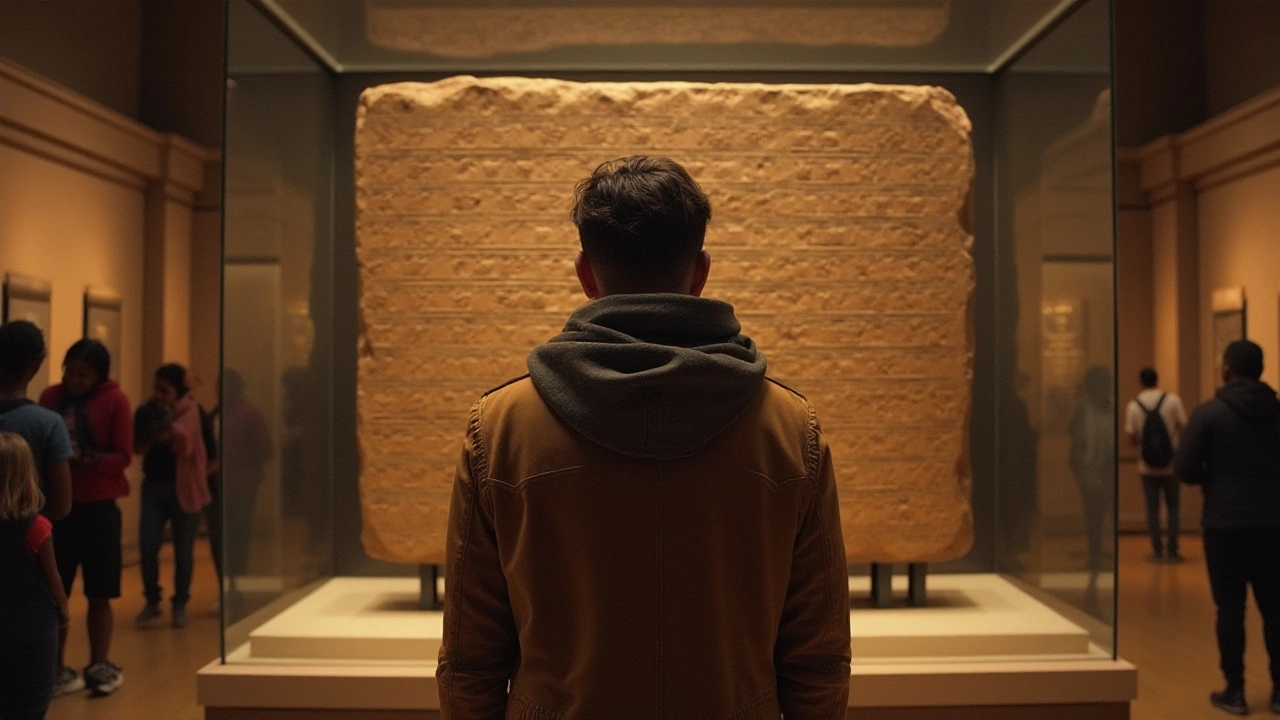
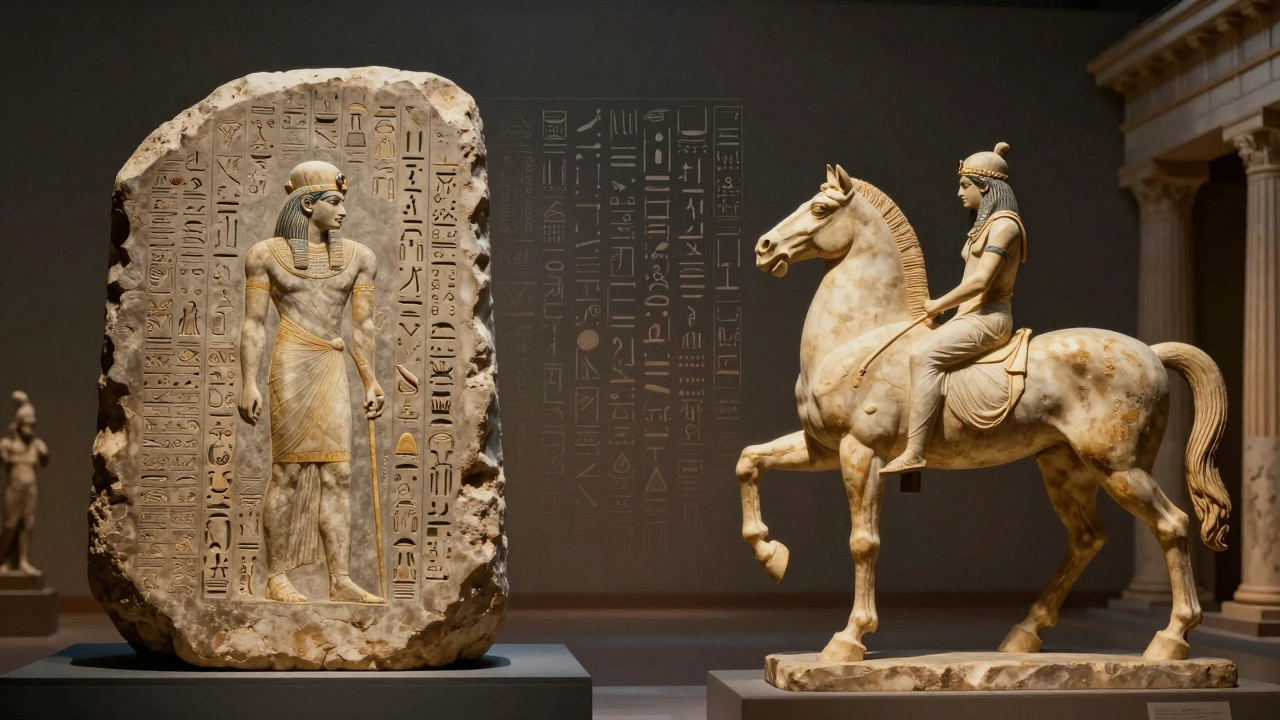
- The Rosetta Stone - Room 4. This isn’t just a slab of black rock. It’s the reason we understand ancient Egypt. Without it, we’d still be guessing what those carvings meant. See it beside the bust of Ramesses II, and imagine the moment in 1799 when French soldiers found it near Rosetta, Egypt - and how British scholars later used it to unlock a lost language.
- The Parthenon Sculptures (Elgin Marbles) - Room 18. These marble figures from the temple of Athena in Athens are among the most debated artifacts in the world. They’re also breathtakingly beautiful. Look closely at the drapery on the horsemen - you can almost feel the wind. Whether you agree with their presence here or not, they’re undeniable.
- The Sutton Hoo Ship Burial - Room 41. This is Anglo-Saxon England’s greatest archaeological find. A 27-meter ship buried with a king’s treasure: gold helmets, silver bowls, a ceremonial shield. It’s the real-life inspiration for Beowulf. You can see the original helmet on display - the same one that’s been on the cover of every British history textbook since 1939.
- The Lewis Chessmen - Room 40. Twelve chess pieces carved from walrus ivory in 12th-century Norway. They’re cute, fierce, and weirdly human. One piece is biting its shield. Another is holding its head in despair. They were found on the Isle of Lewis, off Scotland, and now sit quietly in a glass case, waiting for you to notice.
- The Egyptian Mummies - Room 62 and 63. Over 140 mummies and coffins. Some are wrapped, some are open. Some belonged to priests, others to children. The most famous is the Mummy of Katebet, a young woman who lived 3,200 years ago. Her face is preserved. You can see her eyelashes.
Each of these isn’t just an object - it’s a direct line to a person who lived, loved, feared, and died long before London was even a village.
How to Make the Most of Your Visit
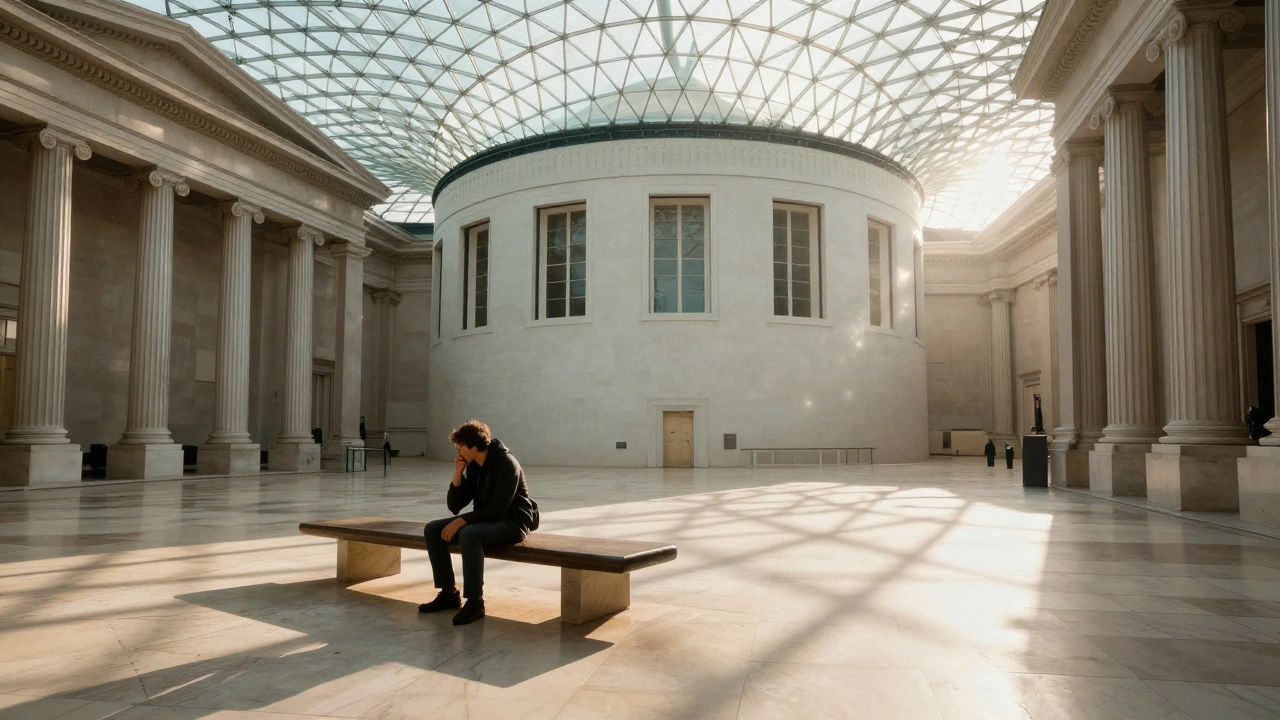
Londoners know the best way to beat the crowds: go early. The museum opens at 10 a.m., but if you arrive by 9:30, you’ll have the Great Court to yourself. That’s the stunning glass-roofed square in the center - designed by Norman Foster. It’s where students from UCL come to study, where couples take photos, and where the world’s largest covered public square in Europe feels like your own private sanctuary.
Grab a free map at the information desk. Or better yet, download the museum’s official app. It has audio guides for every major exhibit, and you can scan QR codes next to objects to hear experts talk about them in real time. No need to rent headphones.
Don’t skip the Reading Room - even if you’re not a scholar. It’s the circular, domed space that once held Marx, Dickens, and Gandhi. Now it’s a quiet, light-filled hall with bookshelves and seating. Sit there for 15 minutes. Listen to the silence. It’s the same silence that once held the quiet hum of Victorian intellectuals.
And yes, the café is good. Not Michelin-starred, but solid. Try the British Museum Tea - a blend made with Earl Grey and mint, served with shortbread biscuits. It’s the kind of thing you’d find in a London pub, just with more marble.
Why This Matters to London
London has always been a city of movement. From the Roman roads to the Windrush generation, from the East India Company to the refugee resettlement programs in Hackney, we’ve always been shaped by what comes from elsewhere. The British Museum doesn’t pretend to own these objects. It holds them - and lets us touch them.
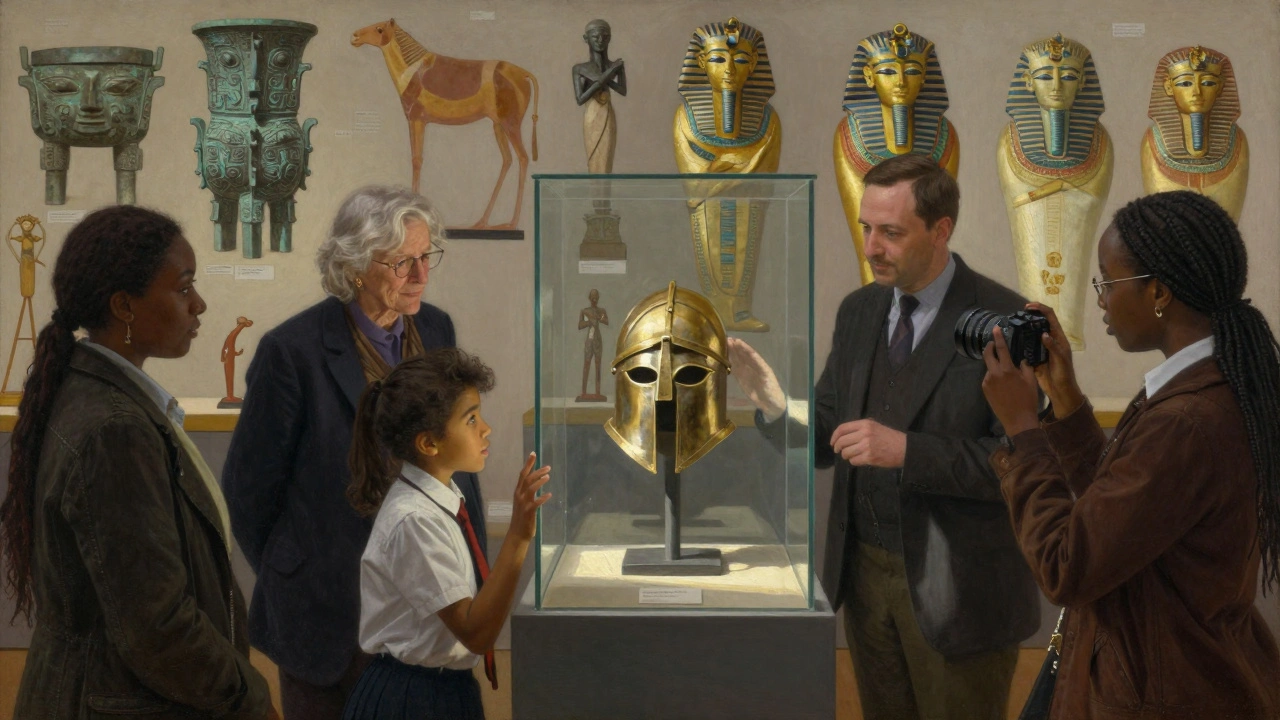
It’s why, on a rainy Saturday in January, you’ll see a group of schoolchildren from Peckham staring at a Mesopotamian tablet, while a retired teacher from Islington explains it to them. It’s why, on a sunny afternoon in May, a Nigerian student from Southwark takes a photo of the Benin Bronzes - the same ones that were looted in 1897 - and posts it with the caption: “This is mine. And I’m here.”
This museum doesn’t just show history. It asks questions. Who gets to keep what? Who gets to tell the story? Why are these things here, and not in Cairo, or Baghdad, or Benin City?
Those questions aren’t just academic. They’re personal. And if you live in London, they’re yours too.
What’s Around the Corner
After the museum, walk 10 minutes to the British Library - home of the Magna Carta and Beatles lyrics. Or head west to the Victoria and Albert Museum, where fashion, furniture, and ceramics tell the story of taste across centuries. Or take the Tube to Portobello Road on a Saturday and find a 17th-century coin in a stall next to a vegan pie.
London’s history isn’t locked in glass cases. It’s in the pavement, the pubs, the markets, the accents, the way people still queue for tea.
Don’t Just Visit - Engage
The British Museum doesn’t just display history. It invites you to rethink it. Free talks happen every week. Curators lead tours on African art, ancient China, or the politics of collecting. There are family workshops on Saturday mornings. You can even volunteer to help catalog objects.
There’s no entry fee. But there’s a deeper cost: the cost of ignoring what’s right in front of you.
So next time you’re near Bloomsbury - whether you’re on your way to work, heading to the cinema, or just walking because you need to clear your head - go inside. Walk through the doors. Let the weight of centuries settle on your shoulders. Then walk out again, and see London differently.
Because history isn’t somewhere else. It’s here. And it’s waiting for you.
Is the British Museum really free to visit?
Yes, entry to the permanent collection is completely free. You don’t need a ticket, and there’s no charge to see any of the main exhibits, including the Rosetta Stone, the Parthenon sculptures, or the Egyptian mummies. Some temporary exhibitions may have a fee, but these are clearly marked and optional. The museum is funded by the UK government and private donations, so access remains open to all.
How long should I spend at the British Museum?
You could spend days here - there are over 8 million objects. But if you’re short on time, aim for 2-3 hours. Focus on one or two galleries that interest you most. Most visitors spend time in Room 4 (Rosetta Stone), Room 18 (Parthenon), Room 41 (Sutton Hoo), and Room 40 (Lewis Chessmen). The Great Court alone is worth 30 minutes just to sit and soak in the architecture. If you’re a first-time visitor, don’t try to see everything. See one thing deeply.
What’s the best time to visit to avoid crowds?
Weekday mornings are quietest. Arrive by 10 a.m. on a Tuesday or Wednesday - that’s when school groups haven’t arrived yet. Weekends and school holidays get busy, especially around the Egyptian galleries. If you’re visiting during peak times, head to the upper floors first (like Room 41 or Room 43), then work your way down. The Reading Room and the café are usually calm all day.
Are there guided tours available?
Yes. Free 30-minute highlights tours run daily at 11 a.m., 1 p.m., and 3 p.m. These are led by trained volunteers and cover the museum’s top five objects. There are also free themed tours on topics like African art, ancient Greece, and collecting history. You can book them on the museum’s website or just show up - no registration needed. Audio guides are available via the free app, and QR codes next to major exhibits let you listen to expert commentary on your phone.
Can I bring food or drinks into the museum?
You can bring water in a sealed bottle, but no other food or drinks are allowed in the galleries. There are several cafés and a restaurant inside, including one in the Great Court with outdoor seating. The café near the main entrance serves full English breakfasts, sandwiches, and afternoon tea - perfect for a post-museum pause. Many locals bring a thermos of tea and a biscuit to enjoy on the benches outside.