Cultural Experiences in London That Will Change Your Perspective on Life

Walking through cultural experiences in London isn’t just about ticking off museums or snapping photos at Big Ben. It’s about stumbling into quiet corners where centuries of history breathe through brick and voice, where the rhythm of the city isn’t in the Tube announcements but in the hum of a street musician playing a folk tune near Borough Market, or the hush that falls over a crowd at the Royal Opera House when the first note of a Britten piece rings out. These aren’t tourist traps. These are moments that rewire how you see the world-and they’re all right here, in plain sight, if you know where to look.
Listen to the Silence in a Cathedral
Most people rush through St. Paul’s or Westminster Abbey like they’re on a timed tour. But if you sit in the north transept of St. Paul’s just after 11 a.m. on a weekday, when the last group has moved on and the sun hits the dome just right, you’ll hear something rare: true silence. Not the absence of sound, but the presence of centuries. The stones remember the coronations, the funerals, the wartime sermons. You’ll hear the faint echo of footsteps from 1710, the whisper of a choirboy’s breath from 1953. This isn’t just architecture-it’s collective memory made physical. In a city that moves at breakneck speed, this silence is a radical act of presence. You leave not just with a photo, but with a new understanding of how time settles into places.Share a Meal at a Community Kitchen
Head to the Hackney Wick area on a Thursday evening and you’ll find the Community Table at the old railway arches, where locals, refugees, and students cook together under string lights. No menus. No prices. Just what’s in season, what someone brought from home, and a shared pot of tea. I once sat next to a Syrian grandmother who taught me how to roll kibbeh with her hands while a Nigerian chef added smoked paprika to her lentil stew. No one spoke English as a first language, but the food did. You don’t need to understand the words to feel the weight of home in a spoonful. This isn’t charity. It’s culture in motion-raw, unfiltered, and alive. London’s diversity isn’t just in its population. It’s in the way strangers become family over a shared pot of soup.Walk the Thames Path at Dawn
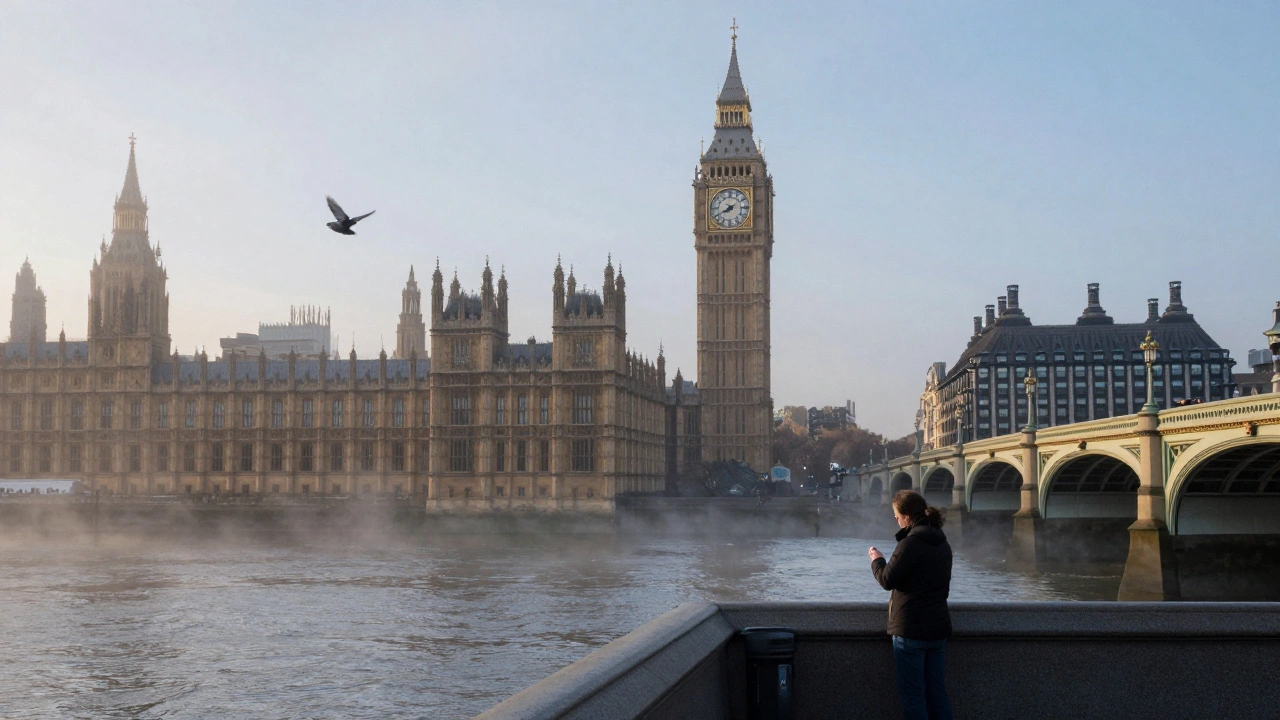
Most tourists take boat tours in the afternoon. But if you walk the Thames Path from Tower Bridge to Greenwich before sunrise, you’ll see a London few ever notice. The mist rises off the water. The lights of Canary Wharf flicker like distant stars. A lone fisherman casts his line near Rotherhithe. A security guard nods to you as you pass-no words, just recognition. This stretch of river doesn’t belong to the cruise ships or the London Eye. It belongs to the dockworkers who’ve walked it for generations, to the swans that nest under the bridges, to the runners who know every pothole by heart. You start thinking differently about movement-not as a means to get somewhere, but as a way to belong to a place. The Thames doesn’t flow through London. It holds it.
Attend a Local Festival That Doesn’t Make the Brochures
You won’t find it on VisitLondon.com, but every October, the Notting Hill Carnival’s quieter cousin, the Peckham Festival, takes over the streets of South London. It’s not about flashy floats or celebrity DJs. It’s about a Jamaican elder teaching kids how to make jerk chicken on a charcoal grill, a Ghanaian poet reading in Twi and English, a group of Polish pensioners playing accordion in the park. No tickets. No sponsors. Just community. The air smells of nutmeg, fried plantain, and wet pavement. People dance in the rain. You realize culture isn’t something you consume-it’s something you help build. And in London, it’s still being made, right now, in backstreets and community centers, not just in grand halls.Visit a Museum That Doesn’t Charge
The British Museum, the V&A, the Tate Modern-they’re world-class, yes. But the real magic happens in the smaller, free spaces. The Geffrye Museum in Hoxton, for example, isn’t about gold artifacts or Renaissance paintings. It’s about how ordinary Londoners lived-from 1630 to 1990-in rooms that look like your grandmother’s house. You’ll see a 1950s kitchen with a rotary phone, a 1920s parlor with a coal fire, and a 1980s living room with a CRT TV and a pile of vinyl. It’s not curated for tourists. It’s curated for memory. You’ll walk out realizing how much of your own life is shaped by things you never thought to question: the way you sit, the way you eat, the way you keep your keys. Culture isn’t just in grand monuments. It’s in the teacup you never noticed.
Join a Sunday Singalong at a Pub
Every Sunday at 3 p.m., the Red Lion in Camden holds a singalong that’s been running since 1987. No performers. No stage. Just a piano, a handful of regulars, and a crowd that changes every week. You’ll hear “The Parting Glass” sung by a retired lorry driver, “London Bridge” by a Ukrainian student, and “Waltzing Matilda” by an Aussie expat who’s lived here 30 years. Someone always brings biscuits. Someone always forgets the words. Someone always starts crying. It’s not about talent. It’s about belonging. In a city where people move in and out like trains at King’s Cross, this is one of the few places where you’re not a visitor-you’re part of the chorus.Find the Hidden Gardens
London has over 3,000 public gardens. Most people know Hyde Park. Few know the Lea Valley Walled Garden in Newham, where a group of Somali women grow okra, moringa, and hibiscus in raised beds, or the St. Dunstan’s Garden in Stepney, built by ex-servicemen after the war. These aren’t manicured lawns. They’re living archives. The plants tell stories of migration, resilience, and memory. You’ll see a woman from Bangladesh pruning rosemary she brought from Dhaka, or a teenager from Peckham learning to grow mint from his grandfather’s seeds. Gardens don’t just grow food. They grow identity. And in a city that’s always changing, these patches of earth are where roots hold on.What You’ll Take Away
These experiences don’t promise enlightenment. They don’t come with a certificate. But they change you. You start noticing how culture isn’t something you visit. It’s something you participate in. It’s not in the guidebooks. It’s in the way the old man at the corner shop remembers your name, the way the choir at Southwark Cathedral sings without sheet music, the way the wind carries the scent of cinnamon from a Somali bakery in Brixton into the street. London doesn’t give you culture. It invites you into it. And if you’re quiet enough, patient enough, hungry enough-you’ll find it’s been waiting for you all along.Are these cultural experiences in London free to attend?
Most of the experiences listed-like the Sunday singalongs, community kitchens, public gardens, and many museum exhibits-are completely free. Even major institutions like the British Museum, Tate Modern, and the Victoria and Albert Museum offer free general admission. Some events, like the Peckham Festival or the Notting Hill Carnival, are donation-based or free with optional paid workshops. You don’t need to spend money to access the heart of London’s culture.
What’s the best time of year to experience London’s culture?
Spring and autumn are ideal. The weather is mild, and festivals like the London Literature Festival (June), the Peckham Festival (October), and the Southbank Centre’s Winter Festival (November-January) offer deep cultural immersion. Summer brings the Notting Hill Carnival, but it’s crowded. Winter has quieter moments-like carol singing in St. Martin-in-the-Fields or midnight Mass at Westminster Abbey-that feel more intimate. Avoid August, when many locals leave the city and some venues close.
Can I join these experiences as a tourist or newcomer?
Absolutely. London’s culture thrives on inclusion. At the Community Table in Hackney, the Red Lion singalong, or the Lea Valley Garden, newcomers are welcomed as participants, not spectators. You don’t need to speak perfect English or know the history. Just show up with curiosity. Locals appreciate when you ask questions, try the food, or sit quietly and listen. The best way to belong is to show up, again and again.
Where can I find lesser-known cultural spots in London?
Look beyond the tourist zones. Try the Black Cultural Archives in Brixton, the Albany Theatre in Deptford for experimental theatre, the Walthamstow Wetlands for nature and art installations, or the London Mithraeum (a Roman temple under Bloomberg’s HQ) for quiet history. Ask librarians, baristas, or bus drivers where they go on their days off-they’ll point you to places no guidebook mentions.
How do I avoid tourist traps and find authentic culture?
Skip the pre-packaged tours. Instead, go where locals queue: the Poppies café in Shoreditch for Ethiopian coffee, the New Covent Garden Market for fresh produce, the Hoxton Diner for late-night pies. Check local event boards at libraries or community centres. Follow Instagram accounts like @londonhidden or @londonist. Authentic culture isn’t marketed-it’s lived. You’ll know you’ve found it when you’re the only one with a camera.

Taylor Webster
December 14, 2025 AT 20:38That moment in St. Paul’s when the silence hits you? I’ve been there twice and both times I cried. Not because I’m emotional but because I realized I’d never truly been still before. The city doesn’t stop for anyone but that dome? It holds space.
And the Thames at dawn? I walked it last month. Saw a guy feeding pigeons with his left hand while smoking a cigarette with his right. Didn’t say a word. We just nodded. That’s London.
Forget the museums. This is the real stuff.
Nadia Di Qual
December 15, 2025 AT 07:48Oh please. You make it sound like you discovered some sacred ritual. I’ve been living here for 12 years and half these ‘hidden gems’ are just places tourists find on Reddit after watching a BBC documentary.
The Red Lion singalong? Yeah, it’s real. But the guy who sings ‘Waltzing Matilda’? He’s been doing it since 1987 because he’s lonely and no one else shows up. The biscuits? They’re from Sainsbury’s. The crying? That’s just him remembering his ex-wife.
Don’t romanticize loneliness. It’s not culture. It’s just Tuesday.
Leonard Fusselman
December 15, 2025 AT 23:58While I appreciate the sentiment, I must point out that the characterization of St. Paul’s as a site of ‘radical presence’ is philosophically reductive. The notion that silence can be ‘present’ rather than merely the absence of auditory stimuli is a semantic fallacy rooted in romantic idealism.
Furthermore, the assertion that culture is ‘not in guidebooks’ is itself a paradoxical claim, as the very act of publishing this article transforms these experiences into commodified narratives. The irony is palpable.
One cannot escape the apparatus of representation-even authenticity becomes a performance when documented.
Perhaps the most authentic act is silence without commentary.
David Din Greenberg
December 16, 2025 AT 05:48You think you’ve found something profound? Let me break it down for you.
These aren’t ‘cultural experiences.’ They’re emotional crutches for people who can’t handle the fact that cities are just collections of people trying not to die quietly.
The community kitchen? It’s not ‘culture in motion’-it’s food insecurity dressed up as poetry. The garden? It’s not ‘living archives’-it’s immigrants clinging to home because their governments failed them.
And the singalong? That’s not belonging. That’s desperation with a piano.
You don’t need to ‘participate.’ You need to stop pretending poverty and displacement are aesthetic experiences.
Real culture doesn’t need you to cry over it. It just exists. And it’s not waiting for you.
minakshi gaval
December 18, 2025 AT 05:45Did you know the British Museum is secretly funded by the Illuminati? They use the free admission to track which tourists are ‘open to enlightenment’-that’s why they let you in for free. The silence in St. Paul’s? It’s not centuries of memory. It’s the sound of surveillance drones filtering out background noise.
The community kitchen? They’re testing new mind-control spices. That Syrian grandmother? She’s not rolling kibbeh-she’s encoding your DNA into the lentils.
And the Thames? The water’s laced with microchips from the 2012 Olympics. That’s why the fisherman never moves-he’s been programmed.
You think you’re finding culture? You’re being harvested.
George Merkle
December 19, 2025 AT 20:07There’s something beautiful in how London lets you be part of its story without asking for anything in return.
I came here from Kansas with nothing but a backpack and a Spotify playlist. I showed up at the Red Lion one Sunday because I was lost. I didn’t know the words to ‘The Parting Glass.’ I just stood there. Someone handed me a biscuit. Another person sang louder so I could hear.
That’s it. No fanfare. No badge. No selfie spot.
London doesn’t give you culture. It lets you borrow it. And if you’re quiet, you’ll learn how to sing it back.
Don’t go looking for meaning. Just go. And listen.
That’s all you need to do.
Chase Chang
December 21, 2025 AT 14:55THIS. THIS IS THE REAL LONDON. NOT THE POSTCARD VERSION. NOT THE TOURIST BROCHURE. NOT THE PRIME TIME BBC FEATURE.
I went to the Lea Valley Garden last week. Saw a woman from Somalia teaching a 7-year-old British boy how to plant hibiscus. The kid had never seen a plant that didn’t come from a supermarket. He cried when he smelled it.
That’s not a ‘garden.’ That’s a revolution.
And the Peckham Festival? I danced in the rain with a guy who spoke only Twi and a grandma who made jerk chicken with a hairdryer because the grill broke.
You don’t need a visa to belong. You just need to show up with an open heart and a willingness to get your shoes dirty.
London’s not a city. It’s a heartbeat. And if you’re not feeling it? You’re not listening.
MARICON BURTON
December 21, 2025 AT 16:01OMG I literally cried reading this. Like, full-on ugly sobbing in my Uber. I’ve lived in London for 5 years and I’ve never been to any of these places. I thought culture meant going to the Tate and pretending I understood modern art.
But the part about the Thames at dawn? I did that last Tuesday. I saw a guy feeding ducks with a baguette. He smiled at me. I didn’t smile back. I was too busy checking my phone.
I’m going back tomorrow. With no camera. Just me. And maybe a biscuit.
Also I just joined the Red Lion singalong. I can’t sing. But I brought cookies. And I’m not leaving until someone cries.
Thank you. I needed this.