Behind the Scenes: What Makes London’s Museums So Captivating?

In London, museums aren’t just buildings with old things behind glass-they’re living spaces where history breathes, art argues, and curiosity gets paid. Walk into the British Museum on a rainy Tuesday morning, and you’ll find a quiet crowd huddled around the Rosetta Stone, not because it’s famous, but because it’s the only thing that makes sense of a language lost for 1,400 years. That’s the magic. Not the price tag. Not the crowds. It’s the quiet moment when something ancient suddenly feels personal.
It’s Not the Art-It’s the Storytelling
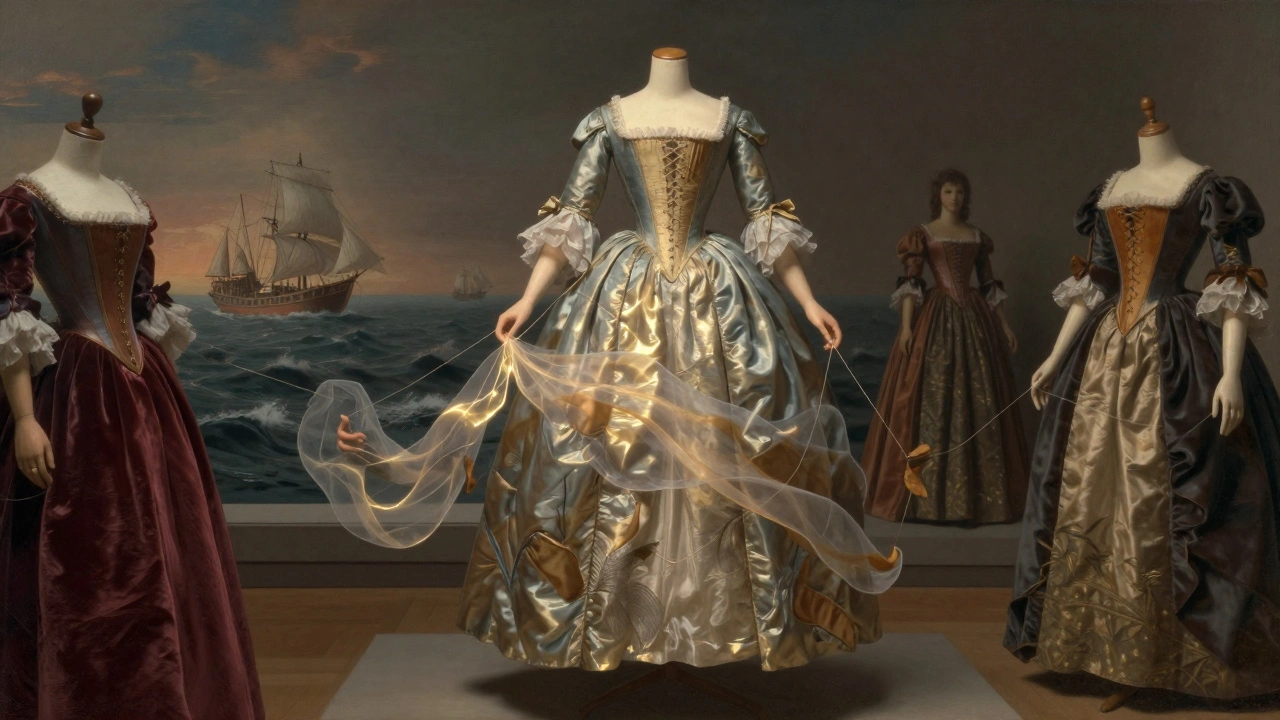
Most people think museums win because they have rare artifacts. But the real secret? They know how to tell stories that stick. The V&A Museum doesn’t just display a 17th-century dress. It shows you the hands that stitched it, the trade routes that brought the silk, and the social rules that dictated who could wear it. In London, where class and history are tangled like a knot in a Savile Row suit, that context matters.At the National Gallery, a Turner landscape isn’t just a pretty sky. The audio guide explains how the artist painted it after watching a storm roll over the Thames near Greenwich. You’re not looking at paint-you’re standing where he stood. That’s the difference between a collection and a connection.
The Quiet Power of Free Entry
London’s biggest advantage? Most of its major museums don’t charge you to walk in. The Tate Modern, the British Museum, the National Portrait Gallery-all free. That’s not just a policy. It’s a promise. A promise that culture belongs to everyone, not just those who can afford it.Think about what that means on a Sunday afternoon in Southwark. A family from Peckham, a student from UCL, a retiree from Hampstead, and a tourist from Osaka-all standing shoulder to shoulder in front of a Hockney painting, all silent, all moved. No ticket booth. No queue. Just access. That’s rare in the world. And it’s why Londoners come back again and again.
Design That Feels Like Home
Walk into the Victoria and Albert Museum and you’ll notice something odd: the lighting is soft, the floors are quiet, the benches are placed where you’d naturally pause. That’s not an accident. Museums in London don’t treat visitors like customers-they treat them like guests.Compare that to a flashy exhibition in New York or Tokyo, where everything screams for attention. London’s museums whisper. They let you lean in. The Science Museum in South Kensington has interactive exhibits that don’t feel like games-they feel like discoveries. A 12-year-old from Croydon can press a button and hear how a steam engine worked on the London Underground in 1863. No headset. No app. Just a lever, a sound, and a spark of understanding.
The Hidden Routines That Keep Them Alive
Behind the scenes, London’s museums run like clockwork. Every morning at 6 a.m., conservators at the British Museum check humidity levels in the Assyrian gallery. At 7 a.m., the Tate Modern team rotates the lighting on the Rothko rooms to prevent fading. At 8 a.m., volunteers from local communities-many of them retired teachers or retired museum staff-arrive to help guide school groups.These aren’t glamorous jobs. But they’re the reason a 3,000-year-old Egyptian mummy still looks like it’s sleeping, and why a 1960s Pop Art poster hasn’t turned brittle. It’s the quiet dedication of people who show up before the doors open, not for fame, but because they believe in what’s inside.
London’s Museums Are Shaped by the City
There’s no museum in London that doesn’t reflect the city’s layers. The Imperial War Museum doesn’t just show tanks and uniforms-it tells the story of how Londoners lived through the Blitz, how mothers stitched blackout curtains, how children were evacuated to the countryside. You can hear the original recordings of air raid sirens in the basement. That’s not history. That’s memory.The Museum of London, now relocated to Smithfield, doesn’t just display Roman coins. It shows you the street plan of Londinium, how the Thames used to flood, how the Great Fire of 1666 changed the skyline forever. And then it shows you photos from the 2011 riots in Tottenham. The past isn’t locked away. It’s still breathing.
What Makes a London Museum Different?
It’s not the size. It’s not the collection. It’s the feeling that you’re part of something ongoing. When you visit the National Gallery and see a Van Gogh, you’re not just seeing art. You’re seeing what a Dutch painter thought of London’s fog. When you stand in front of the Tate Britain’s Turner collection, you’re seeing the same sky that artists like Constable painted from the banks of the Thames.London’s museums don’t just preserve culture. They invite you into it. They let you touch history-not literally, of course-but emotionally. You don’t need to be an expert. You don’t need to know the difference between Baroque and Rococo. You just need to show up. And when you do, you’ll find something that speaks to you.
Where to Go Next
If you’ve only seen the big names, try something quieter. The Foundling Museum in Bloomsbury tells the story of abandoned children in 18th-century London-through letters, dolls, and tokens left by mothers hoping to reclaim them. It’s heartbreaking. And unforgettable.Or head to the Wellcome Collection on Euston Road. It’s part medical history, part art gallery, part philosophy lab. One room has a 19th-century surgical kit. The next has a digital installation about how pain is felt differently across cultures. No ticket. No lines. Just ideas.
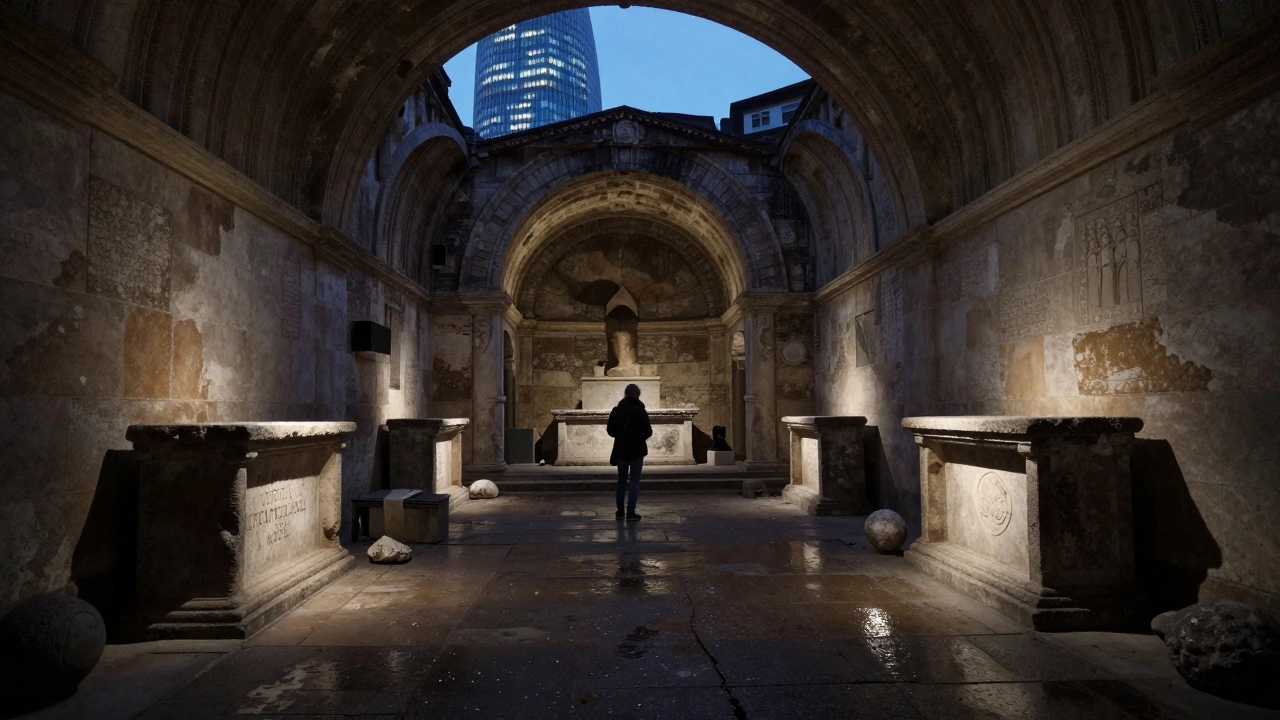
And if you’re visiting on a weekend, check out the London Mithraeum-a Roman temple buried under a Bloomberg building in the City. You descend into a dark, cool space lit only by soft spotlights. The air smells like damp stone. You’re standing where Romans prayed 2,000 years ago. No crowds. Just silence.
Why You’ll Keep Coming Back
London’s museums don’t ask you to admire. They ask you to wonder. They don’t sell tickets. They offer time. Time to sit. Time to listen. Time to think about who you are, where you’ve come from, and what you might become.That’s why, even on a drizzly December day, you’ll still find people inside-quiet, thoughtful, and utterly captivated. Not because they’re tourists. But because they’re Londoners. And in this city, museums aren’t just places to visit. They’re places to belong.
Are London museums really free to enter?
Yes, the major national museums-including the British Museum, Tate Modern, National Gallery, V&A, and Science Museum-have free general admission. You can walk in without booking or paying. Some special exhibitions may charge, but the permanent collections are always free. This policy dates back to the 19th century and remains a point of pride for the UK’s cultural institutions.
What’s the best time to visit London museums to avoid crowds?
Weekday mornings, especially between 10 a.m. and 12 p.m., are the quietest. The British Museum and National Gallery get busy after lunch and on weekends. For the most peaceful experience, go on a Tuesday or Wednesday. Many museums also open late on Fridays-Tate Modern stays open until 10 p.m.-and those evening hours are often much less crowded.
Can I bring food or drinks into London museums?
Most museums allow sealed water bottles and snacks, but full meals are usually restricted to designated café areas. The V&A has a beautiful garden café, and the British Museum’s Great Court Café is perfect for a quiet break. Outside food is fine if you’re discreet-just avoid strong smells and messy items. Many museums have picnic areas nearby, like the South Bank near Tate Modern.
Do I need to book tickets for London museums?
For general entry, no. But if you want to see a special exhibition-like the recent Frida Kahlo show at the V&A or the upcoming Van Gogh & Britain display at Tate Britain-you’ll need to book in advance. Check the museum’s website before you go. Some museums also require timed entry slots during peak seasons, even for free galleries, to manage crowds.
What’s the most underrated museum in London?
The Foundling Museum in Bloomsbury. It’s small, quiet, and deeply moving. It tells the story of the UK’s first children’s charity, founded in 1739, and how mothers left tokens-buttons, coins, scraps of fabric-to identify their babies if they ever returned. The emotional weight of those tiny objects is unforgettable. Most tourists never find it, but locals return again and again.

julia costa
December 2, 2025 AT 00:08The whole free museum thing is overrated honestly
Patricia Estera Esquejo
December 2, 2025 AT 21:48How can you even say that? These museums are sacred spaces where humanity remembers itself. Free access isn't just policy-it's moral obligation. If you think culture should be locked behind paywalls, you've never truly felt the weight of a 3000-year-old artifact staring back at you. This isn't entertainment, it's reverence. And you? You're part of the problem.
Clay Hamilton
December 3, 2025 AT 05:56Look I get the romanticism but let's be real the British Museum is basically a looted treasure chest with nice lighting and the Rosetta Stone was taken from Egypt under colonial duress so calling it magic is just white guilt dressed up as appreciation. Also the whole free thing only works because the UK government underfunds everything else so museums become the feel good distraction for a broken system. People don't go there to connect they go because they have nothing better to do on a Tuesday
Paul Eric
December 3, 2025 AT 11:30Free museums are fine but why do they always have so many signs saying dont touch dont stand too close dont look too long its like they want you to feel guilty for being there in the first place
William Lapes
December 5, 2025 AT 01:11Free museums? Yeah right. The UK spends billions on these places while our schools are falling apart and veterans sleep on the streets. You think a Roman coin matters more than a kid's textbook? This is why America doesn't need this socialist art worship. We build things that matter not museums for tourists to gawk at stolen junk
Gerry Hodgins
December 5, 2025 AT 23:58You wrote 'museum's' with an apostrophe in the title of the section about free entry. That's wrong. It's plural not possessive. Also 'it's' vs 'its' throughout the post. Someone should proofread this
Mindy Robinson
December 6, 2025 AT 04:03I love how you mentioned the Foundling Museum. I went last year and cried for 20 minutes in front of those tiny tokens. It’s such a quiet place but it holds so much heart. I brought my niece and she didn’t want to leave. I think museums like that remind us that history isn’t just kings and battles-it’s people. And people are messy and beautiful and heartbreaking. Thank you for writing this. I’m going back next month with my mom
Lashawn Darden
December 7, 2025 AT 04:06Oh wow so now museums are spiritual experiences? What next? Do we start praying to the Egyptian mummies? This whole article reads like a British propaganda pamphlet. You think this is unique? New York has the Met. LA has the Getty. Chicago has the Art Institute. And guess what? We don't need free entry to appreciate art. We have discipline. We have standards. You people treat museums like public parks. That's why your culture is dying
M. D. Crosson
December 9, 2025 AT 02:43Wow. Just. Wow. This. Is. Beautiful. The way you described the lighting at the V&A? The quiet floors? The 12-year-old from Croydon hearing the steam engine? I felt that. I actually felt that. This isn’t just writing. This is a love letter to humanity. I’ve never been to London but now I need to go. I need to stand where Turner stood. I need to hear the air raid sirens. I need to touch history-not with my hands but with my soul. Thank you. Thank you. Thank you.
Janey Doe
December 10, 2025 AT 09:05Small note: 'Savile Row suit' should be 'Savile Row suit'-no capitalization needed unless it's part of a proper name. Also 'London Mithraeum' is correct, but it's often misspelled as 'Mithraeum' without the 'a'. Small things, but they matter when you're talking about precision in history. Loved the piece though-especially the part about the damp stone smell. That’s the kind of detail that sticks.