Big Ben's Role in British Ceremonies and Traditions in London
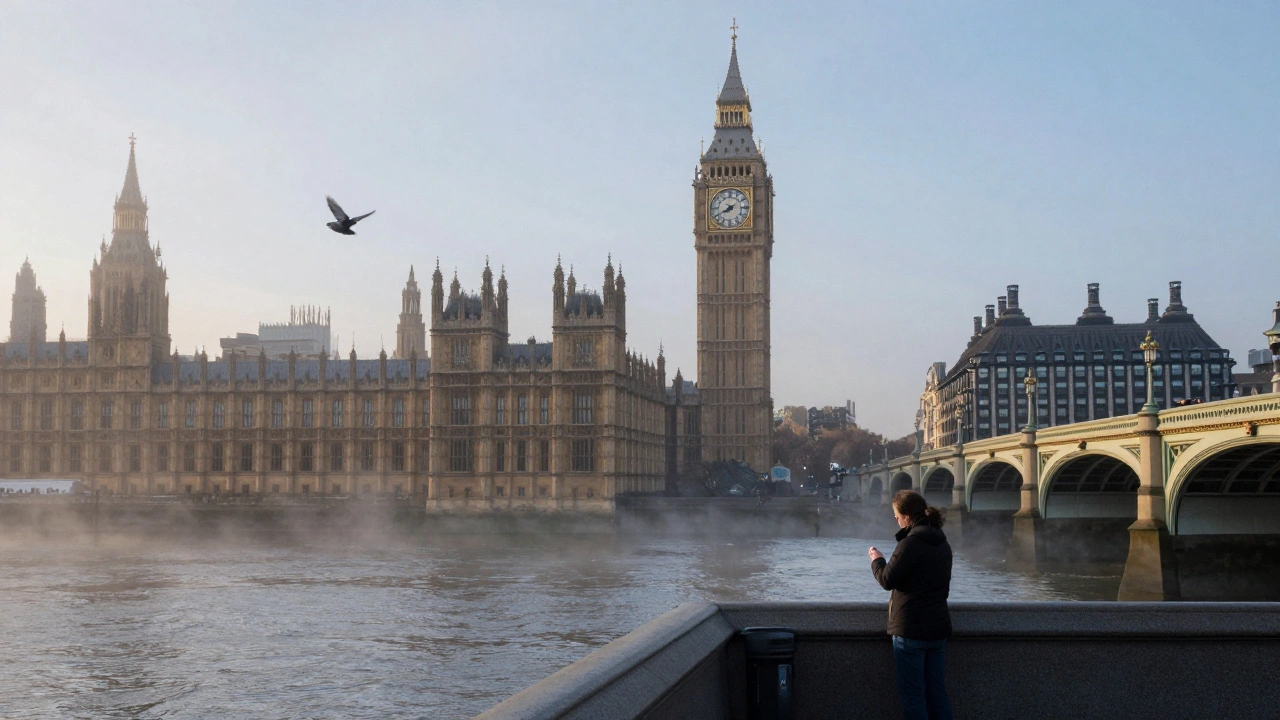
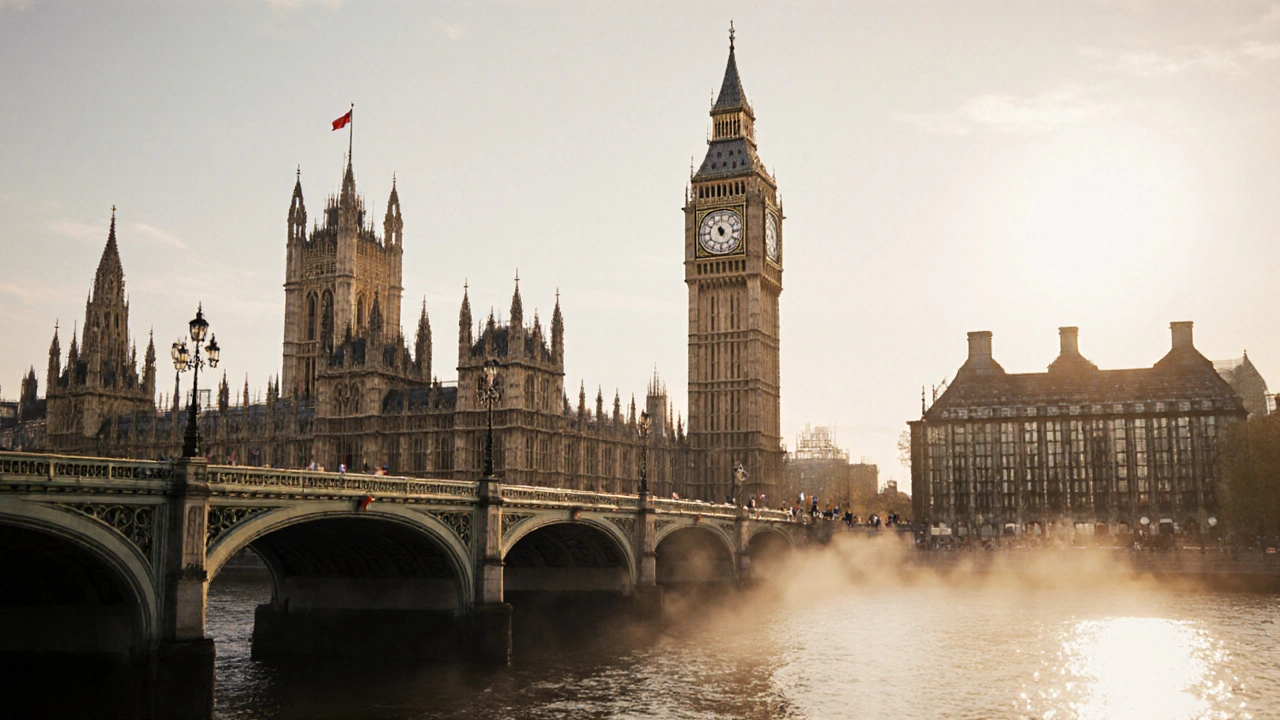
When you stand on the south bank of the River Thames and look north toward the Houses of Parliament, Big Ben isn’t just a clock tower-it’s the heartbeat of London. For over 160 years, its chimes have marked the rhythm of national moments, from quiet dawn vigils to roaring celebrations. In London, where history is woven into street corners and pub conversations, Big Ben doesn’t just tell time-it tells stories.
The Sound That Defines London
Most people think Big Ben is the whole tower, but technically, it’s the name of the bell inside the Elizabeth Tower. The tower itself was finished in 1859, and the bell-cast in 1856 at the Whitechapel Bell Foundry-weighs over 13 tons. Every hour, its deep, resonant tone echoes across Westminster, carrying across the Thames to Southwark and up to St. James’s Park. Locals know the sound like their own alarm clock. Walk through Victoria Station at 8 a.m. on a weekday, and you’ll hear commuters check their watches not by screen, but by the chime drifting in from outside.
It’s not just background noise. In 1940, during the Blitz, the BBC broadcast Big Ben’s chimes across Europe to signal that London was still standing. The sound became a symbol of resilience. Today, when the UK marks national moments-remembrance, royal milestones, or even the Queen’s funeral-the sound of Big Ben is still the first thing you hear on the news.
New Year’s Eve and the Nation’s Countdown
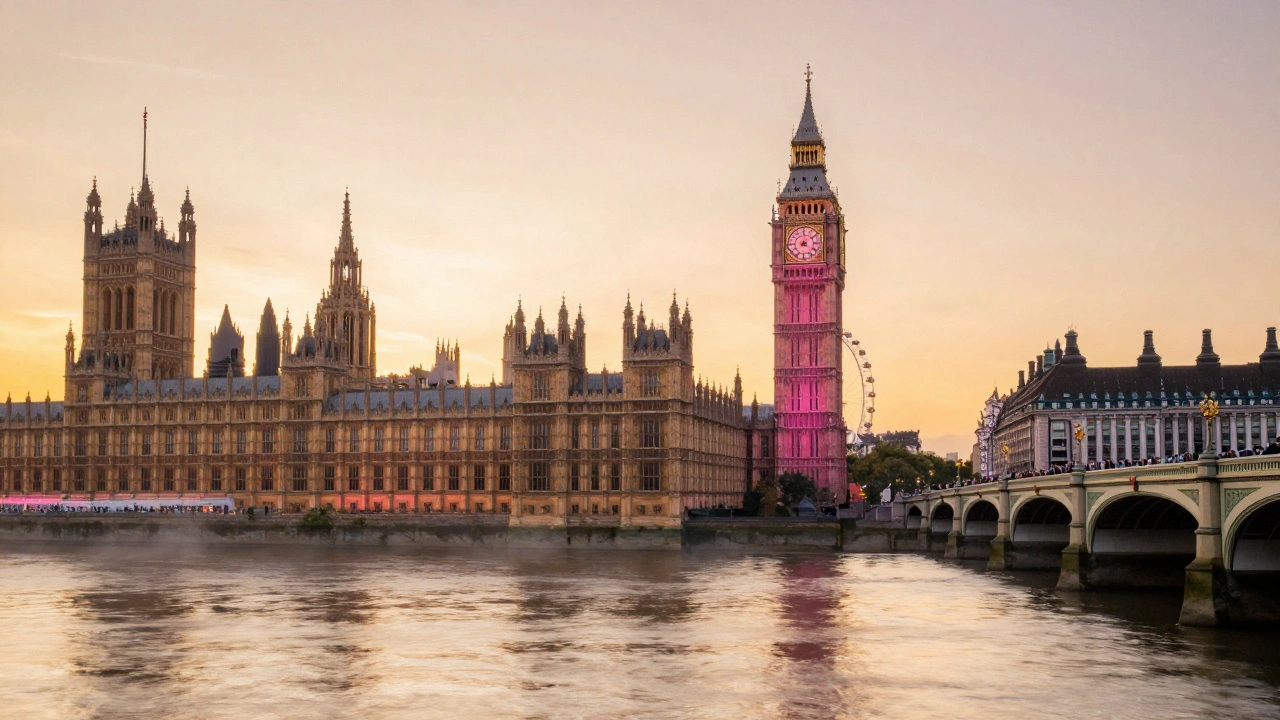
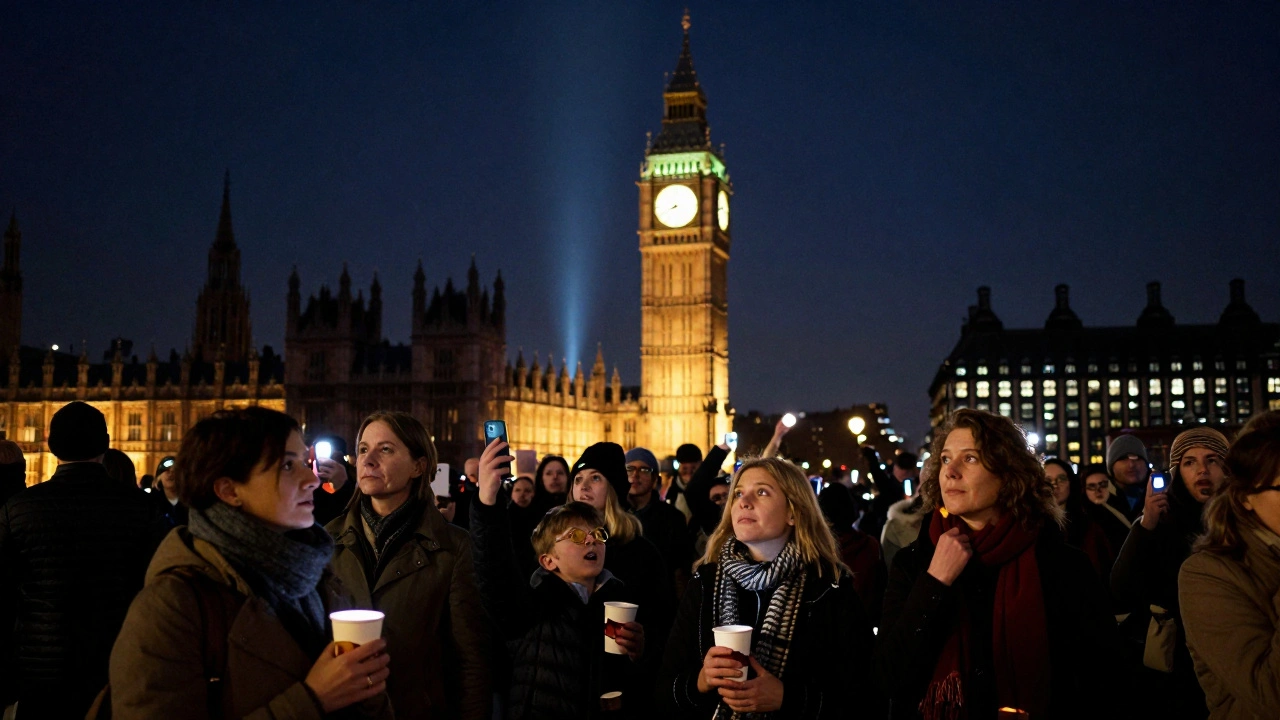
If you’ve ever stood in front of the Houses of Parliament on New Year’s Eve, you know the magic. Thousands gather along the Embankment, wrapped in blankets, sipping mulled wine from paper cups, waiting for the final seconds. As midnight nears, the chimes of Big Ben are broadcast live across the UK and beyond. The bells strike twelve, and the crowd erupts-not just in cheers, but in singing. “Auld Lang Syne” doesn’t just play from speakers; it’s sung by strangers who moments before didn’t know each other’s names. That’s London. That’s tradition.
For years, the bells were silent during renovations, and Londoners noticed. The absence wasn’t just technical-it was emotional. People left flowers at the base of the tower. A local radio station, BBC London, ran a campaign called “Bring Back the Chimes.” When the bells rang again in 2022 after a four-year restoration, it felt like a homecoming. One pensioner from Camberwell told a reporter: “I didn’t realize I’d been waiting for it until I heard it.”
Royal Events and the Pulse of the Monarchy
Big Ben doesn’t just mark time-it marks transitions. When a monarch passes, the bells toll once for each year of their life. During Queen Elizabeth II’s funeral in 2022, Big Ben tolled 96 times. The sound was slow, deliberate, and carried for miles. It was heard by mourners lining the Mall, by workers in Canary Wharf, even by drivers on the M25 who pulled over to listen.
On coronation days, the bells ring in a special pattern. For King Charles III’s coronation in 2023, Big Ben rang 101 times-once for each year of his life, then 21 more for the royal salute. Londoners lined the streets not just to watch the procession, but to listen. The chimes were synchronized with bells across the UK, from Edinburgh Castle to Cardiff Bay. It was a rare moment when every town in Britain heard the same sound at the same time.
Remembrance Sunday and the Silence Before the Chime
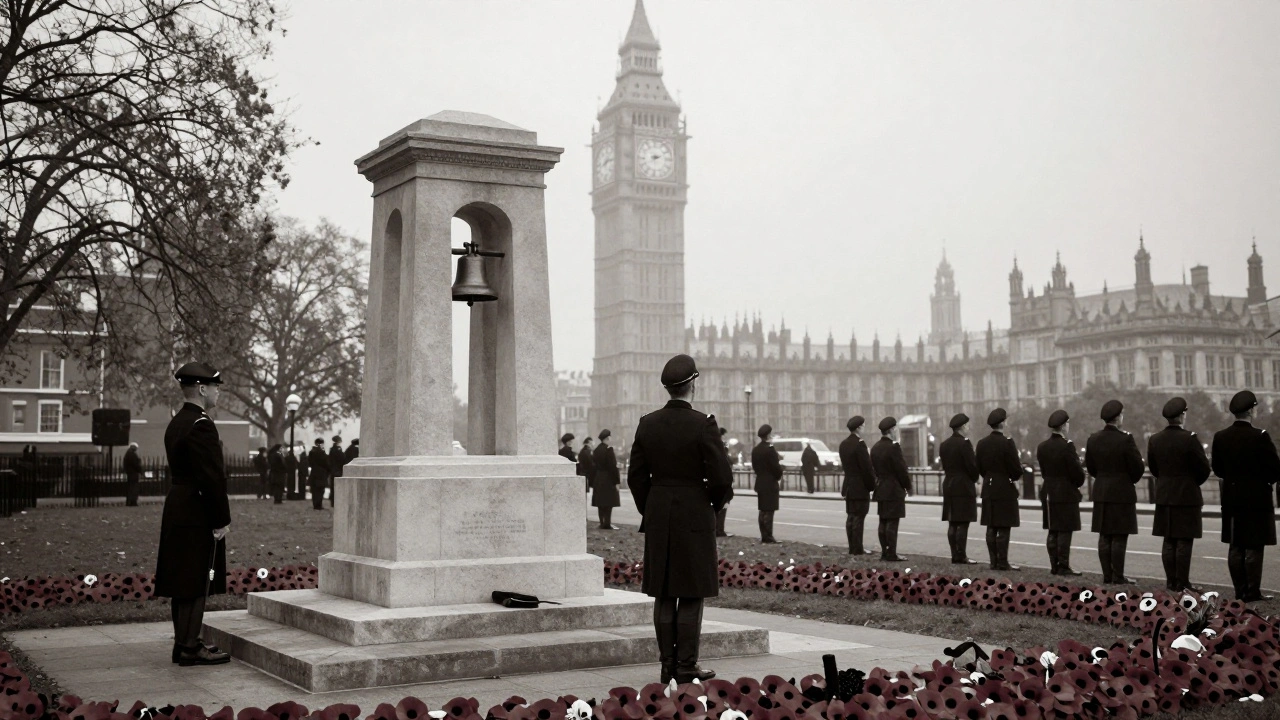
Every November, as the sun rises over Whitehall, a hush falls across London. At 11 a.m., the nation stops. Traffic halts. Buses pause. Even the Tube trains briefly silence their announcements. At the Cenotaph, soldiers stand at attention. And then, after two minutes of silence, Big Ben strikes eleven.
That single chime doesn’t just end the silence-it confirms it. It says: we remember. You can hear it from the steps of the London Eye, from the benches of St. James’s Park, from the offices of Canary Wharf where people step out into the corridor to listen. It’s not just a tradition. It’s a shared breath.
How Londoners Live With Big Ben
For many Londoners, Big Ben isn’t a tourist attraction-it’s part of daily life. The clock face is visible from dozens of tube stations: Westminster, St. James’s Park, Embankment. If you work in a building with a window facing the Thames, you’ve likely set your watch by it. Local cafés like The Clocktower Café on Victoria Street advertise “coffee served before the next chime.”
Even the weather affects how Big Ben is experienced. On foggy days, the sound carries farther-people say you can hear it from as far as Hampstead. On windy nights, the chimes echo oddly, almost like they’re singing in harmony with the Thames. Locals joke that if Big Ben chimes twice in a row, it’s because the Tower’s been hit by lightning. (It hasn’t happened since 1976.)
For schoolchildren in Lambeth or Lewisham, Big Ben is part of history lessons. Teachers take them to the tower, not just to look, but to listen. “The bell’s voice is older than your grandparents,” one teacher says. “It’s been here through wars, strikes, and pandemics. It’s the only thing in London that never asked for permission to stay.”
What You’ll Miss If You Only See It From Afar
Most tourists take photos from afar. But if you really want to understand Big Ben’s role in British tradition, you have to be close. Go early on a weekday morning. Walk along Bridge Street, past the souvenir stalls still setting up, and stand just beyond the railings. You’ll hear the mechanism-clanking gears, the slow swing of the pendulum, the metallic whisper of the hammer hitting the bell. It’s mechanical poetry.
On weekends, you might catch a choir from Westminster Abbey rehearsing nearby. Their voices blend with the chimes. It’s not staged. It’s just how London works. Music, history, and machinery come together without asking for applause.
And if you’re lucky, you’ll be there when the bells are rung for a special occasion-like the anniversary of the Battle of Britain, or the opening of a new bridge. Those moments aren’t advertised. You find out by word of mouth, from a bus driver, a pub landlord, or the woman who sells hot chestnuts near the tower.
Why Big Ben Still Matters
London has newer landmarks-the Shard, the London Eye, the Gherkin. But none of them carry the same weight. Big Ben doesn’t just tell time. It holds time. It’s the only structure in the city that has marked every major moment since the Victorian era. It’s been silent during wars, repaired after storms, and re-tuned after decades of wear.
In a city that changes so fast-where shops turn into flats, and old pubs become co-working spaces-Big Ben remains. It doesn’t need an app. It doesn’t need a hashtag. It just chimes. And in doing so, it reminds Londoners: we are part of something longer than ourselves.
Is Big Ben still working after the recent renovations?
Yes. After a four-year restoration completed in 2022, Big Ben’s clock mechanism, bell, and clock faces were fully restored. The chimes now ring every hour as they did before. The clock’s original Victorian gears were cleaned and lubricated, and the glass in the clock faces was replaced with modern, energy-efficient material that still preserves the original design. It’s now more accurate than ever.
Can you hear Big Ben from other parts of London?
Absolutely. On quiet mornings or foggy evenings, the chimes can be heard as far as Southwark, Lambeth, and even parts of Croydon. The sound travels best over water and open spaces, so you’ll hear it clearly from the South Bank, the Thames Path, or from the top of Primrose Hill. It’s less audible in noisy areas like Oxford Street or the East End, but locals still know when it’s chiming by the pause in traffic or the sudden silence in a pub.
Why is the bell called Big Ben?
The bell was named after Sir Benjamin Hall, the First Commissioner of Works at the time of its installation. He was a tall man-nicknamed “Big Ben”-and the name stuck. There’s also a popular theory that it was named after the heavyweight boxing champion Benjamin Caunt, but official records point to Hall. The tower itself wasn’t called Big Ben until decades later, when the name became shorthand for the whole structure.
What happens if Big Ben stops chiming?
When the bell was silenced for repairs between 2017 and 2022, the UK didn’t fall into chaos-but London felt different. The absence was emotional. People missed the sound like a familiar voice. Emergency services still used radio time signals, but the public relied on digital clocks and apps. The silence became a symbol of change. When the chimes returned, it wasn’t just a technical fix-it was a cultural moment. The BBC recorded over 1.2 million requests for the chime to be restored.
Are there other clock towers in London that chime like Big Ben?
None that carry the same national significance. London has other historic clocks-like the one at St. Paul’s Cathedral or the one at the Royal Observatory in Greenwich-but none are used for national ceremonies. Big Ben is unique because it’s legally tied to official timekeeping for the UK. The Greenwich Mean Time signal is broadcast from the Royal Observatory, but Big Ben’s chime is the one that unites the nation in real time-on New Year’s Eve, during royal events, and on Remembrance Sunday.