The Houses of Parliament: A Tourist's Guide to Westminster in London
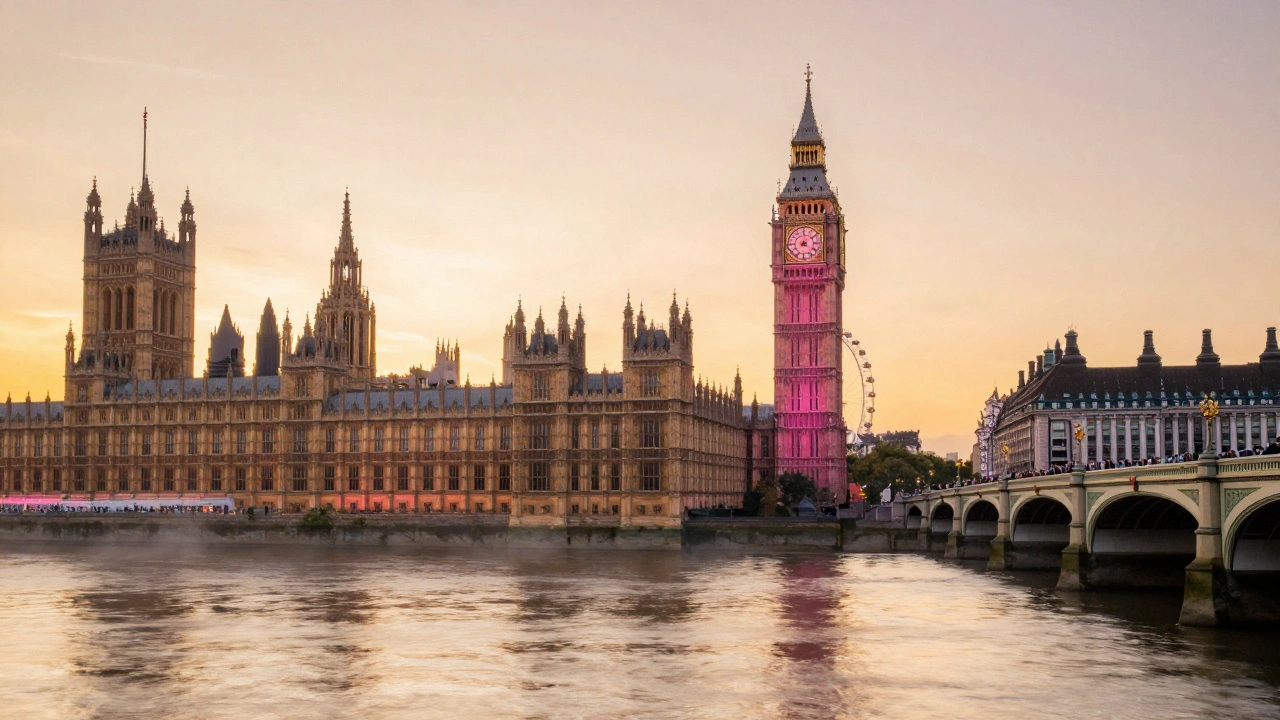
When you're walking along the Thames in London, there’s one building that stops you in your tracks-not because it’s the tallest, but because it’s unmistakable. The Houses of Parliament rise from the riverbank like a Gothic fairy tale made real. If you live in London or have just arrived, you’ve probably seen it from Waterloo Bridge, snapped a photo from Westminster Abbey, or waited for the Tube near St. James’s Park. But how much do you really know about the building that runs the country?
What You’re Actually Looking At
The Houses of Parliament isn’t just one building. It’s a complex of over 1,100 rooms, 100 staircases, and 3 miles of corridors-all packed into a 19th-century Gothic Revival masterpiece. The most famous part? Big Ben. But here’s the twist: Big Ben isn’t the tower. It’s the 13.7-ton bell inside the Elizabeth Tower. The tower itself? That’s the Elizabeth Tower. The whole building? That’s the Palace of Westminster. Locals know this. Tourists? Not so much.
When the original palace burned down in 1834, architects Charles Barry and Augustus Pugin rebuilt it from scratch, using over 2,000 tons of stone and 1,000 tons of cast iron. The clock mechanism? Still hand-wound every week by a team of clockmakers who climb 334 steps. No automation. No apps. Just tradition.
How to Get In (And When to Go)
If you’re a UK resident, you can book a free guided tour through your MP. Yes, really. All you need is a letter from your local MP-most have a simple form on their website. If you’re an international visitor, you can buy tickets online via the UK Parliament website. Book early. Tours sell out weeks ahead, especially in spring and summer.
Best time to visit? Weekday mornings. The building is quieter, the light hits the stained glass just right, and you might catch a glimpse of MPs walking to the Commons chamber. Avoid weekends unless you’re okay with crowds. And skip lunchtime-when the cafeterias open, the queues stretch past the Churchill War Rooms.
Pro tip: If you’re in London on a Thursday, check if the House of Commons is sitting. You can watch debates from the public gallery for free. No booking needed, but arrive before 2:30 PM. The queues form fast. Bring ID. And don’t expect silence. This isn’t a library. It’s politics. Loud, messy, and alive.
What You’ll See Inside
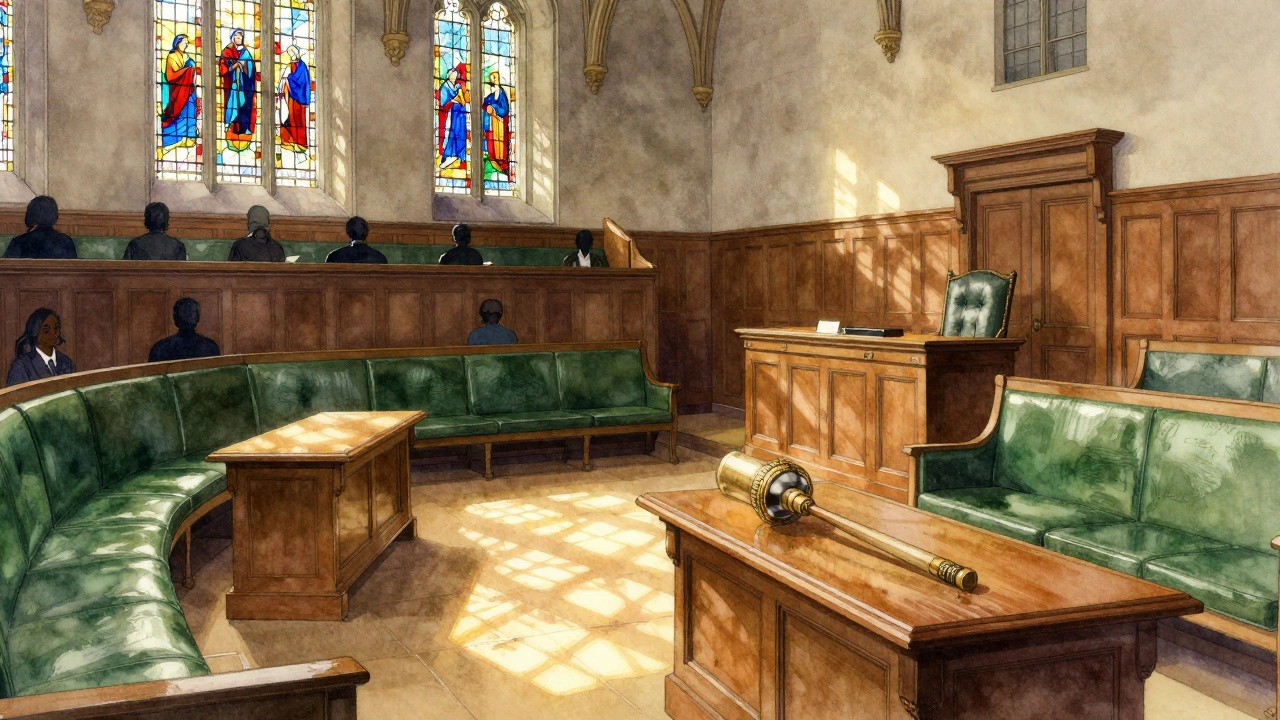
The Commons Chamber is where the real drama happens. Green benches. Wooden desks. The Speaker’s chair, which looks like a throne but isn’t. You’ll see the mace-1.8 meters of gold and silver-resting on the table when Parliament is in session. It’s the symbol of royal authority. If the mace is missing? No business can be done.
Then there’s the Lords Chamber. Purple velvet. Gilded railings. Bishops in robes. It feels more like a cathedral than a legislature. And then there’s Westminster Hall-the oldest part of the building, dating back to 1097. It’s hosted coronation banquets, trials of kings, and lying-in-state for Queen Elizabeth II. The wooden beams are original. The floor? Still covered in centuries of footsteps.
Don’t miss the Royal Gallery. It’s where foreign dignitaries are welcomed. The ceiling? Hand-painted murals showing British military victories. The floor? Marble from the same quarry used for the Taj Mahal.
Where to Stand for the Perfect Photo
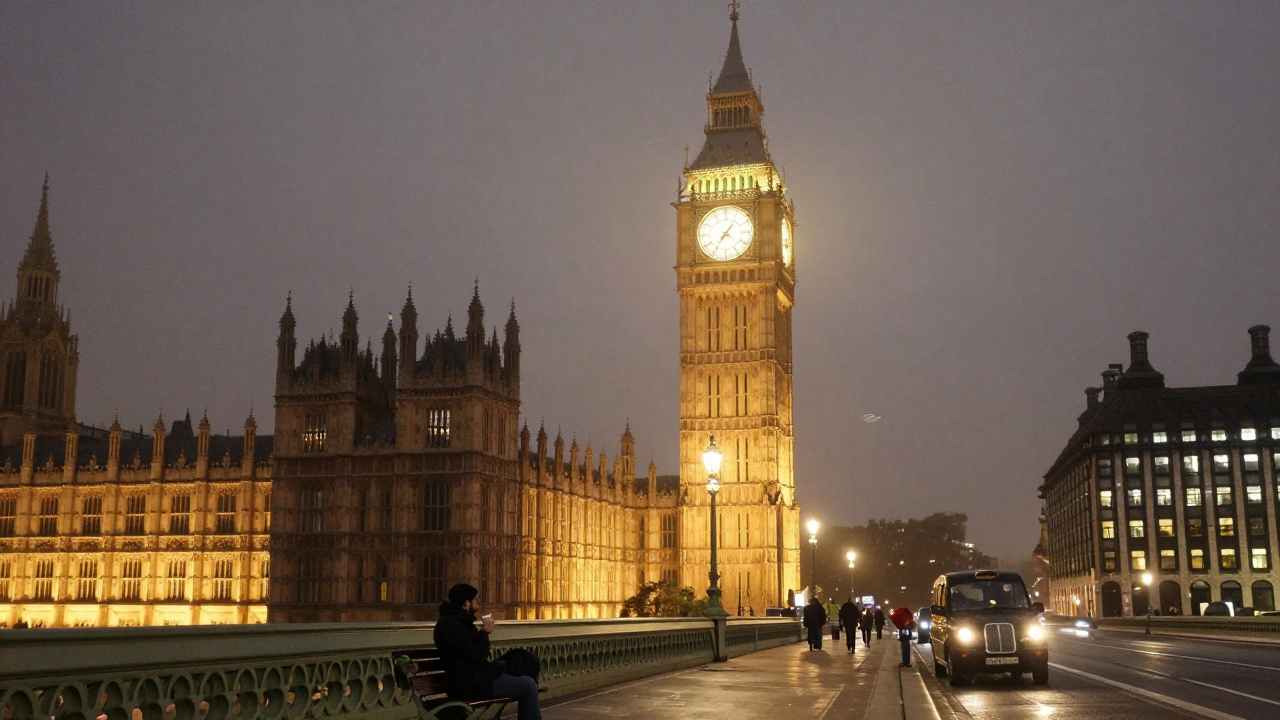
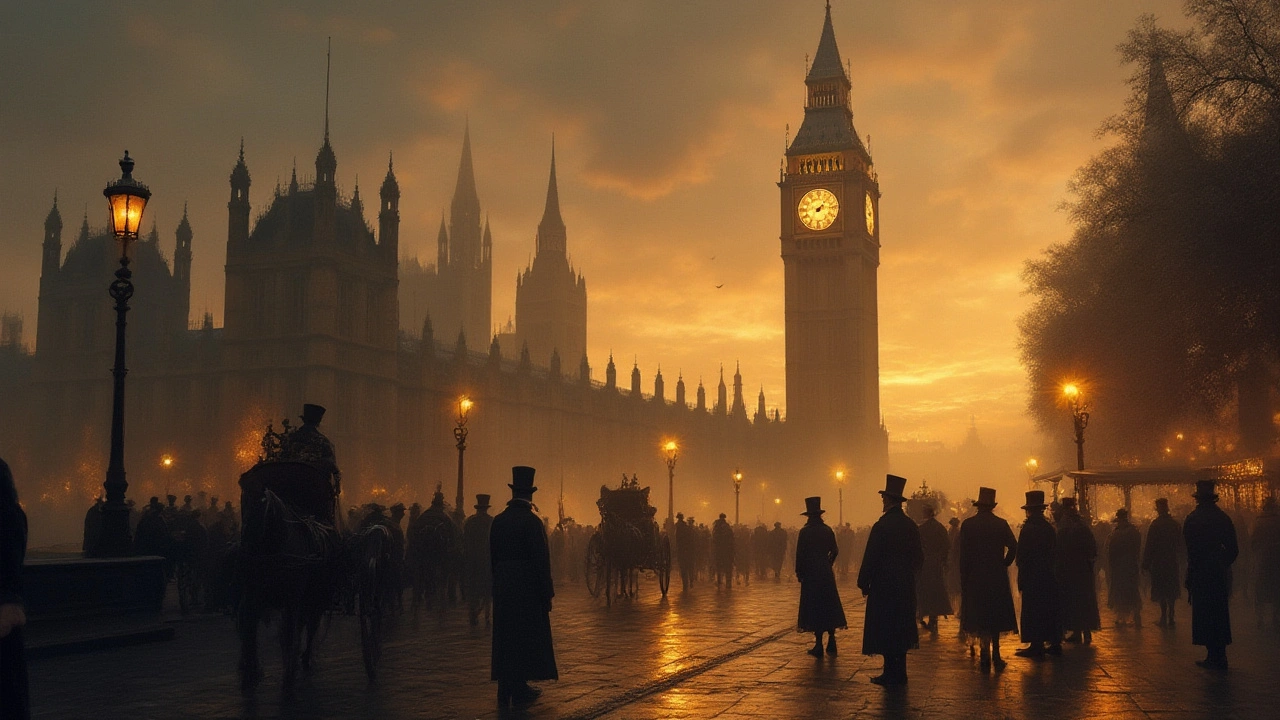
Everyone takes the same photo: Big Ben with the Thames behind it. But the best shot? Walk to the south bank of the river, past the London Eye, and turn left toward the Jubilee Gardens. From there, you get the full facade-clock tower, spires, and the river all in one frame. The golden hour between 4 and 5 PM in summer turns the stone pink. In winter, the lights come on just after dusk, and the whole building glows like a candle in the fog.
Want to avoid crowds? Head to Lambeth Bridge. Fewer people. Better angle. And you can grab a coffee from Barista on the bridge, then sit on the bench and watch MPs arrive in black taxis.
What to Do Nearby
The Houses of Parliament don’t exist in a vacuum. They’re part of London’s political heartbeat. Right next door? Westminster Abbey. Go early. Lines form by 8:30 AM. The abbey’s been crowning kings since 1066. The Poets’ Corner? Walk slowly. You’ll spot Chaucer, Dickens, and Stephen Hawking.
Across the road? St. Margaret’s Church. Free entry. Quiet. The stained glass windows show scenes from the life of the Virgin Mary-and the same ones that inspired the Queen’s coronation gown.
For lunch? Head to The Churchill Arms in Kensington. Yes, it’s a pub. But it’s also a flower shop. And it’s where MPs go after votes to unwind. Try the fish and chips. They use cod from the North Sea. The chips? Hand-cut. The salt? Maldon.
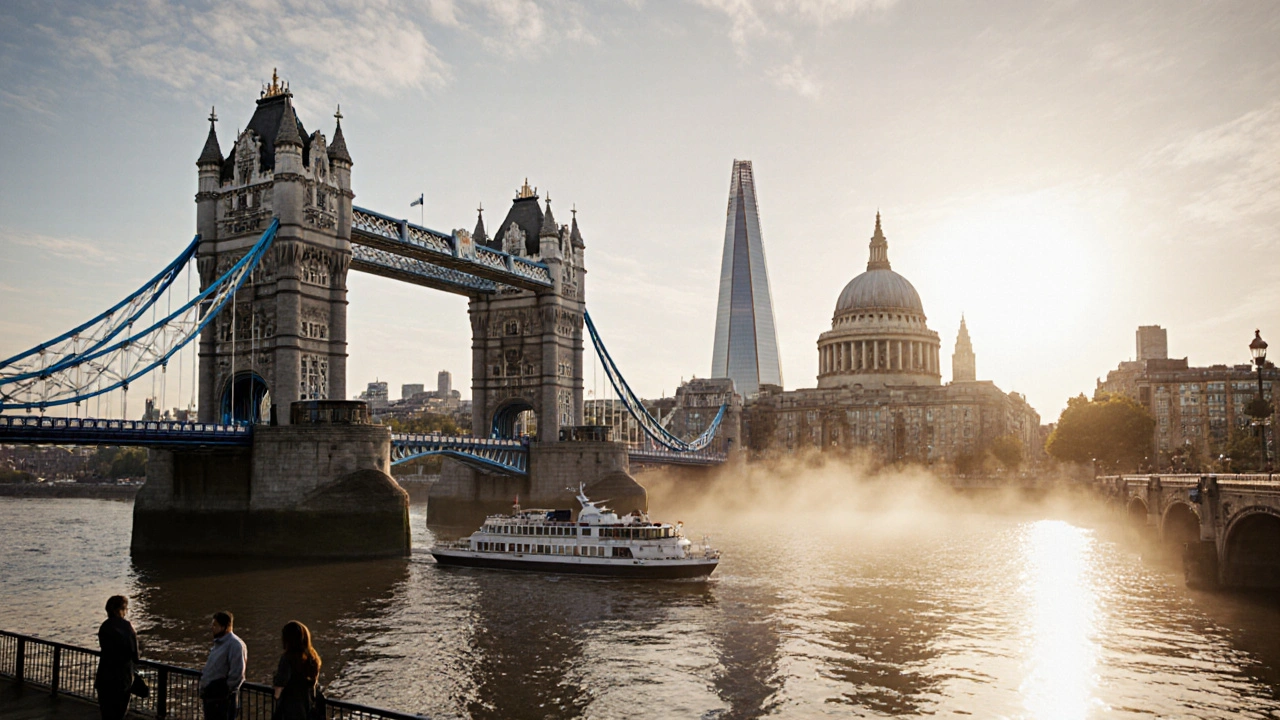
And if you’re staying in London, walk the Thames Path. From Tower Bridge to Westminster, it’s a 6-mile stretch of history, street musicians, and ice cream vans. In spring, the cherry blossoms line the path near Millbank. In autumn, the leaves turn gold and fall right onto the cobblestones near the Houses.
What Most Tourists Miss
There’s a small plaque near the north entrance. It reads: “Here stood the original Palace of Westminster, destroyed by fire in 1834.” Most people walk past it. But if you stop, you’ll see the exact spot where the royal court once dined. Where Henry VIII held his court. Where Thomas More was arrested.
And the clock tower? It doesn’t chime every hour. It chimes the Westminster Quarters-a tune composed in 1793. It’s the same melody played by Big Ben, but also by the clock at the Royal Observatory in Greenwich. You hear it on the radio every morning on BBC Radio 4. If you live in London, you’ve heard it a thousand times without knowing.
There’s also a secret tunnel beneath the building. It was used during WWII to move MPs safely between the Houses and the war rooms. No one’s allowed down there now. But if you ask nicely during a guided tour, the guide might point to a hatch in the floor near the Members’ Lobby. That’s the entrance.
Why This Matters to Londoners
The Houses of Parliament isn’t just a landmark. It’s the engine room of the UK. It’s where laws are made that affect your bus routes, your taxes, your NHS appointments, and whether your local pub can stay open past 11 PM. It’s where debates about climate change, housing, and education happen-sometimes with tears, sometimes with shouting.
For Londoners, it’s not just history. It’s daily life. You pass it on your way to work. You hear the chimes while making tea. You see the flags change when Parliament is in session. And when it’s not? The building feels quiet, like it’s waiting.
Visiting isn’t about ticking a box. It’s about understanding the place you live in-or are visiting. This isn’t just stone and steel. It’s centuries of power, protest, and policy. And it’s still working.
Can I visit the Houses of Parliament for free?
Yes, if you’re a UK resident, you can book a free guided tour through your Member of Parliament. International visitors pay a fee-currently £26.50 for adults. Children under 16 get in free with a paying adult. There’s no charge to watch debates from the public gallery, but you must arrive early and bring photo ID.
Is Big Ben the name of the tower?
No. Big Ben is the nickname for the 13.7-ton bell inside the Elizabeth Tower. The tower itself was renamed in 2012 to mark Queen Elizabeth II’s Diamond Jubilee. Before that, it was just called the Clock Tower. Many locals still call it Big Ben out of habit, but technically, it’s incorrect.
When is the best time to see the Houses of Parliament lit up?
After dusk, between 5 and 7 PM in winter, the building is softly illuminated. The best view is from the south bank of the Thames, near the London Eye. In summer, the lights come on later, around 9 PM. Avoid midday-sun glare washes out the details. The golden hour just before sunset is ideal for photos.
Can I walk inside the building without a tour?
No. The Houses of Parliament are a working government building. You must join a guided tour or attend a debate in the public gallery. There are no public walkways through the corridors. Security is tight. Bags are checked. Phones must be switched off in the chambers.
Are there any nearby places to eat after a tour?
Yes. Just across the road, The Churchill Arms in Kensington offers traditional British food with a floral twist. For something quicker, St. Stephen’s Café inside Westminster Abbey serves excellent scones and tea. If you’re near Whitehall, Barbican Kitchen has hearty pies and craft ales. And if you’re walking along the river, Waterside Café at the London Eye has outdoor seating with a direct view of the Houses.
Rachel Neiman
January 16, 2026 AT 14:17So you’re telling me Big Ben isn’t the tower? I’ve been saying it wrong my whole life and now I feel like a tourist in my own country. Also, the fact that the clock is still hand-wound? That’s insane. We automate everything and they’re out here keeping history alive like it’s a damn ritual. Respect.
And that secret tunnel? I’m not even mad, I’m impressed. This place is basically a time machine with security checkpoints.
Andy Haigh
January 16, 2026 AT 19:30Westminster is the last bastion of Western civilization before the woke mob takes over the entire globe. That mace? Symbol of sovereignty. That bell? The heartbeat of a free people. The fact that you need an MP to get in? That’s not bureaucracy-that’s meritocracy. The public gallery? That’s where the real people speak while the elites in the chamber scream into the void. And the tunnel? Probably where they hid the original Constitution when the EU came sniffing.
They don’t teach this in schools anymore. They teach gender pronouns and climate guilt. But the stones remember. The stones always remember.
Lydia Huang
January 18, 2026 AT 19:28OMG I JUST LEARNED THAT BIG BEN ISN’T THE TOWER 😱 I’M SO EMBARRASSED I’VE BEEN SAYING IT WRONG FOR 10 YEARS 😭 But now I’m obsessed-hand-wound clock?? 334 steps?? I’m booking a flight ASAP 🇬🇧✈️💖 And the flower pub?? I NEED TO DRINK TEA WHERE MPs UNWIND 😍 #WestminsterVibes #HistoryIsCool #LondonIsMagic
Cindy Pino
January 20, 2026 AT 04:17Of course the building is still standing. The same bloodline that built it still runs the country-quietly, efficiently, without the noise of democracy’s latest circus. The public gallery? A performance for tourists. The real decisions? Made in rooms with no cameras, no transcripts, no oversight. The mace? A prop. The clock? A distraction. They let you see the stained glass so you forget the rot beneath the marble.
And that plaque? It’s not a memorial. It’s a warning. The fire didn’t destroy the palace-it purified it. What you see now? A stage. The real power? It never left the basement.
Nicholas Simbartl
January 20, 2026 AT 23:09You know, I spent three weeks in London last year just walking around the Thames, staring at the Houses of Parliament, trying to feel what it meant to be part of something older than nations, older than ideologies. I sat on that bench near Lambeth Bridge for two hours one evening, watching the light hit the spires just right, and I swear to god, I heard the echo of a thousand debates-arguments over war, over bread, over who gets to live and who gets to be forgotten. And then a guy walked by with a dog and said, ‘Bit chilly, innit?’ and it all snapped back. That’s the thing about history-it doesn’t care if you’re moved by it. It just keeps going. The bell still chimes. The mace still rests. The corridors still creak. And we? We’re just passing through. But if you listen close enough, the building whispers back.
And that’s why I’m going back next spring. Even if it’s just to sit there again. And wait.
nested bean
January 22, 2026 AT 08:11Love this. I went last year and didn’t know about the Westminster Quarters being the same as Greenwich’s. I thought I was just hearing a clock. Now every time I hear it on the radio, I pause. It’s like a little piece of London is in my kitchen.
Also, the fish and chips at The Churchill Arms? Game changer. Best I’ve ever had. And yes, the flowers are real. The owner’s a sweet old bloke who remembers everyone’s name. Go for the food, stay for the vibe.
Laura Szabó
January 24, 2026 AT 00:39Just wanted to say thank you for writing this. I’m not from the UK but I’ve been living here for five years and I never realized how much this building is woven into daily life. I hear the chimes every morning while making coffee and never thought about what they meant. Now I do. And it makes me feel connected in a way I didn’t expect.
Carl Grann
January 25, 2026 AT 04:19Hand-wound clock? That’s not tradition-that’s negligence. Someone should’ve automated it decades ago. And the ‘secret tunnel’? Probably just a maintenance shaft they’re romanticizing. The mace? A prop for tourists who don’t understand how parliamentary systems actually work. You think the Queen’s coronation gown inspired the stained glass? No. It was the other way around. The glass was designed to glorify the Crown, not the other way around. And don’t get me started on the ‘cultural heartbeat’ nonsense. This building is a museum with voting rights. It’s not alive-it’s fossilized.
John Dickens
January 26, 2026 AT 03:41Big Ben isn’t the tower? Yeah, I’ve been correcting people about that since 2012. Most don’t care. But the real magic? The fact that you can walk into the public gallery and hear actual MPs yelling at each other about healthcare funding while a guy in the back is eating a sandwich. That’s democracy. Messy. Loud. Human.
And the tunnel? Don’t believe everything your tour guide says. I asked a former parliamentary staffer once-he just laughed and said, ‘We’ve got a basement, not a secret passage. But hey, if it makes the tourists feel like spies, let ‘em dream.’