Top Restaurants with a Rich Culinary History in London
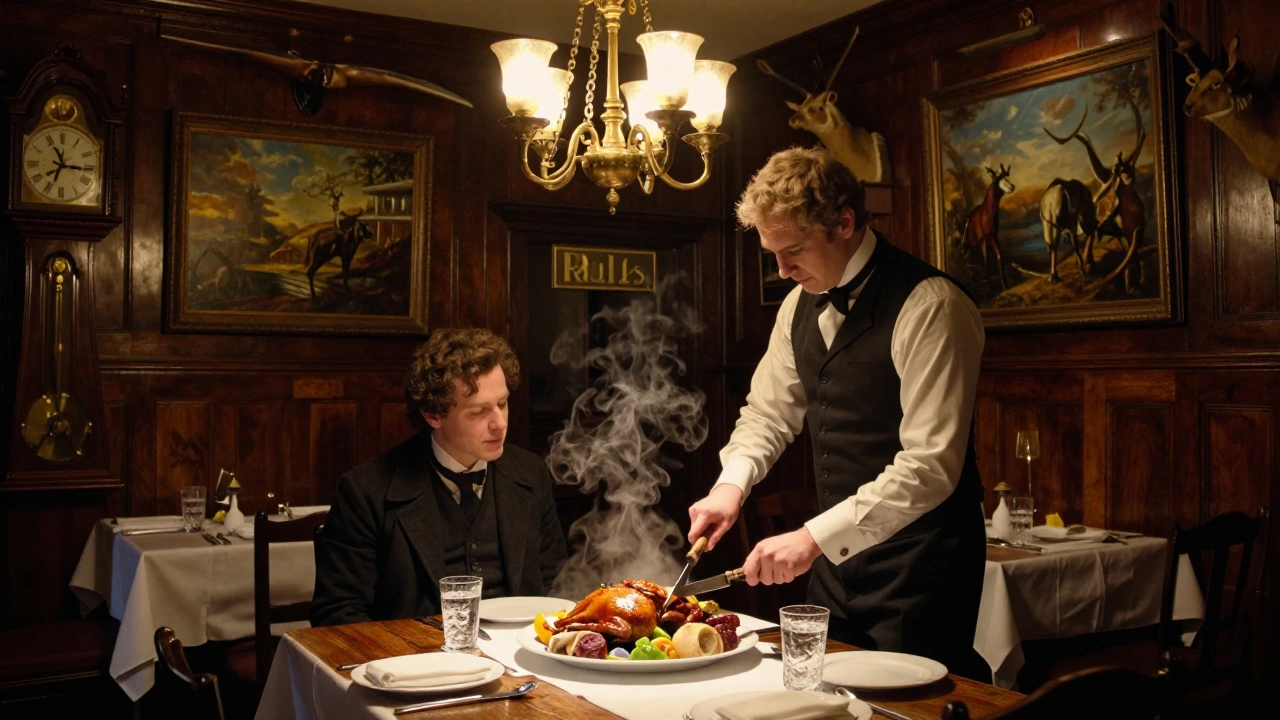
London’s food scene isn’t just about trendy brunch spots or fusion pop-ups-it’s built on centuries of tradition, empire, migration, and quiet resilience. While many visitors head straight for the Tate Modern or the London Eye, some of the city’s most powerful stories are served on a plate. From roast beef that’s been carved since the 1700s to pies that fed dockworkers before the Blitz, London’s historic London restaurants are where history doesn’t just live-it eats.
Rules of the Game: What Makes a Restaurant "Historic" in London?
Not every old pub counts. A true historic restaurant in London has more than just peeling wallpaper and a creaky floor. It’s got continuity-same family, same recipes, same location for generations. It’s survived wars, economic crashes, and food fads. It’s not a museum. It’s still cooking.
Take Rules Restaurant a dining institution since 1798, located in the City of London, known for its classic British dishes like steak and kidney pudding and its strict no-reservations policy. It opened when George III was on the throne, and it still serves the same thick gravy and suet crusts today. No vegan options. No gluten-free bread. Just honest, unapologetic British cooking. You don’t go to Rules to try something new-you go to taste something that hasn’t changed in 226 years.
Compare that to The Ivy a West End dining landmark since 1917, famous for its Art Deco interior and celebrity clientele, known for its British comfort food with a refined twist. It’s not as old as Rules, but it shaped modern London dining. Film stars, politicians, and poets ate here in the 1920s. Today, it’s still a place where the waiters remember your name-and your usual order.
1. Rules Restaurant (Est. 1798) - The Grandfather of British Dining
On Maiden Lane near Covent Garden, Rules is the oldest restaurant in London still operating in its original building. It’s tucked away, almost hidden, but its reputation is loud. The walls are lined with hunting trophies, the ceiling is painted with cherubs, and the menu hasn’t changed much since Queen Victoria was a girl.
Order the game pie-a layered mix of pheasant, rabbit, and venison in a buttery crust. It’s served with mashed potatoes and a red wine jus that’s been simmering for hours. The wine list? Mostly British and French. No Californian pinot here. The staff wear waistcoats. The clocks still tick.
It’s not fancy. It’s not Instagrammable. But it’s real. Locals come here for birthdays, anniversaries, and quiet Sundays. Tourists often miss it. Those who find it? They never forget it.
2. The Ivy (Est. 1917) - The Glamour of the Roaring Twenties
When The Ivy opened in 1917, London was still recovering from World War I. The founders, a Greek immigrant and a British businessman, didn’t just want to serve food-they wanted to create a space where people could escape. The result? A dining room that looked like a Parisian salon, with velvet curtains, mirrored walls, and a ceiling painted like a starry night.
It became the place to be. Winston Churchill ate here. Noël Coward wrote plays in the back room. In the 1980s, it was the spot for pop stars and journalists. Today, it’s still a magnet for A-listers-but the food hasn’t lost its soul.
The truffle scrambled eggs are legendary. So are the chicken liver parfait and the British beef Wellington, served with a side of seasonal greens. The service? Polished but not stiff. The atmosphere? Quietly electric. It’s the kind of place where you feel like you’ve stepped into a movie-but one where the food is just as good as the lighting.
3. Simpson’s-in-the-Strand (Est. 1828) - The Home of the British Chop
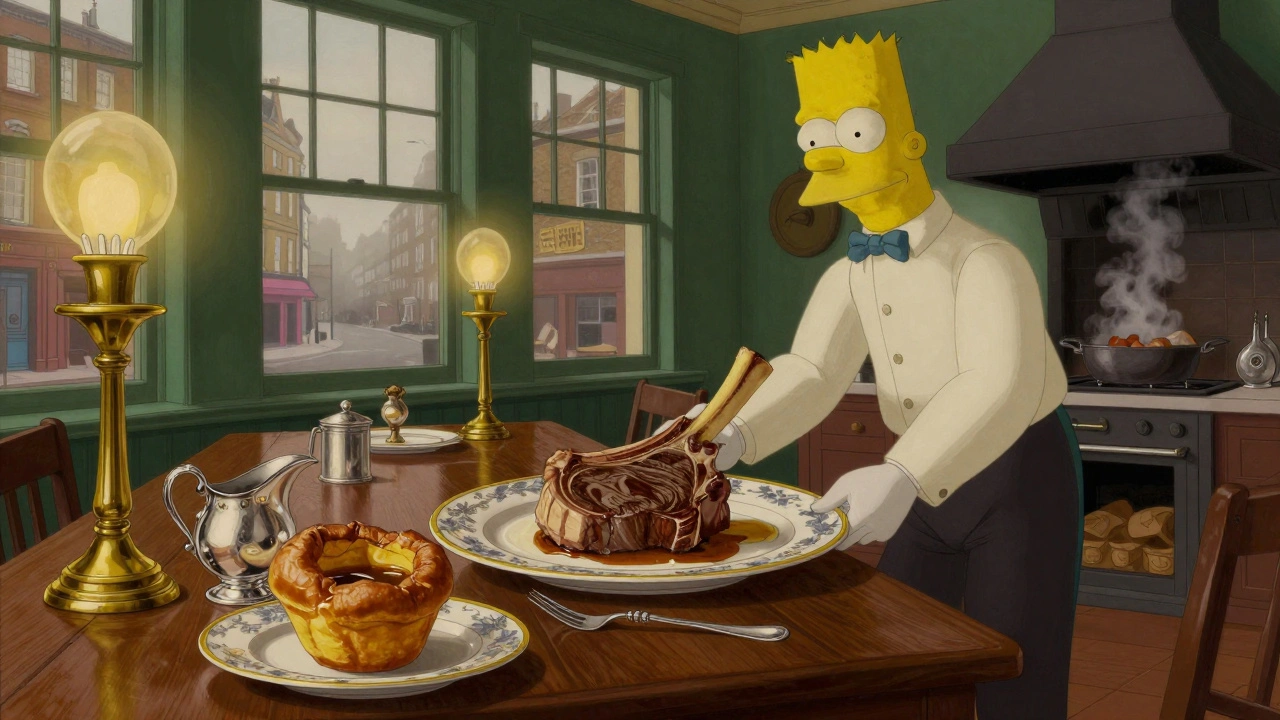
Walk into Simpson’s-in-the-Strand and you’re instantly back in 19th-century London. The long, mahogany tables, the gas lamps, the waiters in white jackets-it’s like walking into a Dickens novel. But this isn’t a stage set. It’s a working restaurant that’s been feeding Londoners for nearly 200 years.
It’s famous for one thing: the chop. Not just any chop. A 12-ounce, bone-in, dry-aged English beef chop, served with a side of Yorkshire pudding and a jug of gravy. It’s cooked on a wood-fired grill that’s been in the same spot since 1890. The kitchen still uses the same cast-iron pans. The same salt. The same pepper.
The building itself has survived the Blitz, two world wars, and a fire in 1974. It was restored to its original glory in the 1990s. Today, it’s still the go-to for business lunches, old-school Londoners, and curious visitors who want to taste what a Victorian gentleman ate after a long day at the Admiralty.
4. Le Bouchon du Marais (Est. 1867) - A Slice of Paris in Soho
London’s French influence didn’t start with the Eiffel Tower. It started with bakers, butchers, and wine merchants who came over after the French Revolution. One of the best surviving examples is Le Bouchon du Marais a traditional French bistro in Soho, operating since 1867, known for its coq au vin, escargots, and authentic Parisian ambiance.
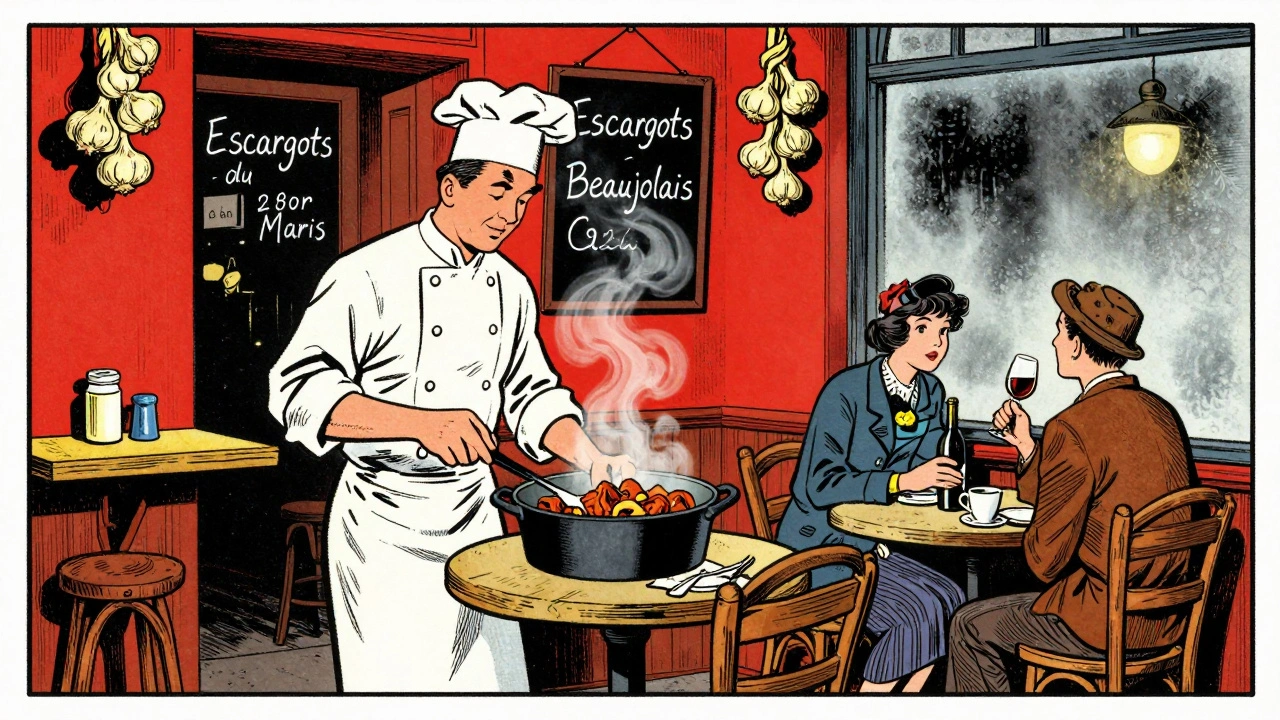
It’s tucked into a narrow alley in Soho, its windows fogged with steam, the smell of garlic and red wine drifting out onto the street. The menu is handwritten on a chalkboard. The wine is poured from bottles with no labels. The coq au vin simmers for 12 hours. The escargots are served with butter, parsley, and a side of crusty baguette-just like in Lyon.
It’s not fancy. It’s not loud. But it’s one of the few places in London where you can still eat French food the way it was meant to be eaten-slow, simple, and with a glass of Beaujolais.
5. The George (Est. 1760) - A Coaching Inn Turned Culinary Landmark
Just outside the City, in the village of Southwark, stands The George-a coaching inn that once welcomed travelers on their way to Dover. It’s been a pub, a tavern, a brothel, and a restaurant. Today, it’s one of London’s most authentic historic eateries.
The building has timbers from the 1500s. The cellar is original. The menu? British classics with a twist. Think stargazy pie (a Cornish fish pie with herring heads poking through the crust), lamb and mint sauce, and treacle tart with clotted cream.
It’s not on every tourist map. But locals know it. The staff have been here for decades. The owner still personally selects the meat. The kitchen opens at 11 a.m. sharp and closes when the last customer leaves.
Why These Places Still Matter in 2026
London has over 15,000 restaurants. Most of them open and close in a year. But these five? They’ve lasted because they didn’t chase trends. They held onto craft. They listened to the city’s rhythm.
In a world of delivery apps and plant-based everything, they remind us that food isn’t just fuel-it’s memory. A slice of game pie at Rules isn’t just dinner. It’s a connection to the men and women who ate the same thing before the Great Fire, before the Empire, before the Tube.
These restaurants aren’t relics. They’re living archives. And if you want to taste London’s soul, you don’t need to visit Buckingham Palace. You just need to sit down, order the chop, and wait for the gravy to arrive.
What to Expect When You Visit
- No reservations? No problem. Rules doesn’t take them. Arrive early or be prepared to wait.
- Formal dress? Not required, but smart-casual is appreciated. No flip-flops. No hoodies.
- Prices? Expect £30-£70 per person. It’s not cheap-but you’re paying for history, not just food.
- Best time to go? Lunchtime on a weekday is quieter. Weekend evenings are lively but busy.
- What to drink? Stick to British ales, red wines, or sherry. Skip the cocktails. This isn’t the place for mixology.
How to Plan Your Historic Dining Route
- Start at Rules for lunch-its location is perfect for a post-visit walk through Covent Garden.
- Take the Tube to Westminster and walk to Simpson’s-in-the-Strand for a late afternoon chop.
- Head to Soho for dinner at Le Bouchon du Marais-it’s open until midnight.
- If you’re still hungry, end at The George for a nightcap and a slice of treacle tart.
It’s a full day of food, but it’s also a journey through London’s soul.
Are these historic restaurants still open during public holidays in London?
Yes, most of them are open, but with limited hours. Rules, Simpson’s, and The George typically open on Christmas Day and Boxing Day for lunch, but close on New Year’s Day. The Ivy usually opens on holidays but requires advance booking. Always call ahead-these places don’t rely on online calendars.
Can I visit these restaurants without being a tourist?
Absolutely. Locals have been dining at these places for generations. Rules has regulars who come every Sunday. Simpson’s is a favorite among City workers. Le Bouchon du Marais is packed with French expats and British food lovers. These aren’t tourist traps-they’re community institutions. You’re welcome to join.
Are these restaurants child-friendly?
Rules and Simpson’s are not ideal for young children-they’re quiet, formal, and slow-paced. The Ivy allows children but doesn’t have a kids’ menu. Le Bouchon du Marais and The George are more relaxed and welcome families. If you’re bringing kids, The George is your best bet.
Do any of these restaurants offer takeaway or delivery?
None of them do. That’s part of the point. These restaurants are about the experience-the atmosphere, the service, the ritual of sitting down and being served. You can’t replicate that with a delivery app. If you want the food, you have to go there.
Is there a dress code at these historic restaurants?
Smart-casual is the standard. No shorts, no trainers, no baseball caps. At Rules and Simpson’s, jackets are common among men. The Ivy has a slightly more polished vibe-think blazers and dresses. Le Bouchon and The George are more relaxed. When in doubt, err on the side of neat.
Next Steps: Where to Go After
If you’ve tasted history at these five spots, you might want to keep going. Visit the London Food Market at Borough Market for traditional pies and pickled eggs. Stop by St. John for nose-to-tail British cooking. Or head to Fortnum & Mason for a tea and a slice of fruitcake.
London’s culinary history isn’t locked in glass cases. It’s in the steam rising from a pot of stew, the clink of a knife on a porcelain plate, the quiet pride of a chef who’s been making the same dish for 40 years.
You don’t need a guidebook to find it. You just need to sit down, order something old, and let the city feed you.