Hidden Gems in the World of Tea: Rare Brews You Must Try in London
London’s tea culture isn’t just about Earl Grey and PG Tips. Beneath the surface of the city’s countless cafés and afternoon tea rituals lies a quiet revolution-tea lovers are rediscovering rare, forgotten, and deeply regional brews that have nothing to do with the standard tea bag. If you’ve only ever sipped from a porcelain cup at Harrods or Fortnum & Mason, you’re missing out on a world of flavour that’s been hiding in plain sight: in back-alley tea houses in Shoreditch, family-run importers in Camden, and even the back shelves of independent grocers in Peckham.
Tea That Doesn’t Come from Assam or Ceylon
Most people think of tea as black, green, or herbal. But the world’s tea traditions stretch far beyond India and China. In London, you can now find Yerba Mate from Argentina, served hot in ceramic gourds at The Tea Room in Notting Hill-no sugar, no milk, just the earthy, grassy punch that Argentinians drink all day. It’s caffeine-rich, packed with antioxidants, and pairs surprisingly well with a slice of sourdough from Bread Ahead.
Then there’s Kombucha, but not the fizzy supermarket kind. In Hackney, Tea & Kombucha Lab ferments their own using organic Chinese oolong and local elderflower. Their batch aged in oak barrels for 45 days tastes like a cross between cider and a wild forest-slightly tart, subtly sweet, and alive with probiotics. It’s not tea in the traditional sense, but it’s the kind of drink Londoners who’ve moved beyond coffee are now ordering by the pint.
The Forgotten Tea of the British Isles
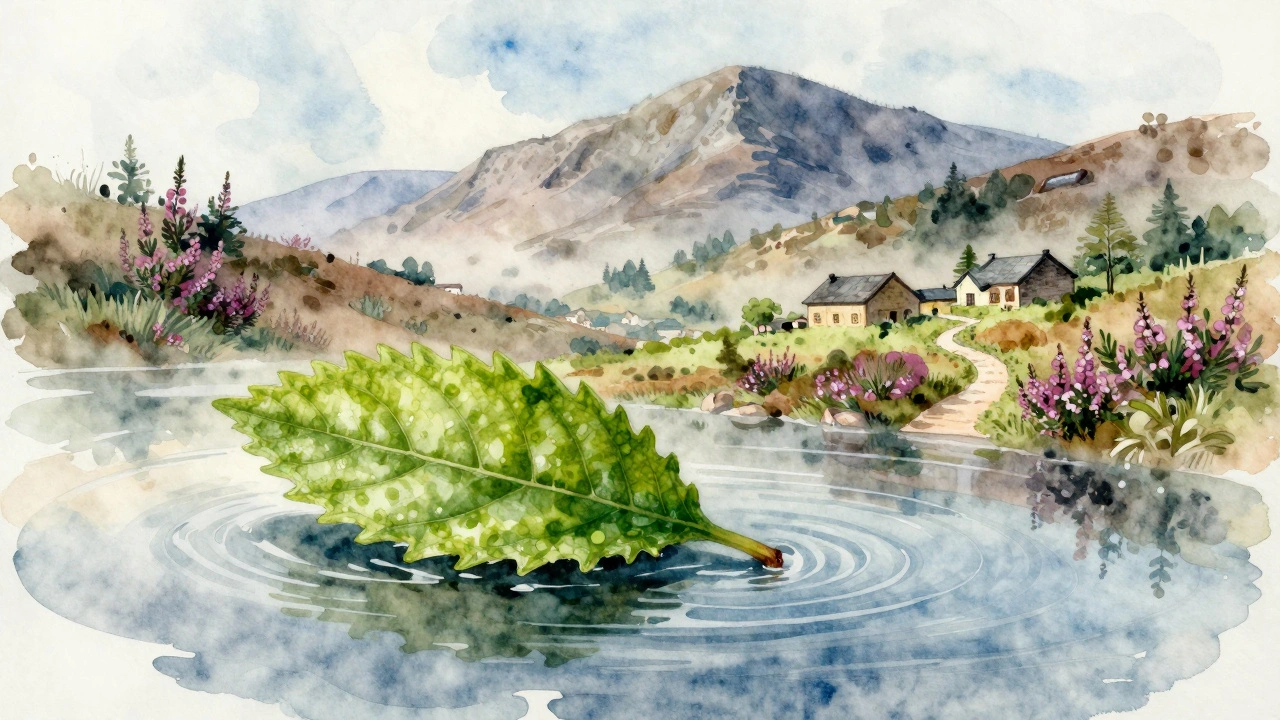
Before tea became an imported luxury, the British drank what grew around them. In the 18th century, people in the Lake District and the Scottish Highlands brewed Heather Tea from the flowering tops of wild heather. Today, Heather Honey & Tea Co. in Edinburgh ships small batches to London, and you can find them at Borough Market on Saturdays. Brew it like black tea-three minutes, no milk-and you’ll taste honeyed smoke, a hint of lavender, and the crispness of a Highland breeze.
Even more obscure is Nettle Tea, once a staple in rural English homes for its anti-inflammatory properties. Now, Wild Tea Co. in Richmond harvests young nettle leaves from Hampstead Heath and dries them in the sun. It’s not bitter like you might expect-it’s clean, slightly metallic, and calming. Many Londoners with anxiety or joint pain have switched from chamomile to nettle tea, especially during the damp winter months.
Tea from the Edge of the World
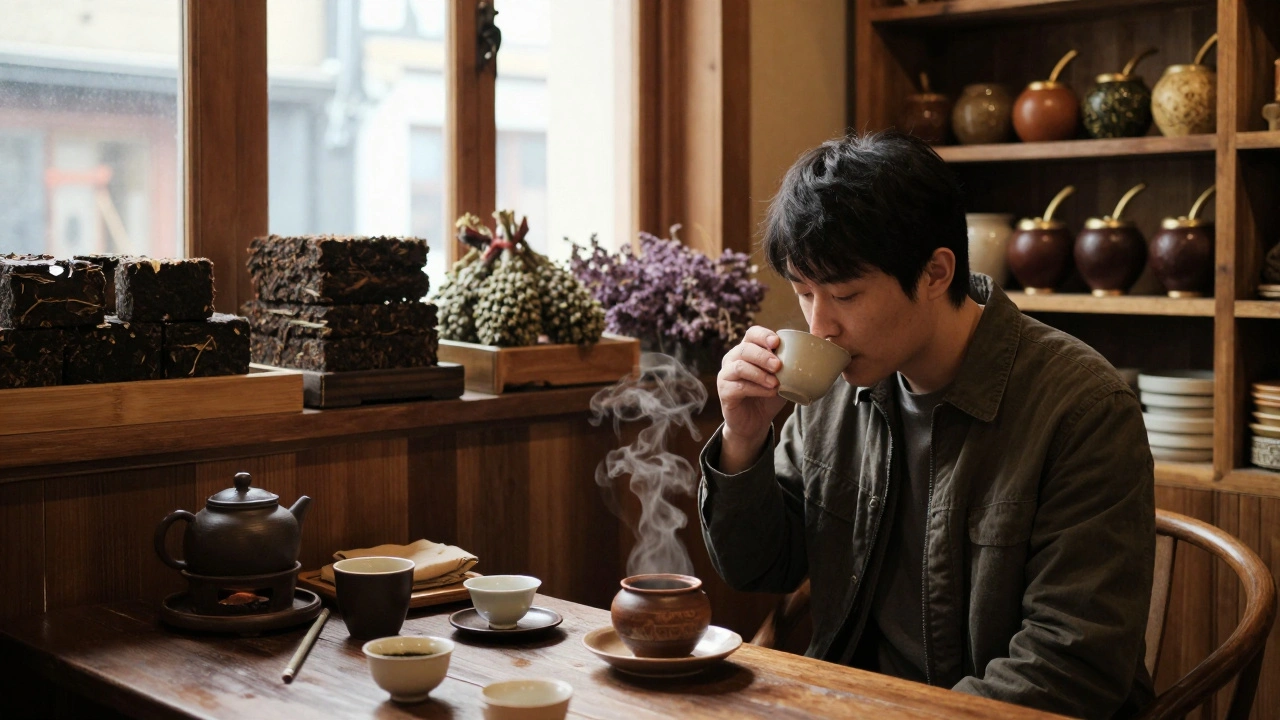
Most tea shops in London stock Japanese matcha and Taiwanese oolong. But the real treasures are the ones you have to hunt for. In a tucked-away unit in Walthamstow, Tea from the Edge imports Shanxi Brick Tea from China’s northern mountains. It’s compressed like a dark chocolate bar, aged for years, and brewed in a clay pot. The flavour? Smoky, mushroomy, almost like lapsang souchong but deeper-like drinking a forest after rain. It’s sold by the gram, and a single brick lasts six months if you’re careful.
Then there’s Red Bush Tea (Rooibos) from South Africa, but not the kind you get at Tesco. Tea & Co. in Notting Hill sources single-origin, hand-processed rooibos from the Cederberg region. It’s sweeter, less astringent, and has a natural vanilla note. It’s caffeine-free, perfect for evening sipping, and the shop even offers a tasting flight with wild honey from the Lake District.
Where to Find These Teas in London
You won’t find these brews in chain cafés. You need to know where to look:
- Tea & Tonic (Clerkenwell): Specialises in rare Chinese pu-erh and fermented teas. Ask for the 2015 aged sheng-only 12 tins left.
- The London Tea Company (Soho): Offers monthly tea subscriptions with obscure varieties like Guizhou White Hair Silver Needle-a delicate white tea from a single mountain village.
- Camden Tea House: Run by a retired Iranian tea master, they serve Saffron Chai made with real Persian saffron, cardamom from Oman, and raw honey from Kent. It’s £8 a cup, but it’s the only place in London where you can taste chai the way it’s made in Isfahan.
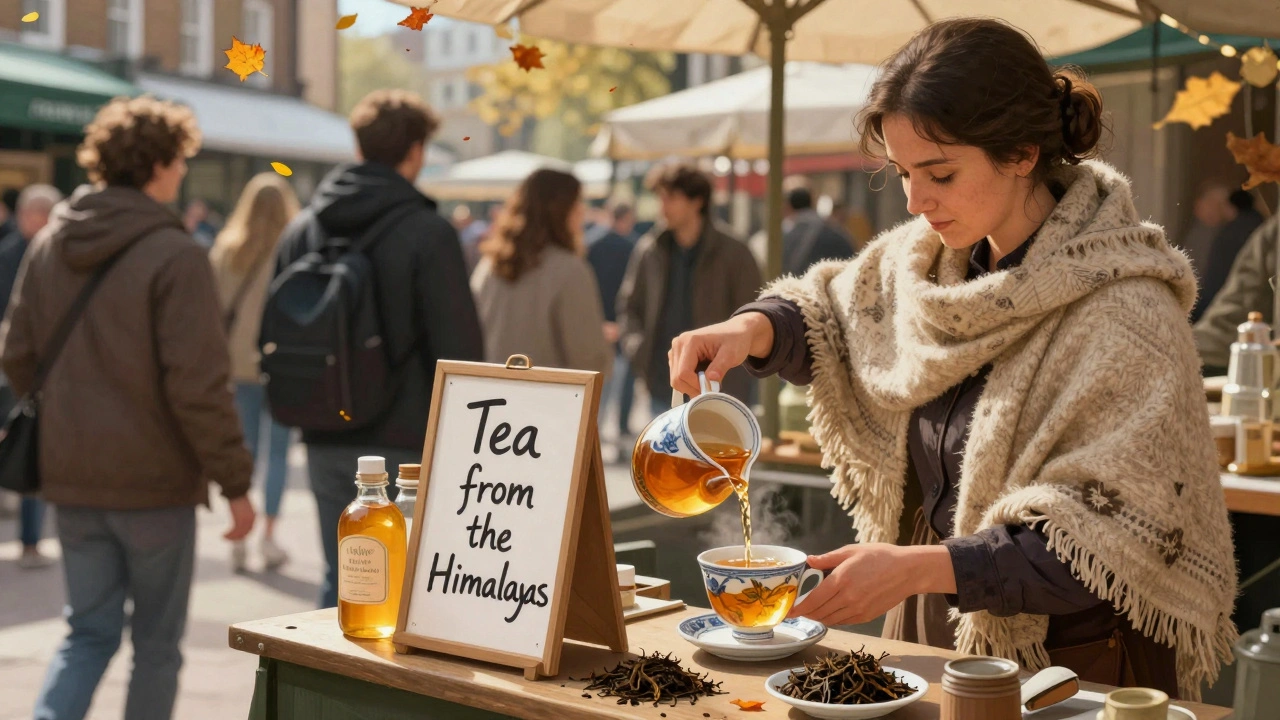
- Borough Market (Saturday mornings): Look for the stall with the handwritten sign: ‘Tea from the Himalayas’. They sell Khukuri Rum Tea-black tea leaves soaked in Nepalese rum and sun-dried. It’s strong, sweet, and smells like a winter campfire.
How to Brew Them Right
These teas aren’t meant for the microwave. Each needs its own method:
- Brick teas: Break off a walnut-sized piece. Boil water in a clay pot, pour over, and steep for 5 minutes. Strain through a fine sieve.
- Heather tea: Use 1 tsp per cup. Water at 90°C, steep 4 minutes. No milk-it masks the floral notes.
- Nettle tea: Steep for 7 minutes. Add a slice of lemon if you like brightness. Best drunk warm, not hot.
- Kombucha: Serve chilled. Don’t shake the bottle-it’s alive. Pour gently into a glass.
Invest in a gooseneck kettle. You don’t need a £300 one, but a £50 Breville with temperature control makes a difference. Water too hot? You’ll burn delicate white teas. Too cool? You won’t extract the depth of a pu-erh.
Why This Matters in London
London is a city of immigrants, and tea is one of the few things that crosses borders without losing its soul. A Somali woman in Peckham makes her own Qishr-a spiced coffee-tea hybrid with ginger, cardamom, and crushed cinnamon. A Vietnamese expat in Wembley sells hand-rolled Trà Sâm Đất (earth ginseng tea) from her kitchen. These aren’t trends. They’re traditions, quietly kept alive.
When you sip a cup of Shanxi brick tea in a quiet corner of a Shoreditch café, you’re not just drinking tea. You’re tasting a thousand miles of mountain trails, centuries of trade, and the quiet resilience of people who brought their rituals here-and kept them alive.
Next time you’re tempted to grab another Earl Grey from the supermarket, pause. Walk into a tea shop that doesn’t have a logo on the window. Ask the person behind the counter: ‘What’s something you’ve never seen anyone else drink here?’ They’ll show you something you didn’t know you were missing.
Where can I find rare teas in London?
Look beyond chain cafés. Try Tea & Tonic in Clerkenwell for aged pu-erh, The London Tea Company in Soho for monthly rare tea subscriptions, Camden Tea House for Persian-style saffron chai, and Borough Market on Saturdays for Himalayan and Nepalese brews. Independent grocers in Peckham and Walthamstow also stock small-batch teas imported directly by artisans.
Is there tea made in the UK?
Yes. While the UK doesn’t grow Camellia sinensis commercially, there are herbal teas made from native plants. Heather tea from the Scottish Highlands, nettle tea harvested from Hampstead Heath, and even wild rosehip tea from the Lake District are all produced by small UK foragers and tea makers. These are sold at farmers’ markets like Borough Market and in independent shops across London.
What’s the most unusual tea available in London right now?
Khukuri Rum Tea from Nepal-black tea leaves soaked in local rum and sun-dried-is arguably the most unusual. It’s sweet, smoky, and has a lingering warmth that feels like a hug in a cup. You’ll only find it at one stall in Borough Market, and it sells out fast. Ask for it by name.
Can I brew these teas with a regular tea bag?
No. Most of these teas are loose leaf, compressed, or fermented in ways that require proper steeping. A tea bag will either under-extract the flavour or release bitter tannins too quickly. Use a infuser basket, a small teapot, or a French press. For brick teas, you need a clay pot and boiling water.
Are these teas expensive?
Some are, but not all. A gram of aged pu-erh might cost £5, but one brick lasts months. Nettle and heather teas cost £6-£8 for 50g-about the same as a good bag of loose leaf. Kombucha from local labs is £4-£6 per bottle. It’s not cheap, but it’s not luxury either-it’s just honest, small-batch tea made with care.
sarah young
December 30, 2025 AT 16:06i just tried nettle tea last week after reading this and wow it’s like drinking fresh air? no joke, my anxiety literally chilled out. also i spelled nettle wrong in my search bar and still found it lol
John Bothman
December 30, 2025 AT 21:10Tea isn’t just a beverage-it’s a metaphysical conduit for cultural memory. The Shanxi brick tea, for instance, isn’t merely fermented; it’s a temporal artifact. Each sip collapses centuries of Silk Road trade, colonial resistance, and quiet perseverance into a single, smoky exhale. We drink tea, yes-but we also drink history, distilled.
mike morgan
December 31, 2025 AT 13:48This article is an absolute disgrace to British heritage. Heather tea? Nettle tea? You’re telling me we’ve abandoned the noble Earl Grey for some hippie foraged weeds? This is what happens when you let immigrants dictate your tea culture. Back in my day, tea was black, strong, and served in a proper cup-not some fermented kombucha nonsense from Hackney. The British Empire built its fortune on tea, not on ‘artisanal’ nonsense from Walthamstow.
And don’t get me started on ‘Khukuri Rum Tea’-that’s not tea, that’s a tax evasion scheme disguised as a beverage. If you want authenticity, drink tea the way it was meant to be drunk: with milk, sugar, and a side of patriotism.
Beth Wylde
January 2, 2026 AT 01:13I love how this post doesn’t just list teas-it honors the people behind them. The Somali woman in Peckham making Qishr, the Vietnamese expat rolling Trà Sâm Đất in her kitchen… these aren’t ‘trends.’ They’re acts of love, quiet resistance, and belonging. Tea becomes sacred when it carries someone’s homeland in every leaf. I’ve started asking baristas, ‘What’s something you grew up with?’ and the stories I’ve heard… I cried once over a cup of jasmine. It wasn’t the tea. It was the memory they shared with me.
Ellen Smith
January 3, 2026 AT 11:44The grammar in this post is atrocious. ‘Tea from the Edge’ is capitalized inconsistently. ‘Bread Ahead’ is not a proper noun in this context. ‘Kombucha’ is misspelled as ‘Kombucha’ in one instance. And the use of em dashes without proper spacing? Unacceptable. Also, ‘it’s’ and ‘its’ are misused three times. I’m disappointed.
Bruce Shortz
January 3, 2026 AT 18:09Man, I went to Camden Tea House last weekend and got the saffron chai. Honestly? Worth every penny. The guy behind the counter didn’t even charge me for the second cup after I told him I was a teacher. Just sat there, sipping, and told me about his time in Isfahan. That’s the kind of stuff you don’t find in Starbucks.
Brenda Loa
January 3, 2026 AT 18:48How dare you call nettle tea ‘calming’? It’s just grass water. And kombucha? It’s just vinegar with delusions of grandeur. You’re not a tea connoisseur-you’re a marketing target.
Zackery Woods
January 4, 2026 AT 03:57Let me break this down for you: every single ‘rare’ tea mentioned here? Controlled by the same three global conglomerates that own Starbucks, Nestlé, and the FDA. They’re seeding these ‘artisanal’ shops to normalize herbal substitutes so they can later patent the genetic strains. That ‘Shanxi Brick Tea’? It’s been genetically modified to mimic the flavor profile of 19th-century Chinese imperial tea-so they can patent it as ‘new.’ And the rum-soaked Nepalese tea? That’s a Trojan horse for alcohol distribution in dry zones. They’re using tea to normalize addiction. Wake up.
Yvonne LaRose
January 4, 2026 AT 18:58Wow. This is exactly the kind of cultural reclamation we need-especially in post-industrial urban centers. The intersection of diasporic knowledge systems, hyper-local foraging practices, and intentional brewing methodologies is a textbook case of decolonizing consumption. I’ve been advocating for tea literacy programs in public libraries since 2020, and this article is a perfect exemplar of the pedagogical potential of embodied tea practices. The use of gooseneck kettles? Non-negotiable. The temperature precision? Essential for polyphenol extraction. And the emphasis on relationality-connecting with the maker? That’s the core of ethical consumerism. We need more of this.
Lisa Kulane
January 5, 2026 AT 14:31Let’s be clear: the British Isles never produced tea. To claim otherwise is revisionist nonsense. These so-called ‘British herbal teas’ are colonial thefts disguised as tradition. The Scottish Highlands did not ‘invent’ heather tea-it was appropriated from indigenous Gaelic practices that were systematically erased. This article romanticizes cultural erasure under the guise of ‘craft.’ You’re not celebrating heritage-you’re commodifying trauma. And the fact that you praise immigrant tea makers while ignoring the British Empire’s role in destroying tea economies across Asia and Africa? That’s not appreciation. That’s hypocrisy.