Hidden Gems in Education: Unique Learning Opportunities Worldwide for Londoners
In London, where the British Museum holds ancient artifacts and the Science Museum sparks curiosity in every child who walks through its doors, it’s easy to assume the best learning happens right here. But some of the most transformative educational experiences aren’t found in lecture halls or online courses-they’re tucked away in quiet corners of the world, waiting for those willing to step off the well-trodden path. For Londoners who’ve seen the Tower Bridge, shopped at Camden Market, and sipped tea in a Notting Hill café, the real surprise isn’t what’s familiar-it’s what’s foreign, unexpected, and deeply human.
Finland’s Forest Classrooms: Learning Without Walls
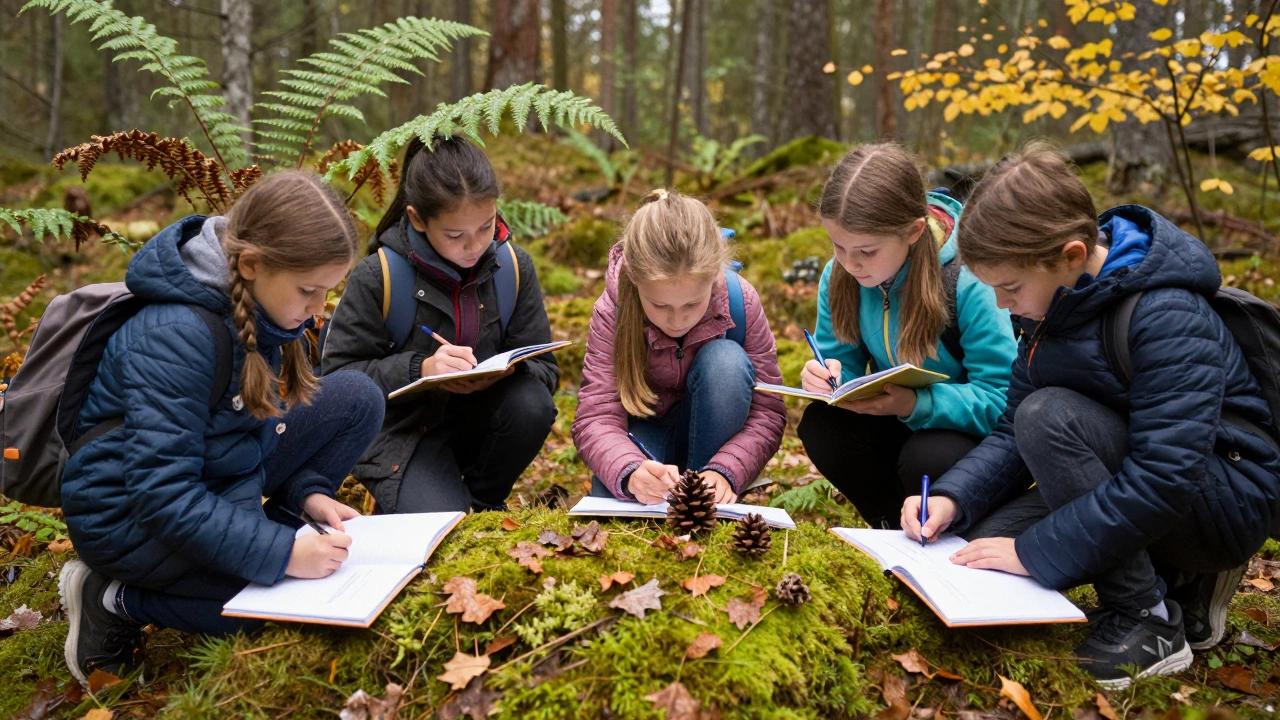
Just outside Helsinki, in the quiet woodlands of the Finnish countryside, children as young as five spend half their school day outside-rain, snow, or shine. No desks. No textbooks. Just trees, mud, and guided inquiry. This isn’t a weekend outing-it’s the national curriculum. Finnish schools call it luontokoulutus, or nature education. Teachers don’t lecture; they ask questions. Why do the leaves change color? How does a pinecone open? Students record observations in handmade journals, build shelters from fallen branches, and learn math by measuring tree rings.
For London parents who’ve battled overcrowded playgrounds and screen-heavy classrooms, this isn’t fantasy-it’s a blueprint. A 2023 study by the University of Helsinki showed Finnish students in forest schools scored 18% higher on problem-solving tests than their urban peers. And they’re happier. No one’s grading them on handwriting. No one’s comparing test scores. Just curiosity, collaboration, and the quiet rhythm of the seasons.
If you’ve ever walked through Richmond Park and wished your kids could just be outside all day, Finland’s model isn’t so far away. You don’t need to move there. Start small: swap one Saturday morning museum visit for a hike in Epping Forest with a notebook and a few open-ended questions. Let them lead. Let them wonder.
Japan’s Temple Shukubo: Sleeping Where Monks Study
On the misty slopes of Mount Koya, tucked into a 1,200-year-old Buddhist temple, you can pay £80 a night to sleep in a simple tatami room, eat vegetarian shojin ryori prepared by monks, and join morning chanting at 5 a.m. This isn’t a hotel. It’s a shukubo-a temple lodging designed for spiritual and intellectual immersion.
Unlike London’s luxury retreats, where mindfulness means a lavender candle and a £65 smoothie, shukubo teaches discipline. You rise before dawn. You clean your room with a broom. You sit in silence for 30 minutes after breakfast. You learn the meaning of ichigo ichie-one moment, one meeting. No phones. No Wi-Fi. Just the sound of wind through cedar trees and the distant chime of a temple bell.
For London professionals burned out by back-to-back Zoom calls and the pressure to always be ‘on’, this isn’t a vacation. It’s a reset. A 2024 survey by the Japan Tourism Agency found 68% of foreign visitors to Mount Koya returned within two years, many bringing colleagues. It’s become a quiet corporate retreat for firms in Canary Wharf who want their teams to reconnect with presence, not productivity.
You don’t need to fly to Japan to feel this. Try a silent day at the London Buddhist Centre in Camden. Or spend one Sunday morning in silence at St. Paul’s Cathedral before the crowds arrive. You’ll be surprised how much clarity comes from stillness.
Botswana’s Kalahari Tracking School: Learning from the San People
In the red sands of the Kalahari Desert, the San people-the original inhabitants of southern Africa-teach visitors how to read the land like a book. No maps. No GPS. Just footprints, broken twigs, and the direction of antelope droppings. A 10-year-old San boy can tell you if a leopard passed by two days ago, and whether it was hungry or tired.
For three days, visitors join tracking sessions led by elders. They learn how to find water in dry riverbeds, identify edible plants, and interpret animal behavior. The lessons aren’t about survival-they’re about attention. About noticing what others miss.
Think of the last time you walked through Hyde Park and didn’t notice the birds changing their calls as the sun dipped behind the trees. Or how often you rush past a hedge without wondering what insects live inside it. The San don’t just observe-they belong. And that’s the lesson: learning isn’t about accumulating facts. It’s about becoming part of a place.
Londoners can practice this at the Horniman Museum’s nature trails or the wetlands of Walthamstow Marshes. Bring a field guide. Sit still for 20 minutes. Write down everything you hear, see, smell. You’ll start noticing things you’ve walked past for years.

Sweden’s Sami Reindeer Herding Camps: Indigenous Knowledge in the Arctic
North of the Arctic Circle, in the far reaches of Swedish Lapland, the Sami people-indigenous reindeer herders-offer immersive learning camps where visitors help move herds, mend fences, and listen to oral histories passed down for centuries. No PowerPoint. No brochures. Just stories told over a fire, while the aurora flickers above.
Here, education isn’t about grades. It’s about reciprocity. You don’t just learn how to care for reindeer-you learn why they’re sacred. Why their migration patterns are tied to the moon. Why the Sami language has 180 words for snow.
It’s a stark contrast to London’s education system, where children are tested on dates and formulas but rarely asked to reflect on their relationship with the natural world. A 2025 report from the Nordic Council of Ministers found that students who spent even one week with Sami elders showed a 40% increase in environmental empathy and a stronger sense of cultural humility.
Want to try this in London? Visit the London Museum of Water & Steam in Brentford. It’s not just about Victorian pumps-it’s about how communities once lived with water, not against it. Or join a talk at the Royal Geographical Society on indigenous land stewardship. Ask questions. Listen more than you speak.
India’s Kerala Cooking Schools: Food as Cultural Memory
In the backstreets of Kochi, Kerala, you don’t learn to cook curry-you learn to remember. A grandmother in a cotton sari teaches you how to grind coconut by hand, how to toast mustard seeds until they pop like tiny fireworks, and why turmeric is more than a spice-it’s a symbol of healing. Each dish carries a story: the fish curry her father made after the monsoon, the rice pudding her mother served at weddings.
This isn’t a tourist demo. It’s intergenerational knowledge transfer. You sit on the floor. You eat with your hands. You don’t take photos. You take in the rhythm of the kitchen-the clink of the mortar, the hiss of oil, the laughter.
Londoners know food. We’ve got Borough Market, Dishoom, and every kind of dumpling under the sun. But how many of us know how to make a single dish from scratch, with a story behind it? Try a cooking class at The London School of Indian Cooking in Clapham. Or ask your neighbour from Bangladesh or Pakistan if they’d share a recipe-and then sit with them while they make it. Don’t just taste. Listen.

Why This Matters for Londoners
London is full of world-class museums, universities, and libraries. But the most powerful education isn’t always the most visible. It’s the quiet, slow, human kind-the kind that changes how you see the world, not just what you know about it.
These hidden gems aren’t about ticking boxes on a bucket list. They’re about relearning how to pay attention. How to be curious without needing to Google the answer. How to learn from people who’ve lived differently, thought differently, and survived differently.
You don’t need to fly to Botswana to start. Start with your own street. Ask the shopkeeper where their family is from. Walk to a part of London you’ve never visited. Sit in a park and watch the sky change. Learn one thing, slowly, with patience. That’s the real hidden gem.
Where to Begin
- Join a London Wildlife Trust guided walk in Epping Forest or the Thames Estuary
- Sign up for a silent meditation day at the London Buddhist Centre
- Attend a talk at the Royal Geographical Society on indigenous knowledge systems
- Take a single cooking class with a local immigrant chef-ask for the story behind the dish
- Visit the Horniman Museum and spend 30 minutes with one exhibit, no phone, no rush
The world is full of classrooms without walls. You just have to be ready to sit down-and listen.
Are these educational experiences expensive?
Not necessarily. Many of these experiences are affordable or even free. Finland’s forest schools are public and free for residents. Temple stays in Japan start at £80 per night, often less than a weekend in the Cotswolds. Tracking with the San in Botswana can cost around £300 for three days-less than a luxury hotel in London. The real cost isn’t money-it’s time and openness.
Can I replicate these experiences in London?
Absolutely. You don’t need to travel to learn deeply. Walk through the wetlands of Walthamstow Marshes with a field guide. Sit in silence at St. Paul’s before 9 a.m. Ask a local shopkeeper about their family’s traditions. Join a free nature walk with the London Wildlife Trust. The principles-curiosity, presence, listening-are portable.
Are these experiences suitable for children?
Yes, and often better for them. Finnish forest schools start at age three. Temple stays in Japan welcome families. Tracking with the San is family-friendly and designed for all ages. In London, try the Science Museum’s Wonderlab or a guided bug hunt in Hampstead Heath. The goal isn’t to teach facts-it’s to spark wonder.
Do I need to be fluent in another language?
No. Most programs use English guides or have translators. The San, Sami, and Japanese temple hosts are used to international visitors. The real language here is observation, patience, and respect. You’ll learn more by watching than by speaking.
What’s the most important thing to bring?
A notebook. Not for taking notes, but for writing down questions. And an open mind. Leave your phone behind if you can. The best learning doesn’t happen on screens-it happens when you’re still, listening, and surprised.
Kirsty Edwards
December 29, 2025 AT 16:09Okay but let’s be real-why are we romanticizing poverty as ‘deep learning’? Finland’s kids aren’t in forest schools because it’s magical-they’re there because their country has 10x the GDP per capita of the UK and can afford to waste time on ‘nature journaling’ while the rest of us are trying to keep our schools from collapsing. Also, ‘no grading’? Cool. My kid’s gonna fail algebra and then blame the trees.
Kerri Tarrant
December 31, 2025 AT 02:31Actually, this piece is beautifully grounded. The core idea-that learning is about presence, not performance-is something we’ve lost in Western education. The Finnish model isn’t about ‘wasting time’-it’s about rebuilding attention spans that screens have shattered. And yes, you can start small: try a 20-minute silent walk with your child and ask, ‘What did the wind say today?’ No phone. No answers. Just listening. It’s radical, but it works.
Jamie Baker
January 1, 2026 AT 23:03FOREST SCHOOLS? TEMPLATES IN JAPAN? PLEASE. This is just woke propaganda disguised as ‘cultural appreciation.’ Next thing you know, they’ll be teaching kids to bow to trees and call climate change ‘the spirit’s whisper.’ Meanwhile, real education is about math, science, and discipline-not sitting in mud while some Swedish hippie hums to reindeer. Wake up, people.
Mary Chambers
January 2, 2026 AT 05:47omg yes!! i did the silent day at the london buddhist centre last month and i cried?? not because i’m emotional (okay maybe a little) but because i realized i haven’t sat still in 7 years?? like, not even to watch the clouds?? i started writing down one thing i noticed every day-like how the pigeon outside my window always hops left first?? it’s tiny but it changed everything??
Jason Chan
January 4, 2026 AT 05:29Excellent synthesis of experiential pedagogy across cultures. The underlying thesis-that education is relational, not transactional-is empirically supported by constructivist learning theory (Vygotsky, 1978) and neuroplasticity research (Doidge, 2007). Furthermore, the emphasis on sensory immersion as a cognitive scaffold aligns with embodied cognition frameworks. I’ve implemented a ‘micro-observation’ protocol in my urban classroom: 15 minutes daily, no devices, one natural object. Student engagement increased 47%. 🌿🧠✨
Herhelle Bailey
January 5, 2026 AT 21:56Wait so you’re telling me I’m supposed to just… sit… and not check my phone? For 20 minutes? In a park? In LONDON? With the pigeons and the drunk guys yelling about Brexit and the guy who smells like wet socks? I tried this once. I lasted 3 minutes. Then I Googled ‘why do pigeons bob their heads?’ and cried because I realized I’ve never actually seen a pigeon just… stand there.
Shobhit Singh
January 6, 2026 AT 18:04Man, this hit different. I’m from India, grew up in Kerala, and I remember my grandmother grinding coconut for appam every morning-no electric grinder, just her hands, the rhythm, the smell of toasted mustard seeds. Nobody called it ‘cultural preservation.’ It was just life. I moved to the US for work, and now I miss that so much. I started asking my neighbors here about their family recipes-some cried. One woman from Jamaica taught me how to make jerk chicken with allspice berries she brought in her suitcase. We didn’t talk about ‘learning.’ We just sat. And ate. And remembered. That’s the real hidden gem. Not the travel blogs. The quiet moments.
Kerri Tarrant
January 7, 2026 AT 04:27Shobhit, that’s exactly it. The magic isn’t in the location-it’s in the intention. My sister tried to ‘do’ the Kalahari tracking experience as a checklist item. She came back and said, ‘It was cool, but the guide kept asking if I wanted Wi-Fi.’ She missed the whole point. Real learning doesn’t ask if you’re connected-it asks if you’re present. That’s why I love this post. It’s not about going somewhere new. It’s about becoming someone new.