Hidden Gems in Architecture: Lesser-Known Marvels Around the Globe - And Why Londoners Should Care
When you think of London’s architecture, you probably picture Big Ben, the Tower Bridge, or the Shard. But what if the most fascinating buildings aren’t the ones on postcards? Across the globe, there are quiet, overlooked masterpieces - structures that don’t get crowds, don’t have entry fees, and still make you stop in your tracks. And if you’ve ever stood on the South Bank watching the Thames flow past, or walked through Covent Garden on a rainy Tuesday, you know Londoners have a deep appreciation for the unexpected. These hidden architectural wonders aren’t just for tourists. They’re for people who notice the way light falls on a brick wall, or how a forgotten doorway holds a story.
Japan’s Teshima Art Museum - A Building That Breathes
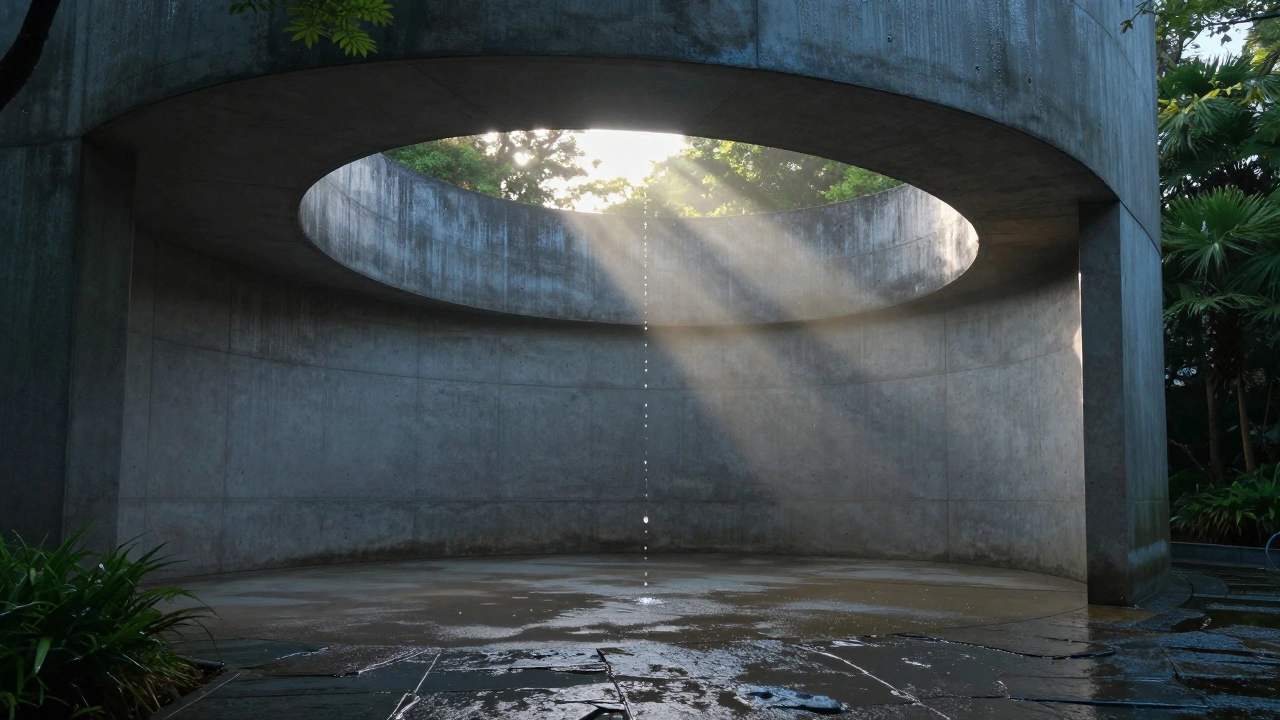
On a tiny island in Japan’s Seto Inland Sea, the Teshima Art Museum doesn’t look like much from the outside. Just a smooth, concrete shell, curved like a droplet. But step inside, and you’re in a space where water drips slowly from the ceiling, condensation clings to the walls, and the air feels alive. Designed by Ryue Nishizawa, it’s not a museum with paintings - it’s a temple to atmosphere. No labels, no guards, no rush. Just you, the echo of water, and the way the sunlight shifts through a single oval opening.
Londoners who’ve spent quiet afternoons in the Serpentine Gallery’s temporary pavilions will feel at home here. It’s the same quiet reverence you find in the crypt of St. Pancras Church - where the silence is deeper because you know you’re standing where generations once walked. Teshima doesn’t shout. It waits. And that’s something Londoners understand.
Georgia’s Svetitskhoveli Cathedral - Stone That Remembers
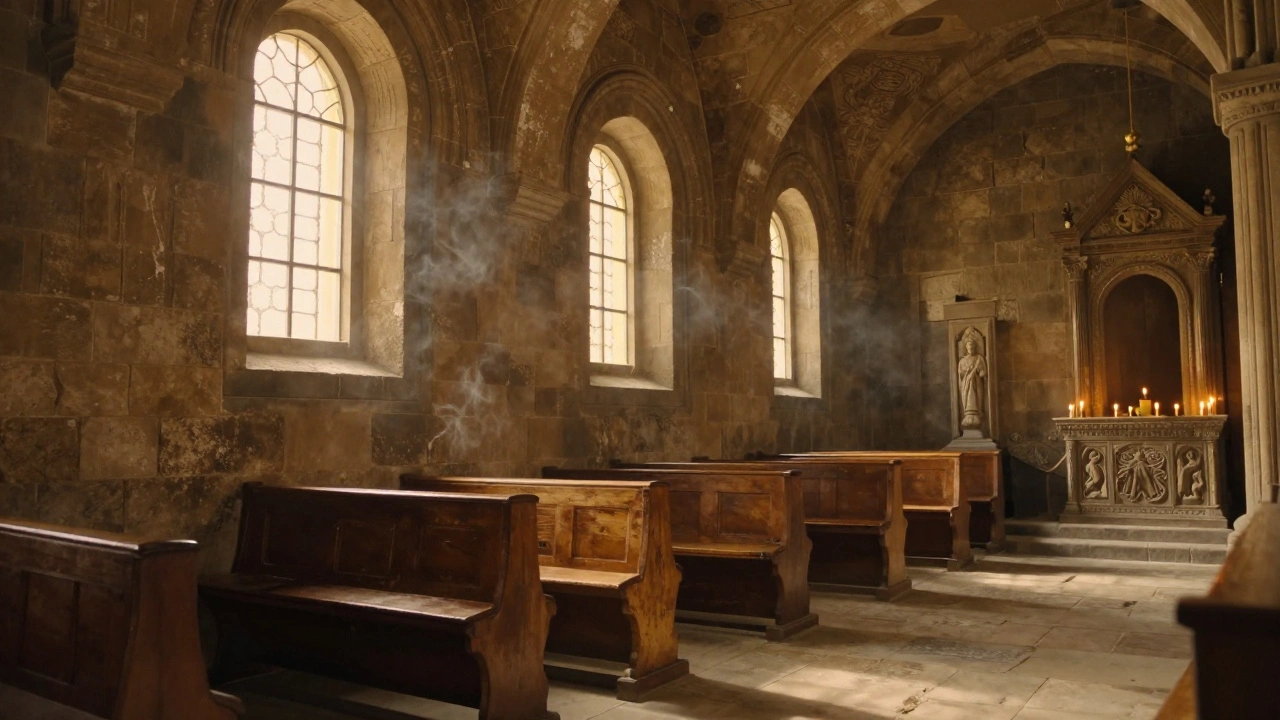
In the quiet town of Mtskheta, just outside Tbilisi, stands Svetitskhoveli Cathedral. Built in the 11th century, it’s the spiritual heart of Georgia. But what makes it special isn’t its size or gold domes - it’s the story behind the stones. Legend says the robe of Christ was buried beneath its floor. The bricks? Some were said to have been laid by hands that touched the holy relic. The walls still hold the fingerprints of centuries - not just of monks and kings, but of ordinary people who came to pray, weep, or simply be still.
Think of Westminster Abbey’s cloisters, where the stone is worn smooth by centuries of footsteps. Svetitskhoveli is that same feeling, but quieter. No coach tours. No audio guides. Just the scent of incense, the creak of wooden pews, and the echo of a single chant drifting through the arches. If you’ve ever sat alone in the chapel at St. James’s Palace during a quiet Sunday morning, you know what this feels like.
Sweden’s Kastellet - A Star That Never Sleeps
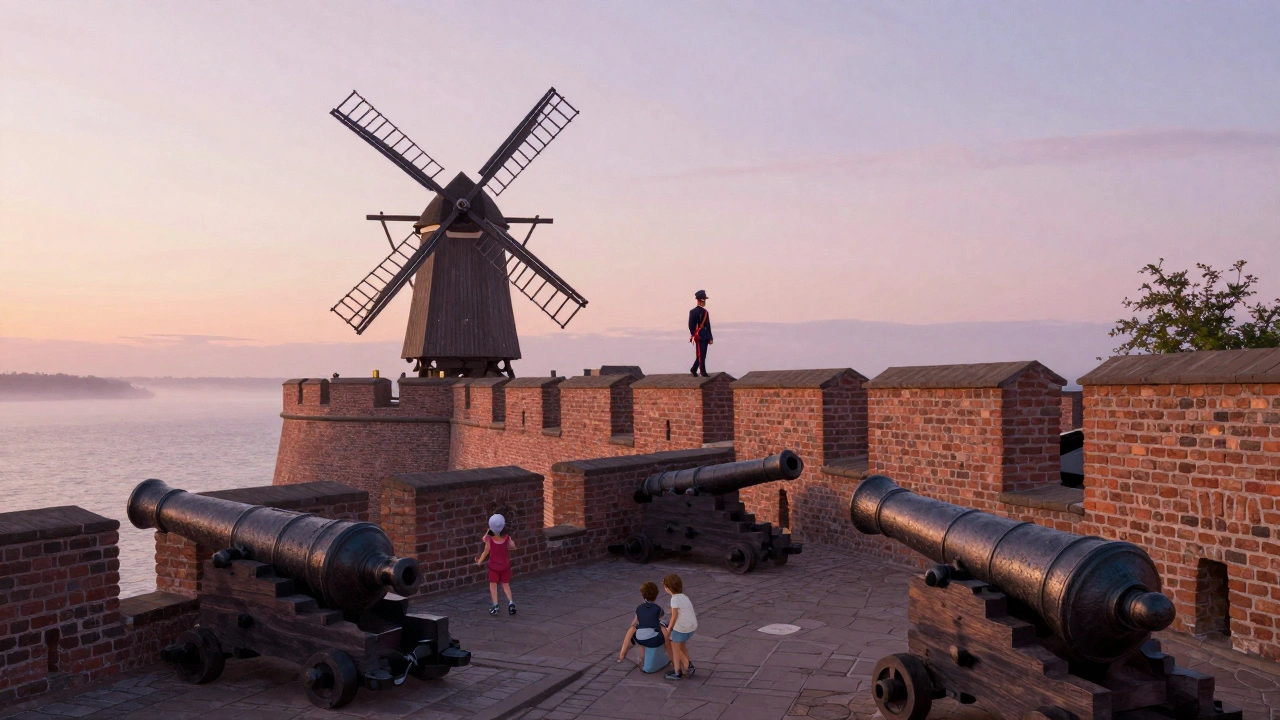
On the edge of Copenhagen, not far from the Little Mermaid, lies Kastellet - a 17th-century star-shaped fortress. Its five pointed bastions, brick ramparts, and wooden windmill look like something out of a Dutch painting. But here’s the twist: it’s still a living place. Locals jog along its walls. Children play hide-and-seek in the tunnels. A single soldier still marches the perimeter every morning at 10 a.m. - a tradition unchanged since 1701.
London has its own versions: the Tower of London’s moat, the ramparts of Dover Castle, even the quiet corners of Greenwich Park where old military bunkers still stand. But Kastellet doesn’t charge you £30 to enter. You walk in for free. The cannons are real. The guard is real. The history isn’t curated - it’s lived. If you’ve ever walked the Southwark Bridge at dawn and seen the first light hit the Houses of Parliament, you know how powerful it is to witness architecture that hasn’t been turned into a show.
India’s Stepwells - When Water Was Sacred
Deep in the dry plains of Gujarat and Rajasthan, you’ll find stepwells - vast, underground labyrinths of carved stone. Rani ki Vav, built in the 11th century, has 500+ sculptures lining its seven levels. It wasn’t just a water source. It was a temple, a marketplace, a social hub. Women came to draw water, but also to sing, to gossip, to escape the heat. The steps led down into cool darkness, where the air stayed still and the light filtered through ornate pillars like stained glass.
Londoners know the value of hidden spaces. Think of the subterranean passages under Borough Market, or the quiet courtyards behind Spitalfields. But stepwells take it further - they’re architecture designed for survival, beauty, and community. They remind us that buildings don’t need to be tall to be powerful. Sometimes, going down is the only way to find something real.
Iran’s Gonbad-e Qābus - A Tower That Defied Gravity
In the desert of northern Iran, a 53-meter brick tower rises like a needle from the sand. Built in 1006 AD, it’s one of the oldest surviving examples of Islamic architecture. Its shape? A perfect cylinder topped with a conical roof. No buttresses. No reinforcements. Just bricks, mortar, and genius. The tower’s walls are so thin at the top, you’d think wind would knock it over. Yet it’s stood for over a thousand years.
It makes you think of London’s own architectural marvels - like the Bricklayer’s Arms in Bermondsey, a 19th-century pub built with bricks fired locally, or the curved glass of the Bloomberg Building, which somehow holds its shape without a single visible support. Gonbad-e Qābus proves that beauty doesn’t need steel or glass. Sometimes, it just needs patience, precision, and a belief that something made by hand can outlast empires.
Why These Matter to Londoners
London is a city built on layers. Roman walls under modern streets. Victorian sewers beneath Tube lines. Georgian terraces hiding secret gardens. We’re used to finding history in the cracks. These global gems aren’t just beautiful - they’re lessons. They remind us that architecture isn’t about scale. It’s about intention. It’s about who built it, why, and how it still speaks today.
Next time you’re walking through Camden Passage or wandering the backstreets of Hackney, look up. There’s a doorway with a carved rose you’ve walked past a hundred times. A brick arch that casts a perfect shadow at 3 p.m. on a summer day. A forgotten chapel in a converted warehouse. These aren’t tourist attractions. They’re your quiet marvels. The same ones that make Teshima, Svetitskhoveli, and Kastellet unforgettable.
Travel doesn’t always mean flying halfway across the world. Sometimes, it means seeing your own city with new eyes. Because the most hidden gem might be the one you’ve been walking past without noticing.
Are these hidden architectural sites safe to visit?
Yes - most are publicly accessible and well-maintained, even if they’re off the beaten path. Places like Teshima Art Museum and Kastellet have clear visitor guidelines, and many stepwells in India are now protected UNESCO sites. Always check local travel advisories, but these aren’t dangerous ruins. They’re living spaces, often cared for by local communities. In London, you’ll find the same: places like the Old Operating Theatre or the crypts of St. Bartholomew’s are open to visitors and perfectly safe.
Do I need to book tickets in advance for these sites?
Some do, some don’t. Teshima Art Museum requires advance booking - only 40 people per day. Kastellet and Svetitskhoveli Cathedral are free and open without tickets. Stepwells like Rani ki Vav have small entry fees, usually under £5. The key is to research ahead. If you’re planning a trip from London, use the same approach you’d take for a quiet Sunday at the V&A or a visit to the Wallace Collection: check opening times, avoid peak hours, and go early. You’ll get the full experience without the crowds.
Can I visit these places on a day trip from London?
Not all - but you can find similar experiences closer to home. The Teshima experience? Think of the Serpentine Pavilion or the Tate Modern’s Turbine Hall - spaces designed to make you feel, not just look. Kastellet’s quiet history? Visit the Tower of London after hours during a special event, or walk the old walls of Dover Castle at sunrise. Stepwells? Try the crypt of St. Mary-le-Bow in Cheapside - its stone steps lead down into cool, shadowed space, just like the wells in India. You don’t need a flight to feel wonder.
What’s the best time of year to see these hidden sites?
Spring and autumn are ideal. In Japan, Teshima is best in late April or October when the humidity is low and light is soft. Georgia’s Svetitskhoveli is peaceful in May, before summer crowds. Kastellet’s windmill turns best in autumn breezes. Stepwells in India are coolest in winter - November to February. Londoners know this rhythm: avoid the peak, catch the quiet. The same applies abroad. If you’ve ever visited Hampton Court in January and had the gardens to yourself, you get it.
Why should I care about architecture overseas when I have so much here in London?
Because London’s greatness isn’t just in its famous landmarks - it’s in its ability to hold space for quiet beauty. The same hands that built the Tower Bridge also inspired the builders of Svetitskhoveli. The same love of brick and stone that gave us the red terraces of Notting Hill gave us the stepwells of Rajasthan. These global gems aren’t distant curiosities. They’re echoes of what we already value: craftsmanship, patience, and the belief that a building can be more than a structure. It can be a memory, a prayer, a moment of peace.
Where to Start Your Own Hidden Architecture Hunt in London
Start small. Walk from Bank to London Bridge and look up at the rooftops - you’ll spot Victorian chimneys shaped like flowers, or a 1920s tile mosaic hidden behind a newsagent. Visit the St. Dunstan-in-the-East garden - a ruined church turned public park, where ivy climbs over broken arches. Stop at the Old Operating Theatre in Guy’s Hospital - a tiny attic space where 19th-century surgeons once worked, now preserved with eerie clarity.
Or take the DLR to Silvertown and find the abandoned 1880s gasworks - brick towers standing like sentinels, rusted but still standing. No sign. No guide. Just you and the wind.
These aren’t attractions. They’re invitations. To look closer. To pause. To remember that beauty doesn’t need a crowd.
Jumoke Enato
January 7, 2026 AT 14:51Look i dont care if some building in japan drips water or whatever thats not architecture thats a humidifier with pretensions and dont even get me started on this londoners should care nonsense you think we dont have our own shit to deal with like the fact that half the buildings in niger are still being held together by prayer and duct tape and you want me to get emotional about some concrete droplet in the middle of nowhere
Emily Wetz
January 9, 2026 AT 09:59It’s not about the buildings it’s about the silence between them
That’s what we’ve lost
Not the grandeur
But the pause
The breath before the next step
That’s architecture that lasts
Jamie Williams
January 10, 2026 AT 05:20You know who really designed those stepwells in india
It wasn’t the artisans
It was the british colonial surveyors mapping water routes to control the population
Same with the tower in iran
They built it tall so the shah could see dissenters coming from miles away
And now we’re all supposed to be moved by it
Like it’s poetry
When it’s just control disguised as culture
And don’t even get me started on the serpentine pavilions
Those are just tax write-offs for billionaires pretending to be artists
Londoners don’t appreciate quiet beauty
We’re being manipulated into feeling it
Jackie Brosio
January 11, 2026 AT 13:04I just sat there after reading this and cried
Not because of the places
But because i realized i’ve walked past so many of those hidden doorways in my own neighborhood and never looked up
I used to sit in the crypt behind my old church and just listen
Now i just scroll
And i miss it
So much
Max Cossío
January 12, 2026 AT 19:50Okay but what if the whole thing is a metaphor for capitalism
Like the buildings are fine but the fact that you have to *search* for them
That’s the real horror
They’re not hidden because they’re beautiful
They’re hidden because someone doesn’t want you to find them
And now we’re all just vibing with our emotional stepwells like it’s a self help book
Bro
It’s not a vibe
It’s a warning