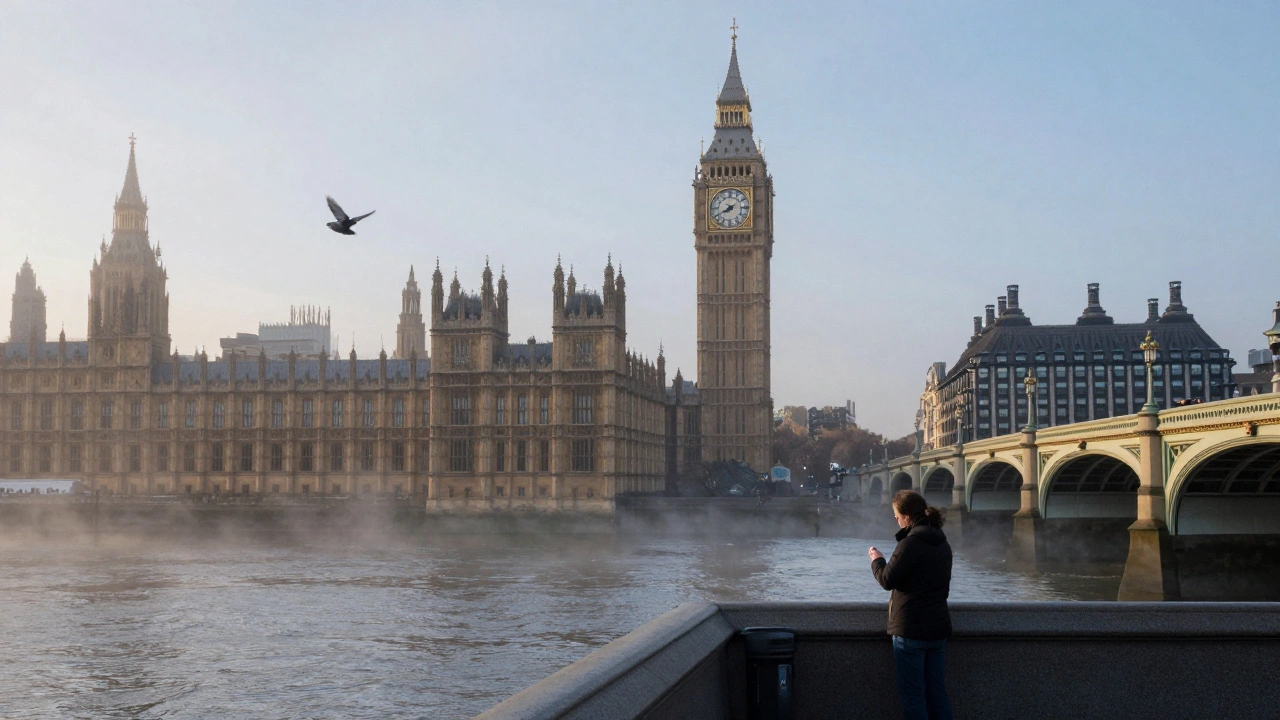
Exploring the World's Most Iconic Buildings: A Visual Journey from London’s Perspective
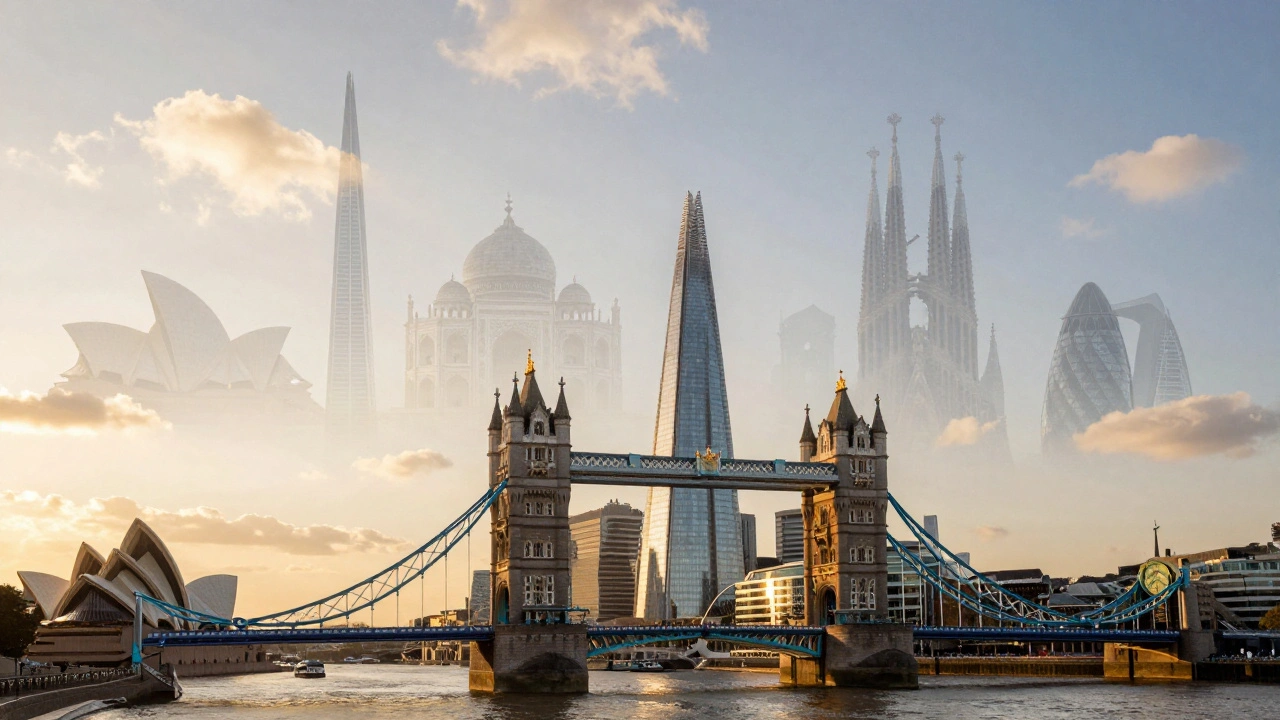
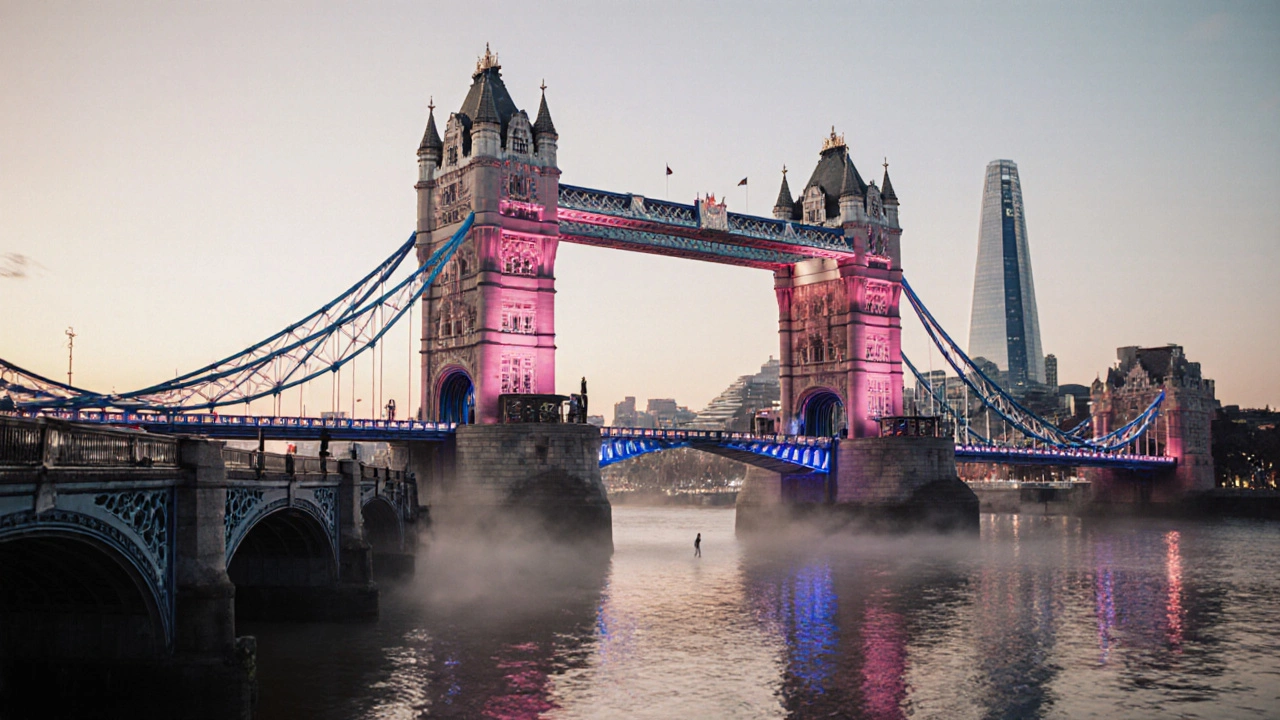
When you walk past London’s skyline from Tower Bridge to the Shard, you’re not just seeing steel and glass-you’re standing in the shadow of human ambition. Every brick, every curve, every spire tells a story of innovation, power, and culture. And while London has its own iconic structures, the world is full of buildings that make us pause, stare, and wonder how anyone built them. This isn’t just a list of famous places. It’s a visual journey through the most unforgettable buildings on Earth-and how they connect to the way we see architecture here in London.
The Sydney Opera House: When Form Becomes Function
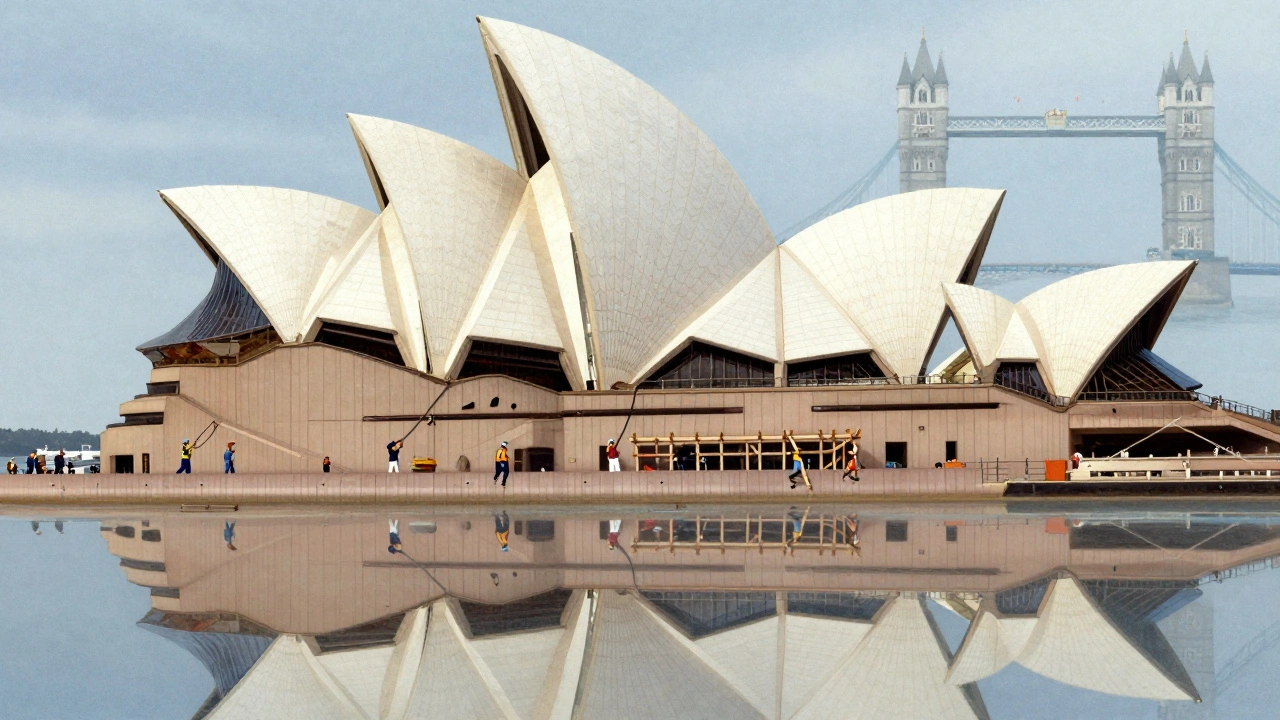
Imagine a building that looks like a fleet of white sails caught mid-breeze. That’s the Sydney Opera House, completed in 1973 after 14 years of construction and more than $100 million in costs (over $1 billion today). Its design, by Danish architect Jørn Utzon, was rejected twice before being accepted. The shells aren’t just decorative-they’re engineered to carry the weight of the roof and deflect wind. Londoners who’ve visited the Royal Opera House in Covent Garden might notice a parallel: both are temples of performance, but one is sculpted from concrete and ceramic tiles, while the other is carved from Victorian brick and gilded plaster.
What makes the Opera House unforgettable isn’t just its shape. It’s the fact that it was built on Bennelong Point, a tidal island, with no modern cranes. Workers lifted 2,194 pre-cast concrete segments by hand, using temporary wooden scaffolding. That kind of grit feels familiar to anyone who’s seen the Tower Bridge being raised for a tall ship or the Thames Barrier closing during high tides. London knows what it means to build against the tide.
The Burj Khalifa: Reaching for the Sky
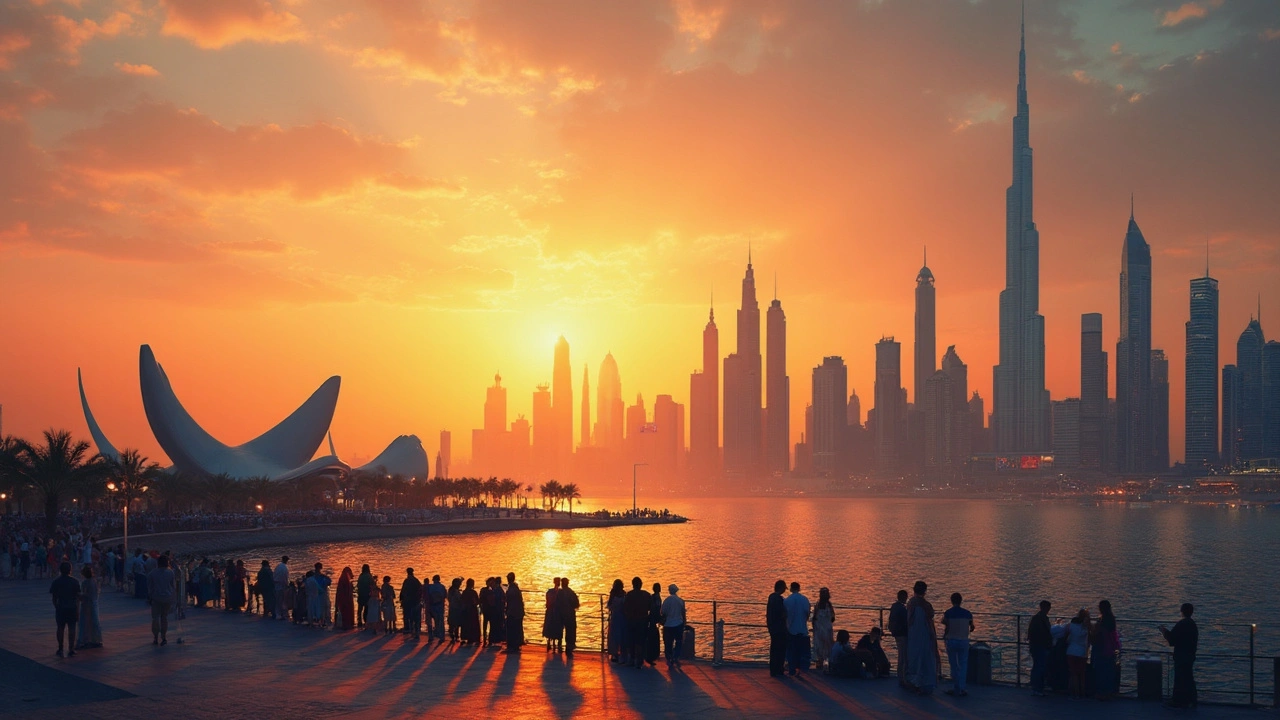
At 828 meters tall, the Burj Khalifa in Dubai isn’t just the tallest building in the world-it’s a statement. It took 22 million man-hours to build. Its Y-shaped floor plan reduces wind forces, and its cladding can withstand 50°C heat. The elevators move at 10 meters per second-faster than most London Underground trains. If you’ve ever waited for the lift in The Shard, you’ve felt the slow crawl of urban verticality. The Burj turns that experience into a thrill.
But here’s what Londoners might not realize: the Burj’s foundation is anchored by 192 concrete piles, each 1.5 meters wide and 50 meters deep. That’s deeper than the Thames is wide in central London. The building’s cooling system recycles condensation from air conditioning, using it to irrigate palm trees around its base. In London, we recycle rainwater for green roofs on new developments like the Bloomberg European HQ. The Burj shows how far we can push sustainability when necessity meets ambition.
The Colosseum: Ancient Power in Stone
Standing in Rome, the Colosseum is a haunting echo of empire. Built in AD 80, it held 50,000 spectators who watched gladiators, wild animals, and mock naval battles. Its arches, made from travertine limestone and tufa, were designed to distribute weight evenly. That’s the same principle behind London’s Roman Wall foundations, still visible near Tower Hill and the Museum of London.
What’s striking is how the Colosseum’s drainage system worked. Rainwater and blood from the arena floor drained through 20 underground tunnels into a sewer network that fed into the Cloaca Maxima-the ancient world’s most advanced sewage system. London’s Victorian sewers, designed by Joseph Bazalgette, were built 1,700 years later to stop cholera. Both systems were engineering marvels born from crisis. The Colosseum reminds us that great architecture doesn’t always serve beauty-it serves survival.
The Taj Mahal: Love, Marble, and Precision
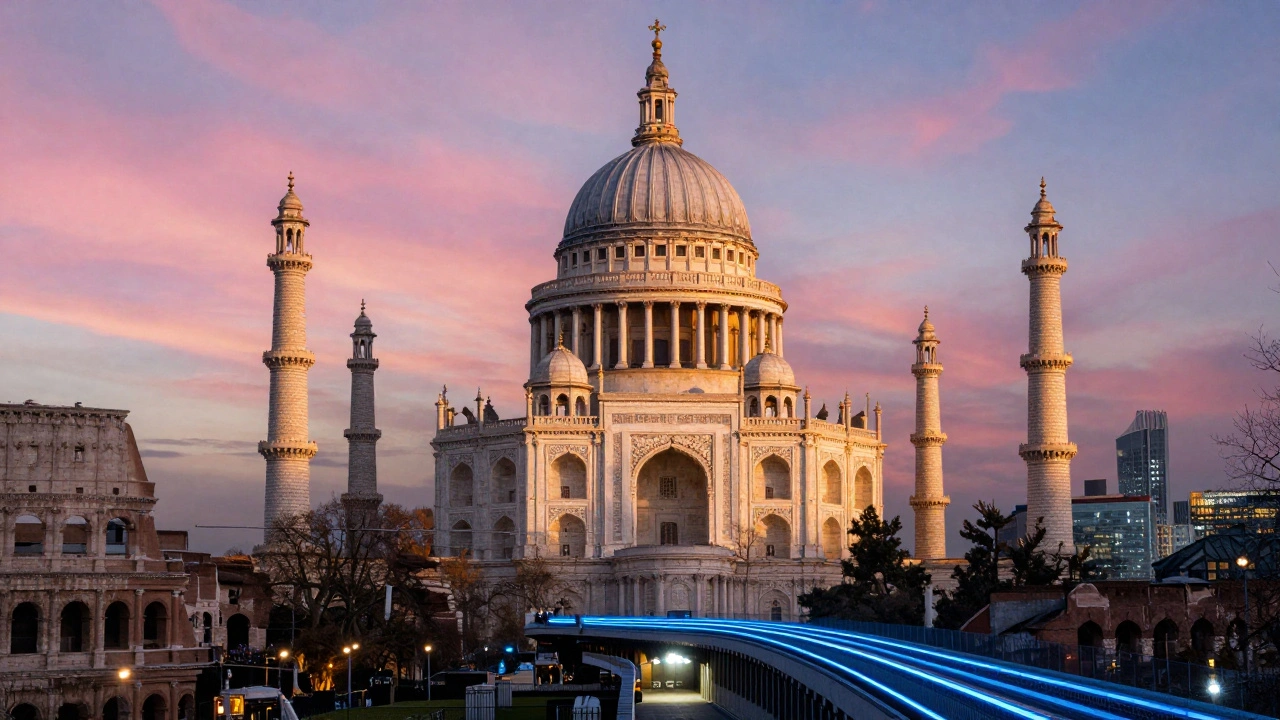
The Taj Mahal isn’t just a mausoleum. It’s a mathematical poem. Built between 1632 and 1653 by Emperor Shah Jahan for his wife Mumtaz Mahal, it’s made from white Makrana marble that changes color with the light-pink at dawn, gold at noon, silver under moonlight. The minarets tilt slightly outward so they’d fall away from the tomb in an earthquake. The symmetry is perfect: every element mirrors another, down to the 22 types of semi-precious stones inlaid into the marble.
Londoners who’ve walked through the Victoria and Albert Museum’s Islamic art wing will recognize the craftsmanship. The Taj’s dome is a double-shell design, like St. Paul’s Cathedral, but far more refined. Where St. Paul’s uses lead and brick to support its dome, the Taj uses a system of arches and piers that transfer weight directly to the ground. It’s a lesson in restraint. In London, we build skyscrapers to show off. In Agra, they built a monument to memory-and made it timeless.
The Sagrada Família: Faith in Stone and Steel
Antoni Gaudí’s unfinished cathedral in Barcelona has been under construction since 1882. It’s scheduled to be completed in 2026-exactly 144 years after it began. Its towers, shaped like organic forms-trees, waves, and coral-are covered in mosaic tiles that shimmer in the Mediterranean sun. Gaudí never used blueprints. He built scale models upside down, using weighted strings to calculate load paths.
Compare that to London’s St. Pancras Renaissance Hotel. It was built in 1868 using precise engineering, iron frames, and glass. The Sagrada Família, by contrast, uses parametric design and 3D printing to replicate Gaudí’s vision. Modern builders scan his original plaster models and translate them into digital files. It’s a bridge between 19th-century intuition and 21st-century tech. London’s own Gherkin and Walkie Talkie buildings owe a debt to this kind of innovation. We don’t build like Gaudí, but we’ve learned to think like him.
The Petronas Towers: Symmetry as Statement
When the Petronas Towers in Kuala Lumpur opened in 1999, they became the tallest buildings in the world-tied with the Willis Tower in Chicago. Their twin towers are connected by a skybridge on the 41st and 42nd floors, a feat of structural engineering. The towers are clad in stainless steel and glass, designed to reflect Islamic geometric patterns. The floor plan is based on an eight-pointed star, a common motif in Muslim architecture.
Londoners who’ve stood under the glass canopy of the British Library or walked through the Tate Modern’s Turbine Hall will recognize the power of scale and symmetry. But the Petronas Towers go further: they’re built on a foundation of reinforced concrete piles driven 120 meters into the ground. That’s deeper than the foundations of the London Eye. And while the Shard was designed to cut wind, the Petronas Towers were designed to sway-to absorb earthquakes. They’re not rigid. They’re alive.
Why These Buildings Matter in London
London doesn’t just admire these buildings-it learns from them. The Shard borrows from the Burj’s aerodynamic shape. The Gherkin’s energy efficiency mirrors the Taj Mahal’s passive cooling. The Tate Modern’s turbine hall echoes the Colosseum’s capacity for mass gathering. Even the humble London bus stop, with its curved glass and aluminum frame, owes something to the clean lines of modernist architecture seen in the Bauhaus movement.
Every time you take the Tube under the Thames, you’re riding through a tunnel that follows the same principles used to build the Colosseum’s vaults. Every time you see a new residential tower rise in Canary Wharf, you’re witnessing a version of the Petronas Towers’ vertical logic. These global icons aren’t distant curiosities. They’re part of London’s architectural DNA.
What You Can See in London Today
You don’t need to fly halfway around the world to feel the influence of these buildings. Visit the Barbican Estate and notice how its brutalist concrete echoes the raw strength of the Colosseum. Walk along the South Bank and look up at the O2 Arena’s dome-it’s a modern take on the Pantheon’s coffered ceiling. The Bloomberg European HQ uses natural ventilation like the Taj Mahal. The new Battersea Power Station redevelopment? It’s a love letter to industrial heritage, just like the Eiffel Tower was in its time.
And if you want to see these buildings up close? The London Architecture Diary lists exhibitions year-round. The Royal Academy of Arts often hosts shows on global landmarks. The V&A’s Architecture: From the Ground Up exhibit includes 3D-printed models of the Burj Khalifa and Sagrada Família. You can touch the curves of Gaudí’s towers without leaving the city.
Final Thought: Architecture as Memory
These buildings aren’t just made of stone, steel, or glass. They’re made of time. Of sweat. Of failure. Of hope. The Sydney Opera House nearly bankrupted a government. The Burj Khalifa was built by workers from over 100 countries. The Taj Mahal was funded by an empire’s entire treasury. The Sagrada Família is still being finished by people who never met Gaudí.
London, too, is built on layers of ambition. From the Roman walls beneath City Hall to the new Elizabeth Line tunnels, every generation leaves its mark. These global icons remind us that architecture isn’t about height or cost. It’s about what we’re willing to build for-love, faith, survival, beauty.
Which of the world’s iconic buildings has the most direct influence on London’s architecture?
The most direct influence comes from the Eiffel Tower and the Crystal Palace. The Eiffel Tower introduced iron lattice structures that inspired London’s Blackfriars Railway Bridge and the Hungerford Bridge. The Crystal Palace, built for the 1851 Great Exhibition in Hyde Park, pioneered the use of prefabricated cast iron and glass-directly shaping the design of railway stations like St Pancras and the Victoria and Albert Museum’s original galleries. These structures taught London how to build large, light-filled spaces with minimal material.
Can you visit replicas of these buildings in London?
Yes. The V&A Museum has full-scale 3D-printed models of the Sagrada Família’s spires and the Taj Mahal’s dome. The Science Museum displays a 1:100 scale model of the Burj Khalifa with interactive wind-flow simulations. The London Architecture Centre runs temporary exhibits featuring scaled replicas of the Sydney Opera House’s shells. These aren’t just displays-they’re tools for understanding how these buildings work, not just how they look.
Why do London’s modern buildings look so different from global icons like the Burj Khalifa?
London has strict height restrictions in historic zones and prioritizes context over spectacle. While the Burj Khalifa rises to dominate its skyline, London’s tallest buildings-like The Shard-are designed to complement, not overshadow. The Shard’s glass facade reflects the Thames and the city’s skyline, making it feel part of the landscape. Also, London’s building codes emphasize energy efficiency and public access, which leads to more varied, human-scaled designs compared to the single-use towers seen in Dubai or Kuala Lumpur.
Are there any London buildings that could be considered iconic on a global scale?
Absolutely. The Tower Bridge is one of the most photographed bridges in the world. St Paul’s Cathedral has influenced domes from Washington D.C. to St. Petersburg. The Gherkin (30 St Mary Axe) was the first major skyscraper to use natural ventilation and is studied in architecture schools globally. The Tate Modern’s Turbine Hall is one of the largest urban interior spaces in Europe, often compared to the atriums of the Burj Khalifa and Petronas Towers. London doesn’t need to build taller to be iconic-it builds smarter.
How can I learn more about global architecture while living in London?
Join the Royal Institute of British Architects (RIBA) for free public talks on global landmarks. Visit the Architecture Foundation’s exhibitions in King’s Cross. Take the London Architecture Walks, which include stops at buildings inspired by global designs. Many libraries, including the British Library, offer free access to digital archives of architectural journals. And don’t overlook the free exhibitions at the Design Museum in Shoreditch-they often feature global icons with detailed technical breakdowns.