Why a Travel Companion Can Make or Break Your Trip
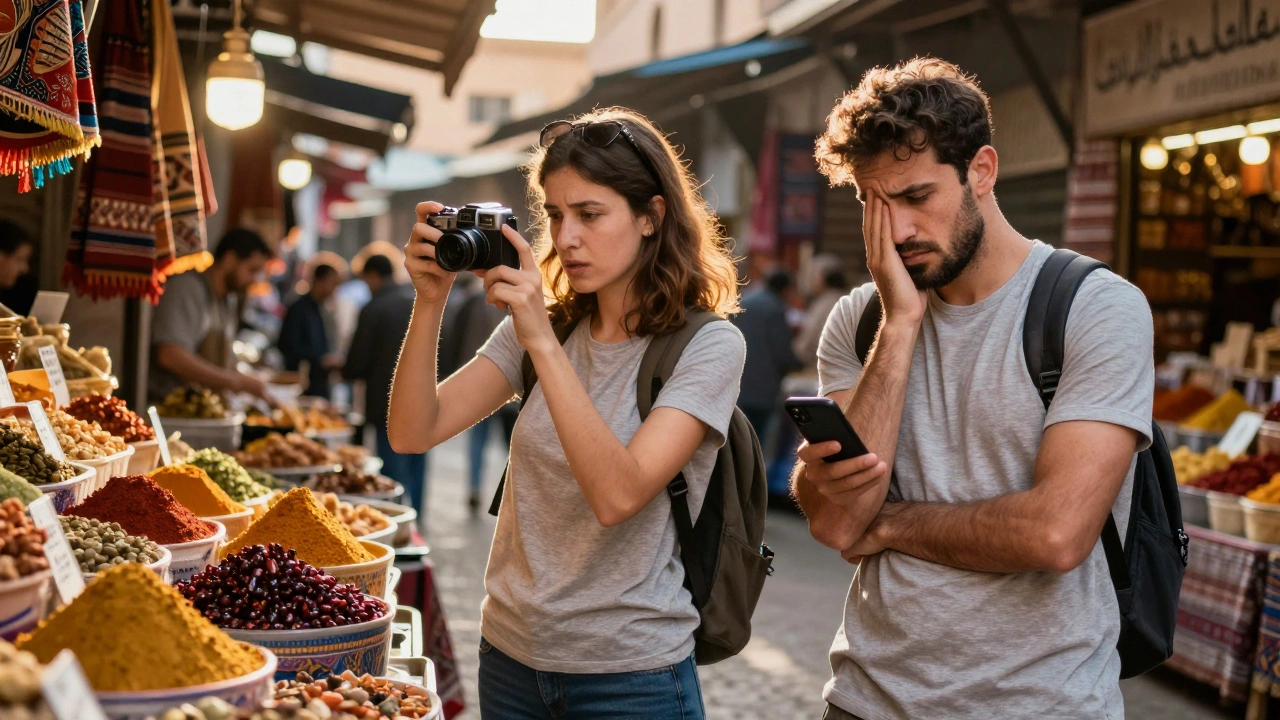
Choosing the right travel companion isn’t just about who you like hanging out with-it can completely change the outcome of your trip. One person can turn a relaxing getaway into a nightmare, while another can make even the worst delays feel like part of the adventure. The difference? travel companion compatibility.
How Your Travel Partner Affects Your Stress Levels
A 2024 study from the University of Surrey tracked 312 travelers and found that 68% of those who reported high stress during trips had a travel companion who clashed with their pacing, budget, or decision-making style. Stress didn’t come from flight delays or lost luggage-it came from arguing over whether to splurge on a hotel or stick to a budget, or from being stuck in a small room with someone who refuses to adapt.
Think about it: if you’re the type who wakes up at sunrise to catch the best light at a museum, but your partner sleeps until noon and expects you to wait, resentment builds fast. Or if you want to try local street food, and they’re convinced everything will make them sick, you’re not just eating differently-you’re living differently.
The Hidden Rules of Travel Compatibility
There’s no single personality type that makes a perfect travel partner. But there are clear patterns in what works.
- Flexibility beats rigidity. Someone who can switch plans when a train is canceled or a restaurant is closed makes trips smoother.
- Communication style matters more than you think. Do they say what they feel, or bottle it up until it explodes? Silent resentment is one of the biggest trip killers.
- Money attitudes are non-negotiable. If you’re saving for a future trip and they’re blowing cash on souvenirs, you’ll be stressed before you even leave.
- Energy levels need to align. A night owl paired with an early bird can work-but only if both agree on when to be together and when to be alone.
One couple from Manchester told me they broke up after a 10-day trip through Portugal. Not because they fought-but because they never talked. One wanted to explore hidden villages; the other just wanted to sit by the pool. They didn’t discuss it. They just drifted apart, literally and emotionally.
Real-Life Scenarios: When a Travel Companion Turns Bad
Let’s say you book a week in Bali. You’ve planned hikes, temple visits, and cooking classes. Your companion shows up with five suitcases, zero research, and a list of Instagram influencers they want to copy.
Day 2: They refuse to leave the resort because the wifi is slow.
Day 4: They spend $300 on a massage while you’re eating noodles from a street cart because you’re trying to stick to your budget.
Day 6: They complain you’re not "living in the moment" because you’re taking notes for a blog.
This isn’t about being picky. This is about mismatched expectations. And it’s more common than you think.
A 2025 survey by Travel Intelligence Group found that 41% of travelers who had a negative experience blamed their companion-not the destination, the weather, or the airline.
When a Travel Companion Makes Your Trip Unforgettable
Now flip the script.
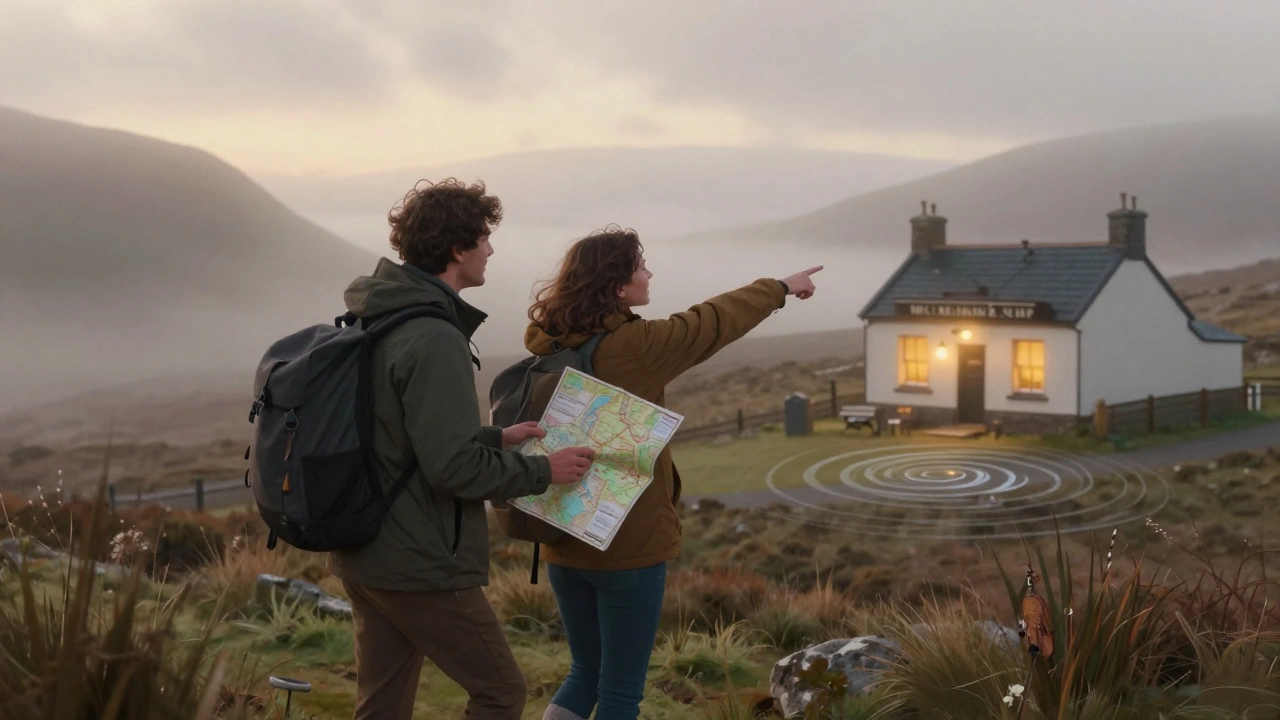
Two friends from London took a 14-day road trip through the Scottish Highlands. One was a planner. The other was spontaneous. They agreed on one rule: each person picked one day’s itinerary. No arguing.
The planner scheduled castles and hikes. The spontaneous one led them to a tiny pub where they met a local musician who played for them for two hours. They didn’t know his name. They didn’t care. They left with a recording and a story they still tell five years later.
That’s the magic. It wasn’t the destination. It was the dynamic. They respected each other’s rhythm. They didn’t try to change each other. They let the trip be bigger than either of them.
How to Choose the Right Travel Companion
Before you book anything, ask yourself these questions:
- Do we handle surprises the same way? (Think: missed flights, closed attractions, bad weather.)
- Can we talk about money without it turning into a fight?
- Do we both need alone time-or do we need to be together every minute?
- Have we traveled together before? If not, start small. A weekend away tests more than a week-long trip.
- Are we both excited about the same kind of experiences? (Culture? Food? Nature? Rest?)
If you answer "no" to more than two of these, reconsider traveling together.
What to Do If You’re Already Stuck With a Difficult Travel Companion
Maybe you’re already on the trip. Maybe you can’t cancel. Here’s what actually works:
- Take breaks. Go for a walk alone. Sit in a café by yourself. Even 90 minutes apart resets tension.
- Set micro-boundaries. "I’m doing this tomorrow, but you can join if you want." No pressure. No guilt.
- Focus on shared wins. "Look at that view!" or "This coffee is insane." Positive moments rebuild connection.
- Don’t fix them. Trying to change their behavior during the trip will backfire. Accept the version of them you’re with right now.
One woman from Bristol told me she survived a trip to Japan with her sister by agreeing to one rule: "No talking about the trip until 8 a.m. each day." They slept, ate, wandered. No pressure. No complaints. By day five, they were laughing again.

Traveling Alone Is Not a Last Resort
Some people assume traveling solo means you’re lonely or desperate. That’s not true.
More people are traveling alone than ever before. In 2025, 32% of UK travelers took at least one trip solo-up from 18% in 2020. And 78% of them said they felt more relaxed, more present, and more creative on solo trips.
You don’t need a companion to have a meaningful journey. Sometimes, the best travel companion is the one you already are.
| Trait | Good Sign | Red Flag |
|---|---|---|
| Planning Style | Shares research, asks for input | Shows up with no plans and expects you to fix it |
| Money Attitude | Open about budget, willing to compromise | Secretly overspends or criticizes your choices |
| Communication | Expresses needs calmly, listens | Silent treatment, passive aggression |
| Energy Levels | Respects your need for rest or activity | Demands constant togetherness |
| Adaptability | Willing to change plans when needed | Stiffs to schedule, gets angry over small changes |
Final Thought: It’s Not About Who You Go With-It’s About How You Go Together
A great trip doesn’t need perfect weather. It doesn’t need a five-star hotel. It doesn’t even need a travel companion.
What it needs is mutual respect. A little space. And the willingness to let the journey shape you-not the other way around.
If you’re planning your next trip, take a moment before you book. Ask: "Do I really want to share this experience with them?" Not because they’re bad people. But because travel reveals who we are-and who we’re not meant to be with.
Can you travel with someone you’re dating?
Yes-but only if you’ve traveled together before. Romantic relationships often look perfect on paper, but travel exposes hidden tensions. A weekend trip to a nearby city is the best test. If you argue over which restaurant to pick, you’ll argue over which country to visit next. Use that test before booking a two-week international trip.
What if my travel companion is a family member?
Family trips are emotional. You can’t just "break up" with your sibling or parent. Set clear boundaries: agree on separate activities, give each other space, and pick one shared meal per day. Don’t try to be best friends on vacation. Be respectful companions. Sometimes, that’s enough.
Is it better to travel solo or with someone?
It depends on what you want. Solo travel gives you freedom, clarity, and self-discovery. Traveling with someone can deepen bonds-if you’re compatible. If you’re not, it can strain relationships. Don’t assume one is better. Ask yourself: "Do I want to control my time, or share it?"
How do I know if my travel companion is toxic?
A toxic travel companion makes you feel guilty for wanting alone time, constantly criticizes your choices, refuses to adapt, and drains your energy. If you leave the trip feeling worse than when you started, it’s not the destination-it’s the person. Trust that feeling.
Can you fix a bad travel dynamic mid-trip?
Sometimes, yes-but only if both people are willing. Start small: "I need an hour to myself this afternoon," or "Can we try one thing your way and one thing mine?" If they respond with defensiveness or silence, you can’t fix it. Accept the situation, protect your peace, and focus on the parts of the trip you still enjoy.
Next Steps
If you’re planning a trip with someone, don’t wait until you’re on the plane. Have the conversation now. Talk about money, schedules, alone time, and what "having fun" means to each of you. Write it down. Agree on one rule. Then go.
If you’re unsure about your current travel partner, take a solo trip next time. You might discover you don’t need them at all.

Jodie Rae Plaut
February 15, 2026 AT 01:42Let me tell you something about travel compatibility-it’s not about personality tests or budget spreadsheets. It’s about emotional bandwidth. When you’re in a foreign city with no Wi-Fi, a missed train, and a language barrier, your partner’s capacity for calm becomes the infrastructure of the whole trip. I’ve seen people who are amazing at home completely unravel on the road because they mistake travel for leisure instead of a stress-testing ground.
Flexibility isn’t a trait-it’s a practice. You train it. Like meditation. Like lifting weights. If you’re the type who gets anxious when plans change, start small: book a one-night trip somewhere new and force yourself to adapt. No backups. No contingency. Just show up and see what happens.
And yes, money attitudes matter, but not because of spending habits. It’s about control. The person who secretly overspends? They’re not being reckless-they’re trying to buy safety. The one who micromanages budgets? They’re terrified of unpredictability. Neither is wrong. But if you can’t name that, you’re just arguing over currency.
Travel reveals attachment styles. And if you’re not ready to see yours, don’t bring anyone else along.
Colin Napier
February 15, 2026 AT 02:43It’s not 2024, it’s 2025. The study you cited is from the University of Surrey, yes-but it was a self-reported survey with a 37% dropout rate, and they excluded all participants who traveled with children or pets. That’s not data; that’s a biased sample dressed up as science. Also, you say ‘68% of those who reported high stress’-but you don’t define ‘high stress.’ Is it ‘I yelled at my partner once’ or ‘I considered leaving them in Prague’? There’s a difference.
And your checklist? It’s superficial. ‘Open about budget’? What does that even mean? Do they show you their bank statement? Do you have joint accounts? Or do you just nod along while they ‘forget’ to mention the €120 bar tab? Real compatibility isn’t about questions-it’s about patterns. And patterns only emerge after multiple trips, not after one weekend in Cornwall.
Patsy Ferreira
February 15, 2026 AT 08:44First off-your grammar is a disaster. ‘It can completely change the outcome of your trip’-that’s not even a complete sentence structure. It’s a fragment. You’re missing a subject. Also, ‘travel companion compatibility’? That’s not a phrase. It’s a noun phrase. You can’t italicize it like it’s a brand name. And you use ‘they’ as singular 17 times. That’s not acceptable in formal writing. Even if Reddit allows it, it’s still grammatically incorrect.
Also, you say ‘a 2024 study’-but then you cite a 2025 survey. Which one is real? Or are you just making this up? And ‘41% of travelers who had a negative experience blamed their companion’-where’s the citation? Link. I need the link. You can’t just say ‘Travel Intelligence Group’ like it’s a real organization. Is that even a thing? I looked it up. No website. No contact info. No papers. This is misinformation.
And your ‘micro-boundaries’ advice? That’s not advice. That’s therapy-speak. You’re using jargon to sound smart. ‘Respect your rhythm’? What does that even mean? People don’t have ‘rhythms.’ They have schedules. And if you’re too tired to walk, you say ‘I’m tired.’ Not ‘I need to honor my energy levels.’ Stop using Buzzfeed psychology on real people.
William Terry
February 17, 2026 AT 05:51Man I’ve been there. Took my girlfriend to Thailand. She wanted to do temples. I wanted to eat street food and nap. We didn’t talk about it. Just drifted. By day 4 I was eating pad thai alone at 2 a.m. while she was meditating on a rooftop.
But here’s the thing-she didn’t change. I didn’t change. We just stopped trying to make it the same trip. I let her have her quiet time. She let me have my chaos. We met for dinner. We laughed about it. That’s the whole point. You don’t need to match. You just need to not fight the mismatch.
And solo travel? Yeah it’s better. I did Bali alone last year. Slept in a hammock. Ate with locals. Got lost. Didn’t care. Felt like me for the first time in years. You don’t need someone to validate your experience. You just need to show up.
Also-no one says this but it’s true: the best travel companion is someone who doesn’t take photos. Let me enjoy the view without seeing it through a screen. Just sayin’.
Gordon Kahl
February 17, 2026 AT 19:37